In the last two decades there has been a massive revival of religious-historical approaches to the Hebrew Bible/Old Testament, including the study of archaeological evidence and cultural history. One of the more controversial issues concerns the origins of Yhwh, the god of the Bible.
The importance of this question is obvious, since it affects our understanding of Yhwh’s nature, essence, behavior and character. It therefore stands at the core of ancient Israelite identity, and also Jewish and Christian self-understanding.
The controversy centers on the questions of where, when, and in what shape did Yhwh enter the light of history. While the earliest profile of Yhwh as a sub-type of weather god is less disputed, the geography and chronology of his emergence are highly contested.
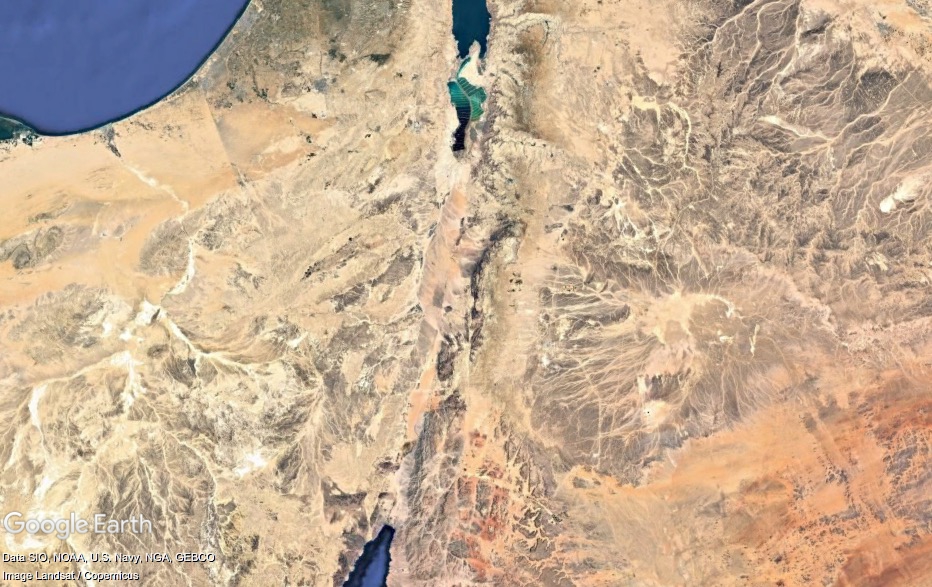
Google Earth image of the Southern Arava.
The classical answer since the 19th century favors a southern provenance for Yhwh. Originating in the Southern Arava south of the Dead Sea and leaving his first traces in documents from the 14th-13th century BCE, he traveled to Canaan/Israel during the 13th-11th centuries, probably carried by the Shasu, a –Bedouin-like people known in Egyptian texts-as well as by Midianites, Kenites, and perhaps others who formed an ‘Exodus’ group. While this remains conjectural, and in my view the best one available, it is not disputed that Yhwh functioned as the tutelary deity of the Israelite and Judeans kingdoms in the 1st millennium BCE.
An alternative thesis has also developed during the last two decades, which posits a northern origin for Yhwh. The so-called ‘Berlin hypothesis’ argues for Yhwh’s origin in the land of Canaan/Israel itself or even further north in the Levant during the pre-monarchic or early state period.
To assess the problem adequately it is imperative to include all available sources and evaluate the data in a critical manner.
Five categories of evidence need to be evaluated. When we look at theophoric toponyms (place names which include elements of divine names), personal names, and deity names for Canaan, which could indicate a northern origin, the result is completely clear: Yhwh is not attested at all.
With two exceptions the same holds true for the southern regions, but the number of sources for the north is very much higher and therefore the absence of evidence weighs much more heavily.
In contrast, the narrow sources from the south feature a few important clues. In two Egyptian temple lists of foreign names from the Late Bronze Age (dating to the 14th and 13th centuries), Shasu groups are mentioned, among them t3 š3św yhw3, “the land of the Shasu of Yhwh.” Parts of this reading are open to question but the most likely reads the term yhw3, which is undoubtedly to be associated with the Hebrew tetragrammaton ‘Yhwh,’ along with the specification of a territory, a population, and possibly also a corresponding deity, located in Seir, the Edomite area of the Arava.
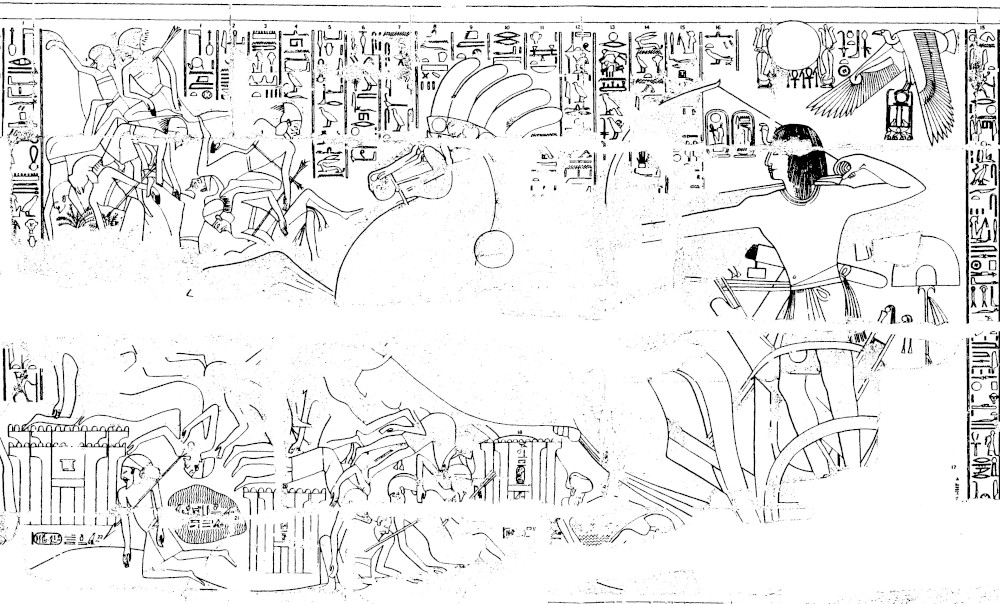
The connection of Yhwh with the Shasu people becomes even more important since this fairly well-documented group played an important role in southern Canaan during the 13th and 12th centuries, including in metallurgy, trade, and in the formation of ‘Israel.’ On this basis a connection with the Biblical Exodus tradition and the Midiantes/Kenites gains considerable plausibility.
Shasu people (upper and lower left) fought by Pharaoh Sety I, 13th century. Drawing from The Epigraphic Survey Reliefs and Inscriptions at Karnak, Volume IV: The Battle Reliefs of King Sety I. Oriental Institute Publications 107 (1986), pl. 2. https://isac.uchicago.edu/research/publications/oip/reliefs-and-inscriptions-karnak-volume-iv-battle-reliefs-king-sety-i
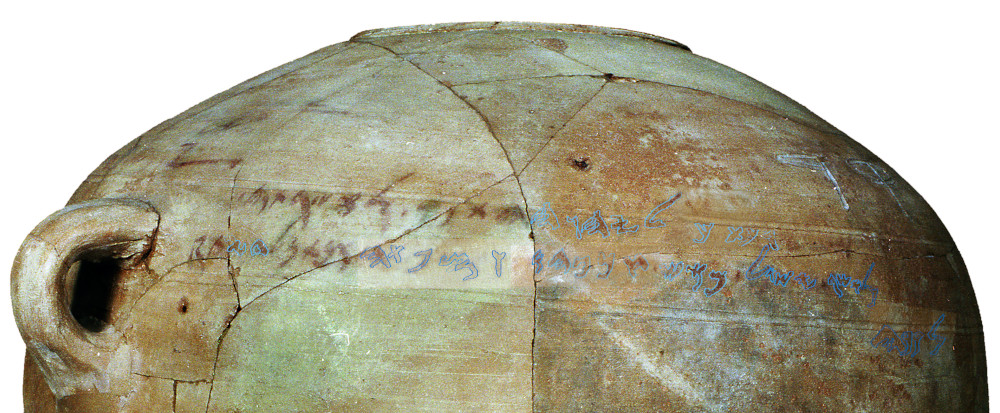
Further epigraphic support is provided by the famous inscriptions from Kuntillet ‘Ajrud from the 8th century, which attests not only a “Yhwh from Samaria” but also a “Yhwh from Teman/the south.” Since this was evidently an established tradition it implies a much older origin for the corresponding veneration of Yhwh, who must therefore be located in the south in the era prior to the Judean monarchy.
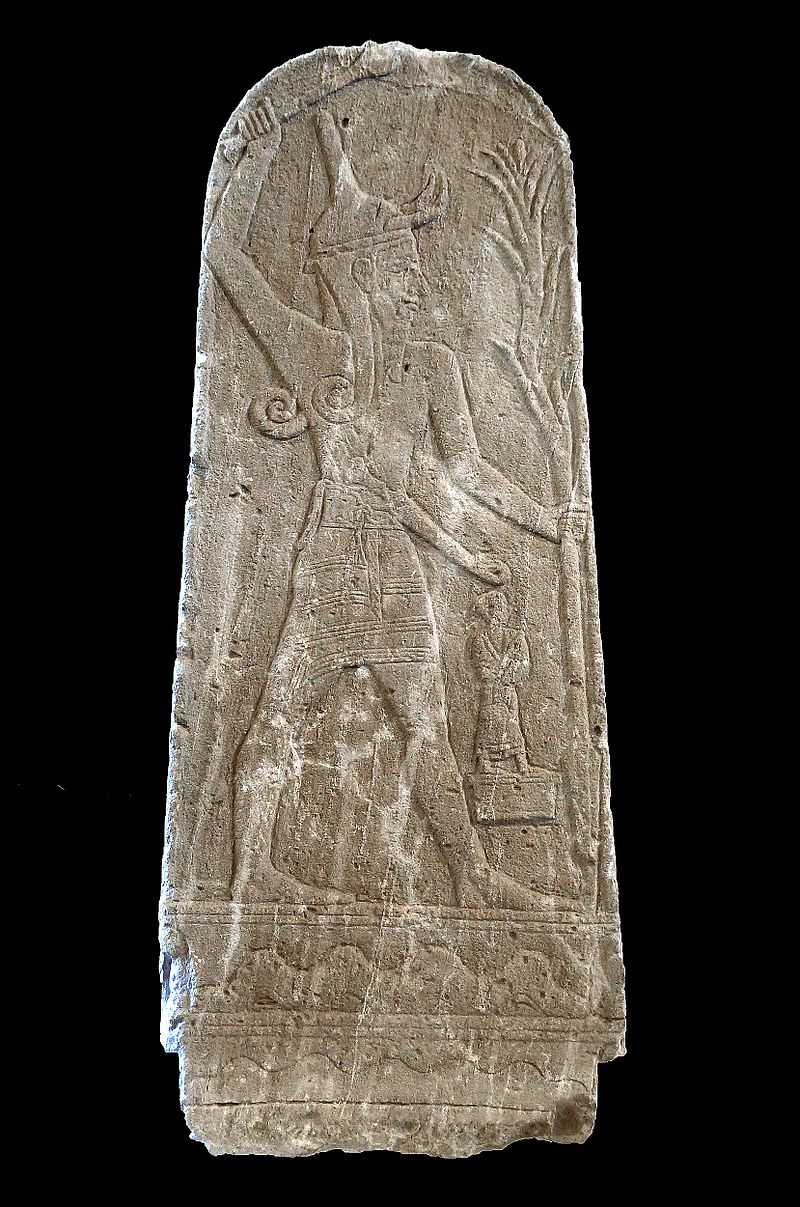
Finally, moving to the Biblical texts themselves, Yhwh’s southern provenance is attested in a group of theophany texts, which discuss the manifestation of god to man, in Judges 5, Psalms 68, Habakuk 3, and Deuteronomy 33. On the other hand, the oldest psalm material (Psalm 29) provides the only positive indication for a northern provenance. There, Yhwh is depicted as a kingly weather god of the Adad-Baal types dominant in the northern Levant and Syria (“The voice of the Lord breaks the cedars, the Lord breaks in pieces the cedars of Lebanon.”
Baal-Stele (“Baal au foudre”), 14th/13th century, Louvre, AO 15775, licensable CC BY 3.0
https://commons.wikimedia.org/wiki/File:P1050759_Louvre_st%C3%A8le_du_Baal_au_foudre_rwk.JPG
But contrary to the view of the northern advocates, this evidence is not conclusive proof of Yhwh’s earliest origins, but only for a religious-historical conception that early Israelite and Judean states adopted from their northern neighbors. The oldest Psalms provide important insights, especially for the transformation or enlargement of Yhwh’s profile (and competences) in the early first millennium BCE.
The southern model also fits the solitary character of the earliest Yhwh (with the exceptions of Deuteronomy 32:8 and the famous pair of “Yhwh and his Asherah” from Kuntillet Ajrud). It connects well with the Arava where outlaw-like groups such as the Shasu and the Habiru were not integrated into the stratified social order. The kingly weather god corresponds better with the complex, stratified urban societies of the north, such as Ugarit or the Phoenician city-states.
In summary, the evidence suggests a southern origin for Yhwh. The northern alternative is only based on Biblical material in early Psalms. In contrast, the southern explanations relies on extra-Biblical evidence and Biblical materials that independently lead to the same paradigm, while the Psalm material may also be integrated to help depict Yhwh’s transformation in the context of Israel and Judah’s evolving monarchies.
Yhwh’s origin and provenance also have implications for the bigger picturein terms of the evolution of the Bible and Israelite religion. His early history needs to be reconstructed comprehensively, considering the Exodus traditions, Yhwh’s movement into the land, and his ascent to the status of the one and only god. Tracing Yhwh’s ascent in the regional traditions of Israel, with his various functions and characteristics as sun-god, city-god and so on, may finally result in a comprehensive history of Yhwh, the god of the Bible.
Martin Leuenberger is Professorof Old Testamentat the University ofTübingen.
For Further Reading Amzallag, N., Metallurgy, the Forgotten Dimension of Ancient Yahwism, http://www.bibleinterp.com/articles/2018/08/amz428015.shtml(9/13/2018)
Leuenberger, M., “Noch einmal: Jhwh aus dem Süden. Methodische und religionsgeschichtliche Überlegungen in der jüngsten Debatte,” in: M. Meyer-Blanck (Ed.), Gott und Geschichte. XV. Europäischer Kongress für Theologie (VWGTh 44), Leipzig 2016, 267–287.
Oorschot, J. van/Witte, M. (Ed.), The Origins of Yahwism (BZAW 484), Berlin et al. 2017.
Smith, M.S., The Early History of God. Yahweh and the Other Deities in Ancient Israel, New York et al. 1990.
Tebes, J.M., The Southern Home of Yhwh and Pre-Priestly Patriarchal/Exodus Traditions from a Southern Perspective, Bib. 98 (2017), 166–188
How to cite this article:
Leuenberger, M. 2019. “Where Does Yhwh Come From?”, The Ancient Near East Today 7.3. Accessed at: https://anetoday.org/bible-religion-hebrew-2/.



Post a comment