There are over 150,000 tablets from the Ur III period, but only a few can be said to have survived 9/11. Sumerian Texts from Ancient Iraq: From Ur III to 9/11 presents transliterations, translations and textual commentary for nearly 150 cuneiform tablets from ancient Babylonia, along with a study of their contents. The tablets all date to the late third millennium BCE, a time when the Babylonian city of Ur was the seat of a political dynasty that controlled much of Mesopotamia and what is now Iran. According to documents from antiquity, this represented the third time that power in Babylonia was held by a dynasty with its capital at Ur. Scholars thus refer to this as theUr III period.
Sumerian Texts from Ancient Iraq: From Ur III to 9/11 - https://isdistribution.com/BookDetail.aspx?aId=85490
Based on the tablets’ contents and month names it is clear that they are from a settlement near the city of Nippur, the religious capital of the Ur III state and home to, among other things, the head of the Mesopotamian pantheon, Enlil, and the city-god of Nippur, Ninurta. Unfortunately, all of the tablets were uncovered in illicit excavations, so no further information about their originis available. The king in question, Shu-Sin (who reigned ca. 2037-2028 BCE), claims in one of his inscriptions that he conquered a site called Shimanum and brought part of the population back to Sumer, settling them in the region of Nippur. Among other pieces of evidence, the tablets include several references to “people of Shimanum,” which are otherwise rare in the thousands of published Ur III economic documents.
The tablets offer valuable new information about the Ur III state and life in Sumer in general. First, they include many records dealing with the temple household of Ninurta–indeed, the tablets themselves seem to have belonged to the archive of a person named Aradmu, who may have been one of the chief officers of that institution. Before these tablets, we knew little about the personnel and landed holdings of that temple at Nippur in Ur III times. Second, and connected to this, they offer new evidence of a family managing agricultural matters in the Ur III countryside. Aradmu, along with his brothers and father, were agricultural officers with huge plots of land, personnel, draft animals and other resources under them.
Third, the texts offer new entries for the lexical and linguistic inventory of ancient Babylonia, including a new field-name, a new kind of loan interest, and possibly a new graph for the verb to swear in oath formulas. Fourth, they show interaction with other temple households at Nippur, especially with the temple of Inanna, records for which were found in controlled excavations. Finally, the tablets resurrect the memory of everyday people, including some of the manual laborers on whom these institutions depended.
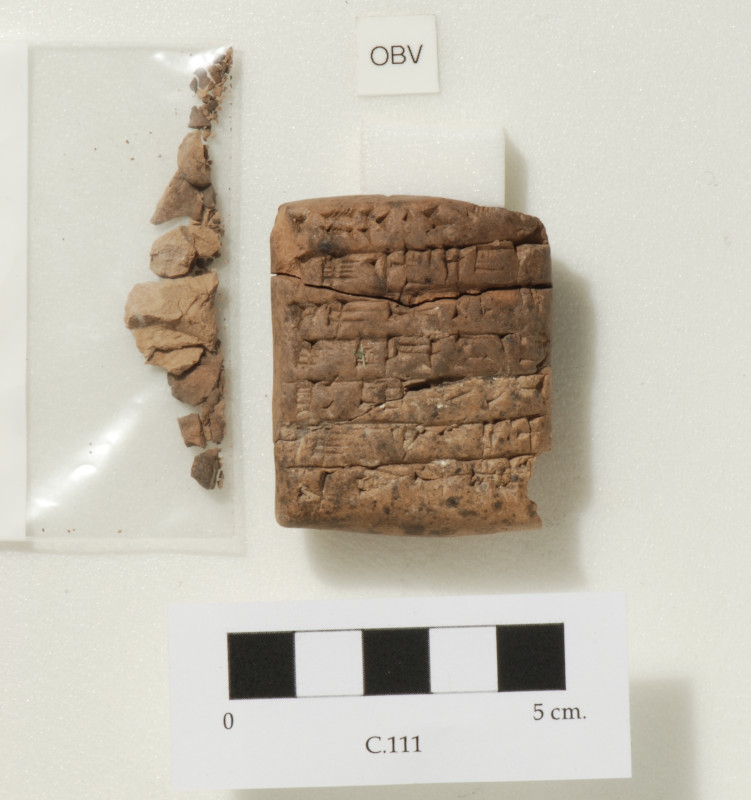
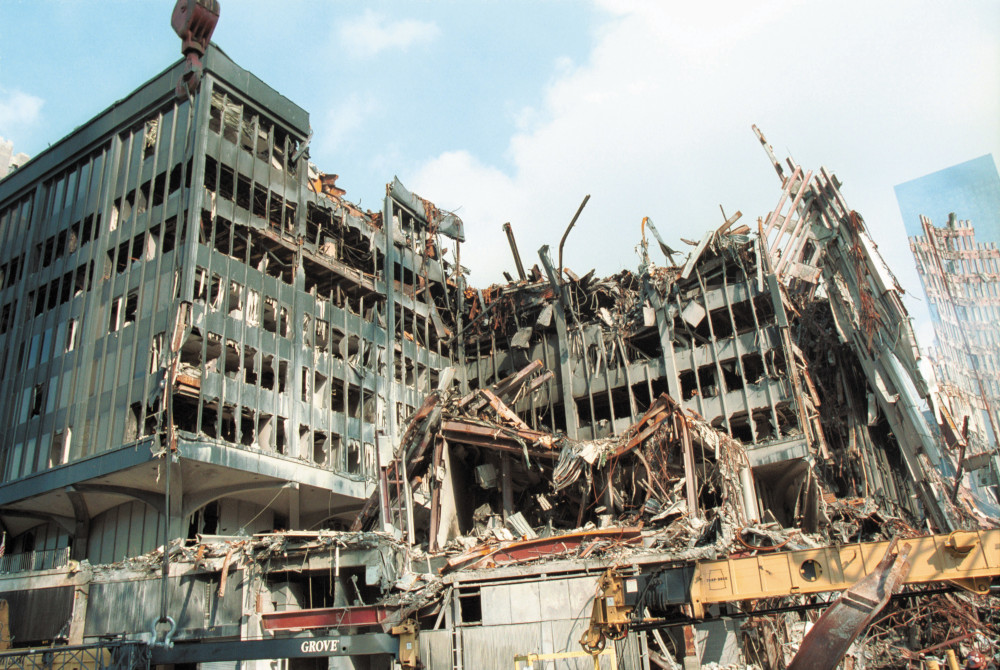
Perhaps the most unique aspect of the tablets, though, is their story since leaving the ground, the attention that received, and the publication process.The tablets were confiscated as part of a federal investigation into an antiquities dealer in Manhattan for dealing in illicit antiquities. In early 2001, agents in Newark, New Jersey confiscated a shipment of tablets and other artifacts bound for the dealer and stored them at the Customs House in the World Trade Center complex, in Manhattan. When 9/11 happened later that year, the tablets were damaged by flooding and were moved to an off-site storage facility, where they sat in their containers during the cleanup of Ground Zero.
World Trade Center after 9/11 - https://commons.wikimedia.org/wiki/File:Six_WTC_SW_Corner.jpg
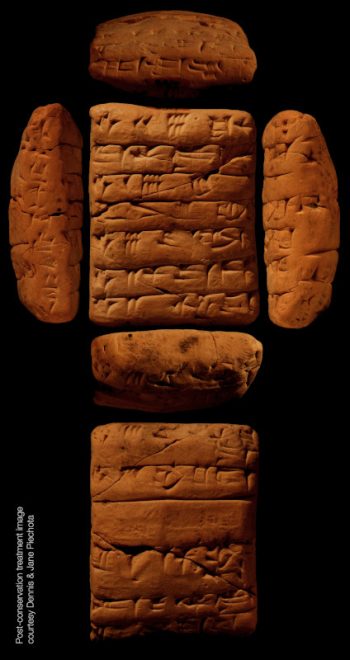
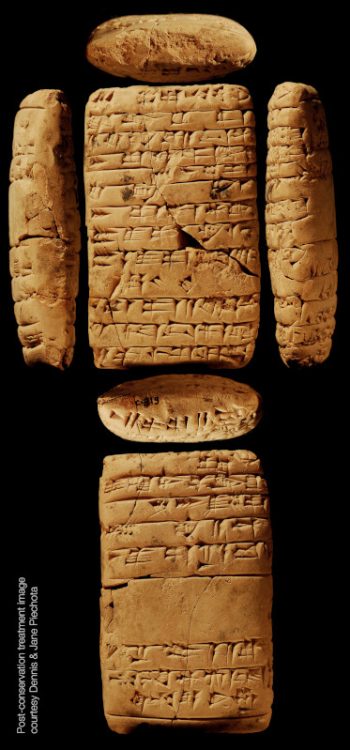
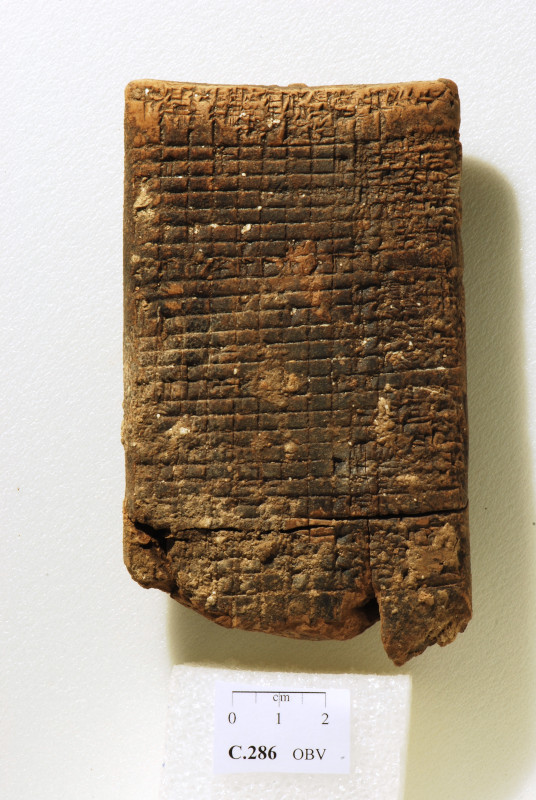
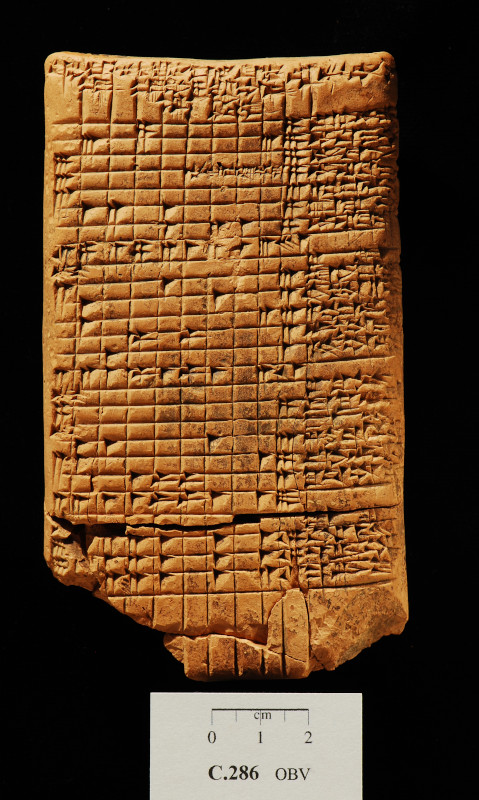
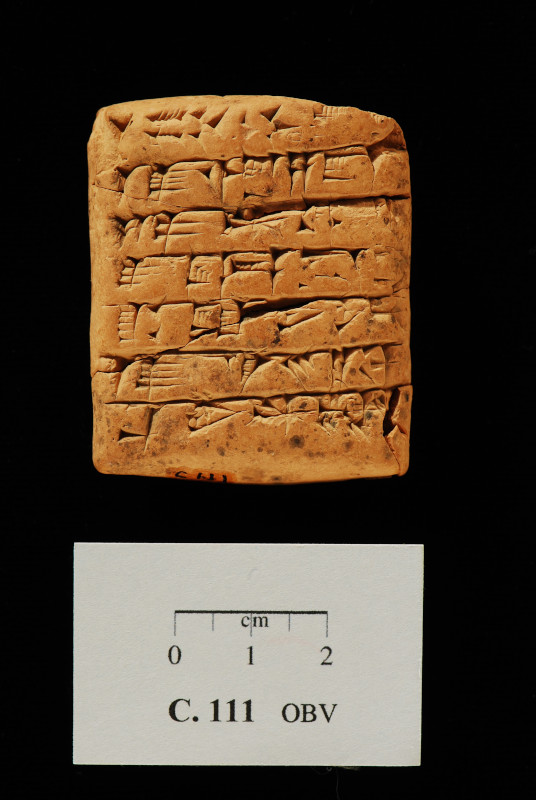
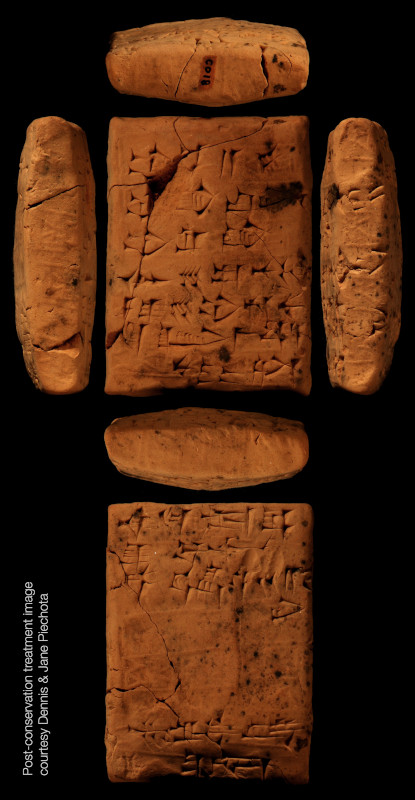
When they were again seen, they were sent to the conservation lab of Dennis and Jane Piechota, in Arlington, Massachusetts, in order to be repaired before being returned to the Iraqis. During that time, the author, a lecturer at Harvard University, and the senior Assyriologist at Harvard, Piotr Steinkeller, made transliterations of the Ur III tablets. Those transliterations, pursued with greater effort by the author after baking, were emended, all toward the publication of the tablets.As part of that, the author requested and received permission from the Director General of Iraqi Museums, Dr. Amira Edan, to proceed. The artifacts were later handed over to the Iraqis at the Iraqi Embassy in Washington, D.C. before being returned to the Iraq National Museum in Baghdad where they now reside. The Piechotas’ conservation report was included as an appendix to the volume.
Tablet before conservation. Image courtesy of Dennis and Jane Piechota.
Tablet before conservation. Image courtesy of Dennis and Jane Piechota.
Tablet before conservation. Image courtesy of Dennis and Jane Piechota.
Tablet before conservation. Image courtesy of Dennis and Jane Piechota.
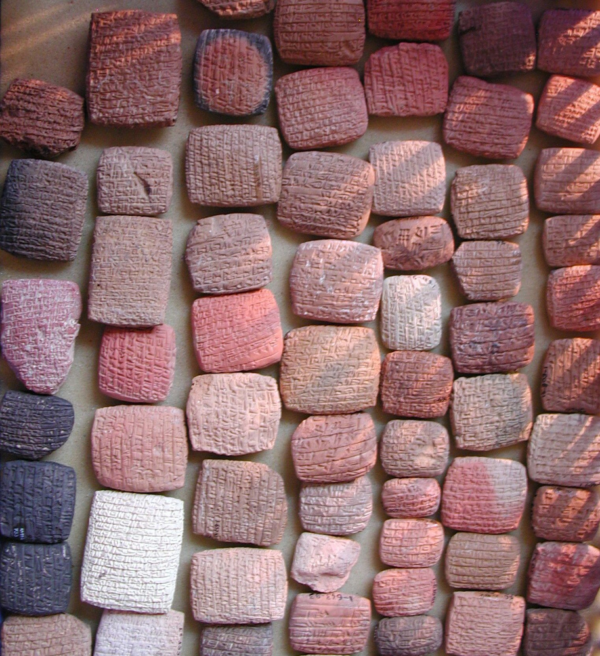
It was clear that the tablets were looted because, among other things, many of them had gouges from pick-axes. It was equally clear that large numbers of tablets from the same archive were to be found in the Banca d’Italia, in Rome, and in the Jonathan and Jeannette Rosen Ancient Near Eastern Seminar at Cornell University.
In an effort to be responsible to the history of the tablets as well as the history contained in them, the author published the results of a Freedom of Information Act (FOIA) request concerning the Federal investigation into the Rosen collection. A freelance journalist, Jason Felch, secured a copy of the FOIA record before the publication of the volume. As he noted in the Los Angeles Times, Cornell has agreed to return thousands of tablets in the Rosen Seminar to Iraq.
The story of these tablets shows the ways in which a small collection can fill important gaps in our knowledge of the past, as well as illustrate how antiquities looting ties the past and present together in sometimes unpredictable ways.
Benjamin Studevent-Hickman holds a Ph.D. in Assyriology from Harvard University
How to cite this article:
Student-Hickmanholds, B. 2019. “From Nippur to Ground Zero”, The Ancient Near East Today 7.3. Accessed at: https://anetoday.org/nippur-conservation-iraq/.

Post a comment