
Reminiscing with David Stronach: A Magnificent Life in Archaeology
november 2026 | Vol. 14.11
By Sabrina Maras
David Brian Stronach (June 1931- June 2020) was a Scottish archaeologist who spent his life immersed in the study of the ancient Middle East and Iran. Most archaeologists may recognize his name in connection with his meticulous study of Pasargadae, his discovery of the Median site of Tepe Nush-e Jan, or his two decades as director of the British Institute of Persian Studies in Tehran. Others remember him as a beloved mentor and professor at the University of California at Berkeley, where his seminars were peppered with riveting tales of his archaeological adventures. Awarded the Archaeological Institute of America’s Gold Medal, the Ghirshman Prize, and an OBE from Queen Elizabeth II, David was recognized internationally as one of those rare people who were equally scholar and fearless adventurer.
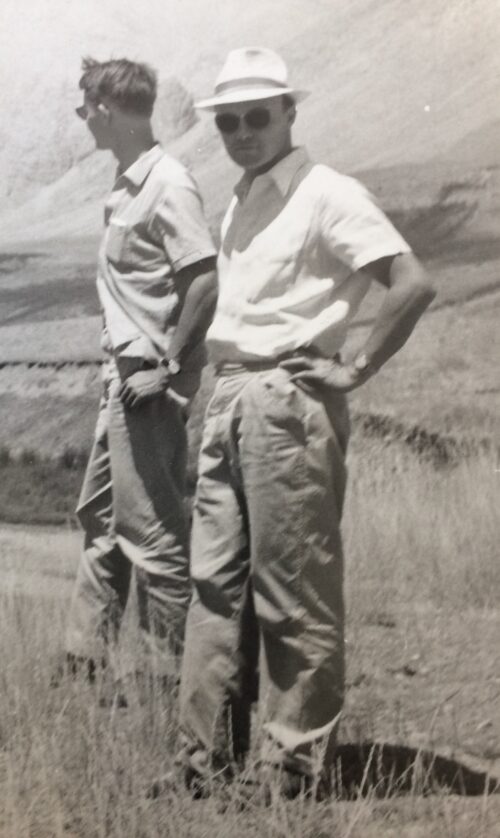
His success in archaeology was primarily due to his intelligence, grit, and willingness to do the hard work. But perhaps there were other factors, as he himself describes in a newly published biography, David Stronach and British Archaeology in the Middle East (Bloomsbury, 2026):
Educated at St. John’s College, Cambridge, David Stronach trained under some of the biggest figures in 20th century archaeology. His mentors were larger-than-life characters, such as Mortimer Wheeler, Seton Lloyd, James Mellaart and Max Mallowan. His willingness to give himself fully to his work served him well, and his career was both extraordinary and long-lived. He dug at a remarkable roster of sites; Nimrud, Pasargadae, Tepe Nush-e Jan, Shahr-e Qumis, and Nineveh are only a few of the more well-known ancient cities he excavated. It was only in 2010, at the age of 78, that he decided to put an end to his forays in the field, writing to a friend:
I do not have much to complain about, I suppose … In fact, I recently decided that I should “hang up my trowel.” So my 2010 season in Armenia last June would now seem to represent my last season in the field. But since I directed my first dig at Ras al Amiya, Iraq, in 1960, it does appear that I managed to be a dig director off and on for fifty years.
Until the end of his life he continued to lecture, publish, and mentor young archaeologists. In 2014, perhaps finding he had more time on his hands in his newfound retirement, he agreed to write his memoir. I had been pestering him about it for years. His life had been as adventurous as that of T. E. Lawrence or Wilfred Thesiger and deserved to be documented. So we began our interview sessions, which continued sporadically over the next six years. In the relaxed, intimate atmosphere of his home office, he opened up not only about his life in archaeology but also about more personal and formative experiences.
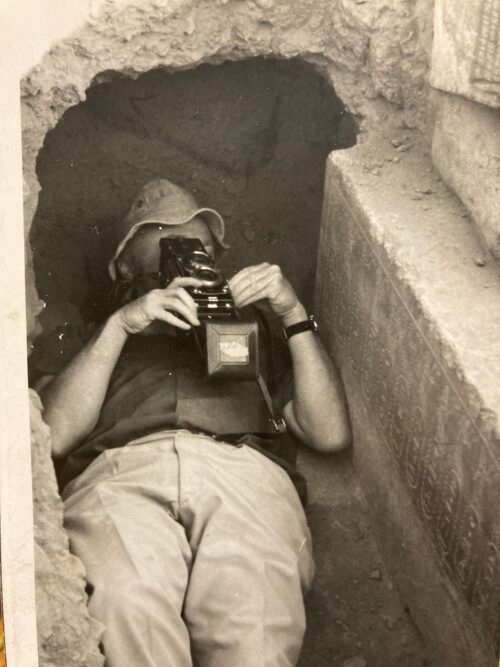
One event that deeply affected him as a ten-year old wartime evacuee was barely escaping death while trying to return to England on a nearly-doomed flight: “My mother had been idly looking out her window when she suddenly saw bullet holes appearing on top of the port wing. We were being attacked by a Messerschmitt 110, or some other long-distance German fighter-plane, and were being pummeled with bullets. The German plane was diving at us — in textbook fashion — from the direction of the sun.”
He survived that attack to live another day, but it impressed upon him that “he was living on borrowed time.” Aware that he was given another chance at life to do the one thing he so desired — to become an archaeologist — he grabbed that chance and never looked back, finding himself on digs in Turkey, Syria, Iraq, and eventually Iran once it became possible. His zest and appreciation for life seemed to drive his work, as did the unflagging cheerfulness he was known for.
After completing his formal studies in archaeology under such luminaries as Dorothy Garrod, JGD Clark, and Joan Margaret Munn-Rankin, David became a Fellow of the British Institute of Archaeology at Ankara, quickly impressing director Seton Lloyd and his co-director, James Mellaart. There he also became acquainted with the Leonard Woolley-trained archaeologist Max Mallowan. David had a most unusual hands-on initiation into archaeological survey with Mellaart, walking across Anatolia for weeks at a time under a hot sun with no map and no water, picking up diagnostic sherds:
They relied on the hospitality of the local people for sustenance, explaining “we had no donkey, we had no money, and so we would just arrive in the evening at one of the villages on our route … and we would find ourselves taken in somewhere.”
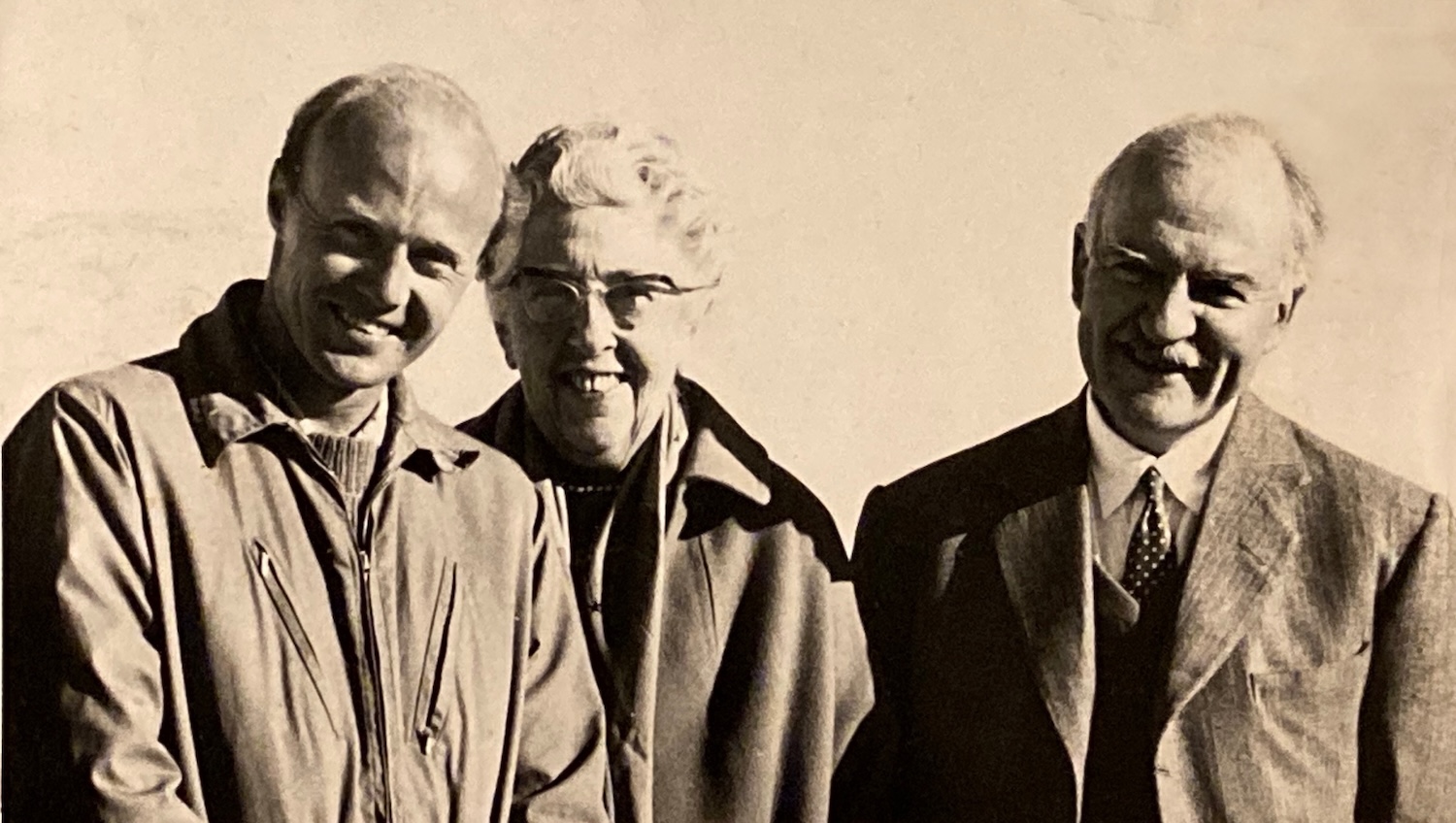
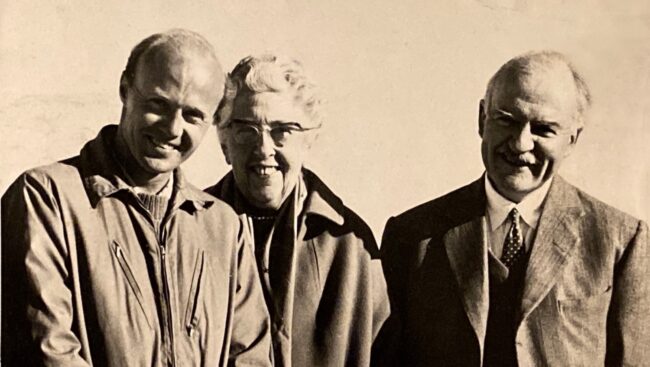
While physically challenging, David’s surveys with Mellaart taught him to read the landscape for tell-tale signs of ancient sites buried deep beneath millennia of soil, a skill he would use to his advantage for the rest of his career. Having proven his ability and durability in the field with Mellaart, David was offered an opportunity to dig at Nimrud with Max Mallowan, who quickly took David under his wing. Their life-long friendship and professional relationship also brought David into the world of Agatha Christie, the celebrated mystery writer who also happened to be Mallowan’s wife. David and Agatha became close friends, and he would find himself helping her choose carpets and jewelry in the Baghdad bazaar or enjoying breakfast at Greenway, her country estate in Devon, before spending the day working on post-excavation notes with Max.
David kept a number of surprising anecdotes about Agatha up his sleeve, some of which he shared with me. Most intriguing was his description of how cleverly Agatha set about collecting details for her stories and characters:
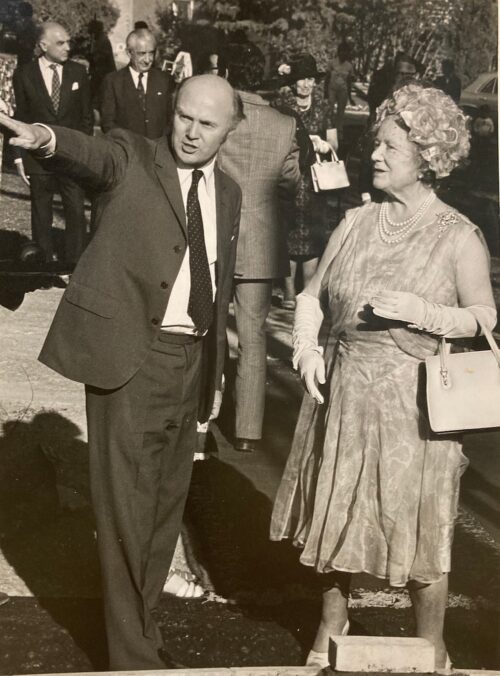
It was in 1961, when he was appointed as director of the British Institute of Persian Studies (BIPS) in Tehran by Sir Mortimer Wheeler (Honorary Secretary of the British Academy and a great champion of British archaeology), that David came into his own. For two decades he led an institute that was a central meeting point for international archaeologists coming to Iran, a place to share ideas, launch new research projects or just take a quick swim after a communal lunch. Land Rovers were lent out, funding was pouring in for new projects, and illustrious guests attended the library lectures (including Her Imperial Majesty the Shahbanou and Isaiah Berlin). It was a golden age of Iranian archaeology, when it seemed anything was possible, and collaboration between British, American and Iranian scholars reached a high point.
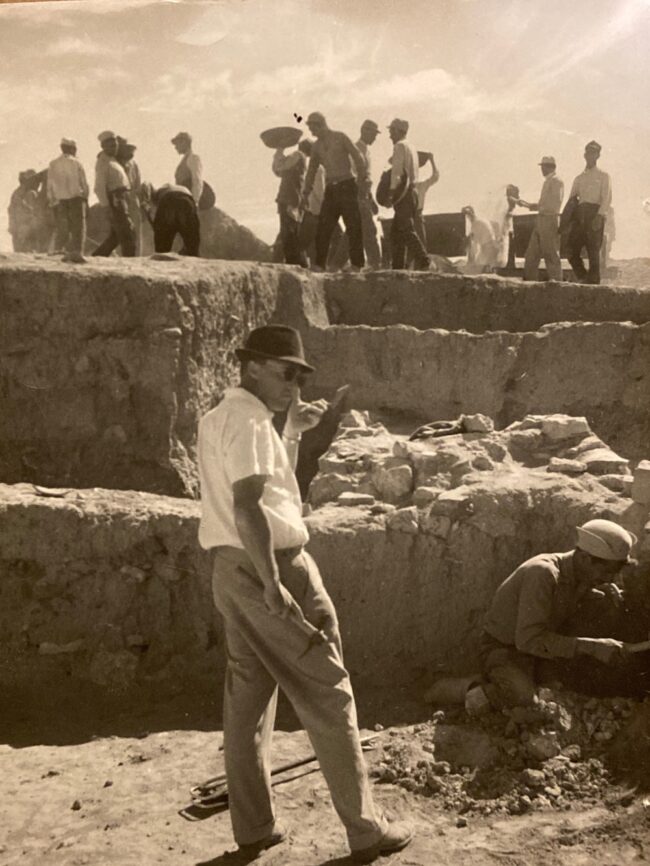
Directing the Tehran-based institute and his resulting proximity to the local archaeological terrain gave Stronach the opportunity to make a number of significant discoveries, including the Median site of Tepe Nush-e Jan near Hamadan (ancient Ecbatana). There, he and his team uncovered a rare example of a Median-era temple with a fire altar, completely filled in with shale and abandoned at the beginning of the 6th century BCE. Perhaps even more exciting was his discovery of the Pasargadae treasure:
One unusually memorable moment occurred in December 1963, only 3 days before the end of the Institute’s final season of excavations at Pasargadae. I had begun — at about 4pm — to probe the depths of a broken, very ordinary looking water jar that stood beside a ruined garden pavilion of Achaemenid date. Working with haste — the sun was going down and our photographer was waiting impatiently to take a last photograph of this part of the excavations — I loosened the topsoil, pulled out one root then another and, thinking that I had grasped a third, drew out a beautiful silver spoon with a swan’s head handle. … I then removed the remaining topsoil much more carefully and had just exposed the top of three gold earrings. … Sometime later, when I attempted to raise the jar out of the ground, a circular crack in the base of the pot led to a piece of the base giving way — and a stream of pearls, miniature gold bells and other semi-precious stones fell into the ground.
David had many wonderful stories about his time in Iran, and he only ever spoke glowingly about the country and its people. And yet, as we spoke, there was an elephant in the room: David’s forced departure from Tehran in 1979 during the Iranian Revolution. I was curious as to how he felt about having to abandon the institute which he had spent 20 years building. On this point, he was less than forthcoming. When he did speak about that tumultuous period, he spoke as if he had just picked himself up and seamlessly adapted to a new life in California: not as David Stronach the charming institute director and indefatigable archaeologist, but as David Stronach, distinguished Professor of Near Eastern archaeology. He excelled in his new role, that is clear; but it was a very different situation from his life in Iran — a place where he had been able to live and breathe archaeology. Infinitely private, he never let on that he might have been devastated at the turn of events. As his daughter Keren had once said to me, “he just rolled with the punches.”
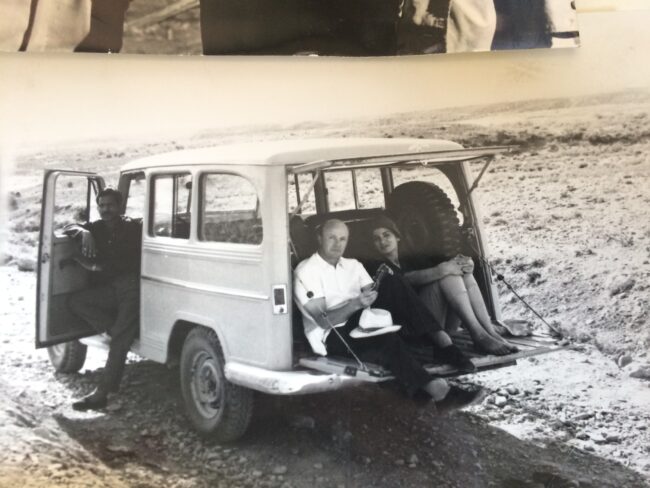
I had little expectation that David would reveal much about the events surrounding the Iranian Revolution in his memoir, and he passed away on June 27, 2020, before I could press him on the matter. He left me with many questions, including what to do with his unfinished memoir. During the following months, while helping his family to organize and sort through his office contents, I came upon clues to those facets of David’s life that had remained unexplored by our conversations: a picture of David standing next to Max Mallowan and Agatha Christie on a road trip through Iran; the letter of thanks Agatha wrote him after their voyage; a beautiful calligraphic decree signed by Queen Elizabeth II bestowing David with an OBE; a tin box filled with Cambridge racing medallions he had won as a college sprinter. There was a trove of mementos that reflected a more complex picture of David Stronach’s exquisitely full life than he had let on.
In addition to these high points and celebratory moments infusing his life’s “artifacts” (which generally reflected a certain joie de vivre), there was evidence of something darker, more tragic, that illuminated the aftereffects of the Iranian revolution on himself, his family and the international world of Iranian archaeology. It was like finding what had been meant to stay hidden away and forgotten, perhaps because it had been such a difficult time. Letters and documents from friends and colleagues bemoaned the state of archaeological sites that were suffering looting or destruction as a result of the chaos that followed the early days of the revolution, such as these minutes taken at one of the Institute’s meetings (documenting the state of affairs in 1979): “between Hamadan and Kermanshah [roads] are said to be unsafe and, as I heard from our site guard at Tepe Nush-e Jan, armed gangs of robbers descend at intervals on the villages of the Malayer plain. … It may not be possible to work at Tepe Nush-e Jan for some time to come.”
As intense and moving a past as these documents and photos described, they remained an incomplete record. I felt it was important to incorporate eye-witness accounts into the reconstruction of David’s life for the sake of accuracy. Luckily, there were many people willing to talk. Thanks to almost a dozen colleagues and family members, who all agreed to be interviewed about those early days of archaeology in Iran, David Stronach and British Archaeology in the Middle East — a memoir turned biography of the late archaeologist — was written.
These informative interviews, combined with the material evidence, tell a much deeper story of David Stronach and the British Institute of Persian Studies, one that was filled — in addition to the usual cheerful banter and happy-go-lucky tales — with great personal challenge and loss. It is only now, after having had the immense privilege of looking into a more complete picture of David Stronach’s life through the many-faceted lenses of his external world — colleagues, family and his archive of personal papers — that I appreciate the extent of his personal sacrifice in the quest to increase our understanding of the ancient Middle East.
Sabrina Maras is a former adjunct assistant professor in Near Eastern Studies and Art History at University of California, Berkeley, and author of David Stronach and British Archaeology in the Middle East, which has just been published by Bloomsbury UK.
How to cite this article:
Maras, S. 2026. “Reminiscing with David Stronach: A Magnificent Life in Archaeology“, The Ancient Near East Today 14.11. Accessed at: https://anetoday.org/reminiscing-with-david-stronach/.
Want to learn more?
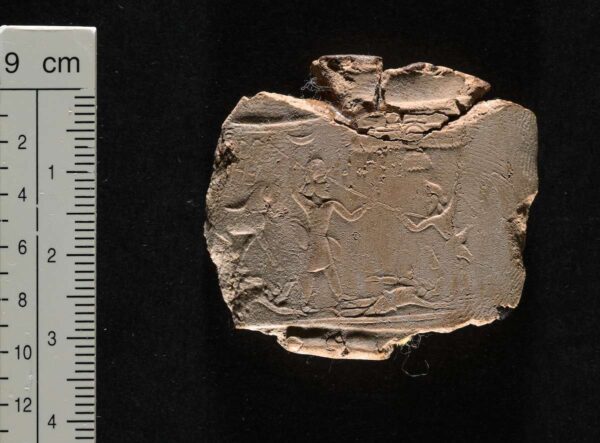
Cuneiform Written Artifacts and Missing Evidence in the Study of the Ancient Near East
Post a comment