Arabic Medieval Cookbooks in English Translation: Treasure Troves for Near Eastern Material Culture
MAY 2019 | Vol. 7.5
By Nawal Nasrallah
Many cultures produce cookbooks but the rich corpus that survived from the medieval Arab-Islamic world is unparalleled. Beginning in the ninth century, during the golden age of the Abbasid rule and its capital city of Baghdad, and ending with the foundation of the Ottoman Empire in the fifteenth century, no other contemporary western and eastern cultures produced as many cookbooks. This was made possible mainly by the rise of cultivated prosperous leisured classes, demanding gourmets, who indulged in luxuriously prepared foods, cooking activities, and in reading and writing about food in prose and poetry. Cookbooks and manuals were in great demand at the time, a trend that was further spurred by the flourishing of the papermaking and stationary businesses in Baghdad in the ninth century.
A large number of cookbooks were written during that epoch, as we gather from medieval sources like Ibn al-Nadīm’s tenth-century encyclopedic catalogue of books, al-Fihrist. But of these, only ten books survived the ravages of time. They hail from Baghdad, Aleppo, Damascus, Cairo, Morocco and Andalusia, and rang in scope from comprehensive full-fledged volumes to a meager 5-page pamphlet. Of these, I have translated several into English. They offer a unique and accessible window into the past.
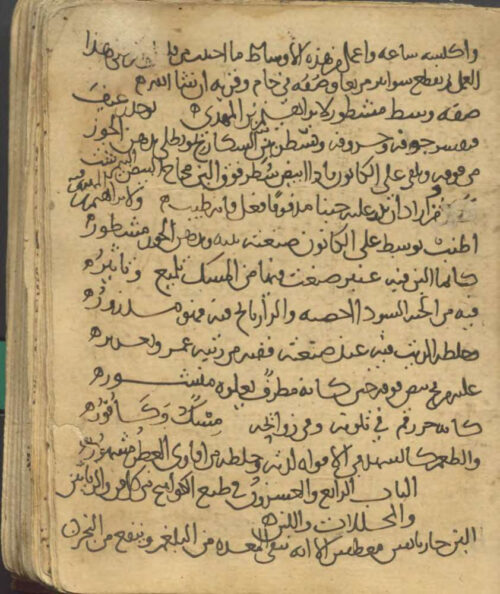
The first, plainly entitled Kitāb al-Ṭabīkh ‘cookery book,’ was compiled by one Ibn Sayyār al-Warrāq in the second half of the tenth century (Annals of the Caliphs’ Kitchens) in Abbasid Baghdad. It is by far the earliest cookbook that has come down to us from the Middle Ages, a culinary anthology commissioned by an unknown affluent patron, which aimed to describe the dishes and foods of caliphs, lords, and dignitaries, vast in scope and exhaustive in execution. The book was indeed designed to be like what we call today a ‘coffee-table cookbook,’ in which glamorous poems and amusing anecdotes interspersed with recipes served the same purpose as today’s food porn.
Folio from al-Warrāq’s Helsinki MS, showing a recipe of an open-faced sandwich followed by poem describing it. The National Library of Finland, signum Coll. 504.14.
With its 132 short chapters comprising more than 620 recipes, it spans the most characteristic dishes and beverages, and includes chapters on hand-washing preparations and proper table manners. It also dedicated numerous chapters on the properties of foods and regimen for a healthy living, all based on the dominant Galenic theory of the humors. What distinguishes it from the rest of the extant volumes is that the writer/compiler acknowledges his sources, more than twenty of them, written by or for caliphs, princes, physicians, prominent political and literary figures, professional cooks, confectioners, beverage makers, and the like. The value and the irony of all this is that none of the works al-Warrāq cited survived save the portions he included in his book; and none of the medieval biographies and book catalogues that acknowledged the existence of these cookbooks mentioned al-Warrāq or his book.
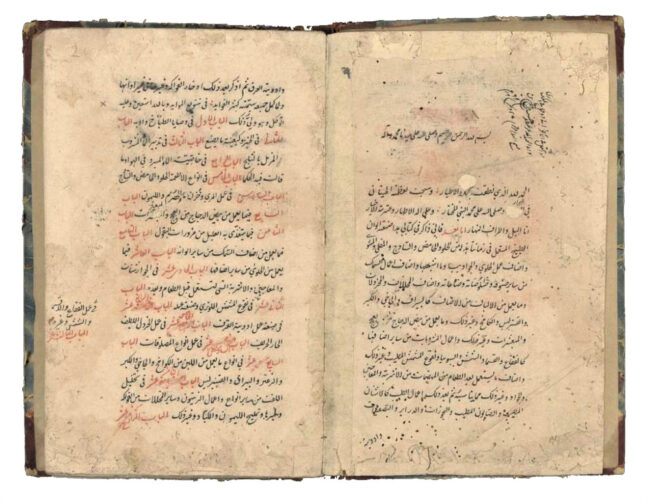
My second translation this time hails from Egypt. It was written during the Mamluk rule, when Cairo replaced Baghdad as a flourishing metropolis. Its title is Kanz al-Fawāʾid fī Tanwīʿ al-Mawāʾid, which translates to Treasure Trove of Benefits and Variety at the Table, compiled sometime during the fourteenth century, and its author is anonymous. It is the only surviving cookbook from Egypt and the last major culinary volume from the entire Arab-Islamic region that has come down to us before the Ottomans rose to power.
Wellcome Library, MS Arabic 260. CC By-4.0
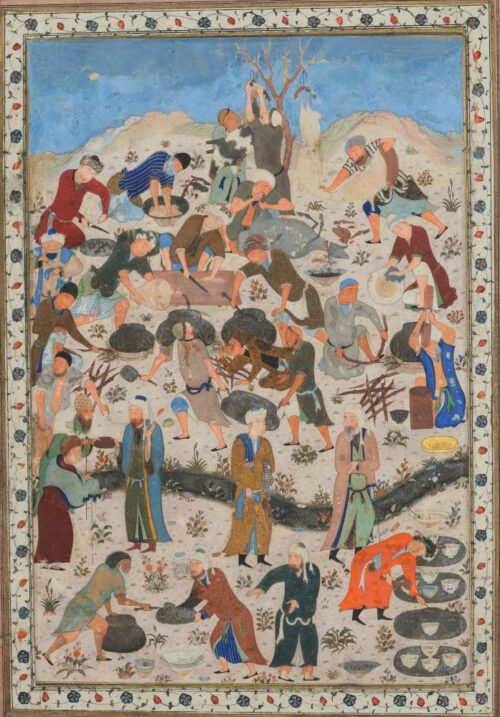
Like al-Warrāq’s, the book of Kanz is encyclopedic in scope, but in intent and execution it differs. To begin with, there is no indication that this Egyptian cookbook was commissioned. Men of letters of mainstream Egyptian society did not expect to receive the favors and patronages their peers enjoyed in previous ages. Instead, they had to earn their living. This book reads more like a practical cooking guide, devoid of any literary aspirations, and borrowed sources were not credited. The author’s intention was to put together a book that sells. Generally, cookbooks were not regarded as anelevated literary genre; nonetheless, they were sought-after commodities, read and used by apprentices, perhaps hired cooks or professionals at cooks’ shops, who might leaf through such books in search of some new and exciting ideas, and by household cooks.
Cooks at work. Folio from Divan of Jami, 52.20.4. Metropolitan Museum of Art, Joseph Pulitzer Bequest, 1952. Public Domain.
Judging from the six or so copies that have survived, it looks like it enjoyed good circulation, and for a good reason. Beginning with its catchy title. The kanz, ‘treasure,’ that the title promises is no mere rhetoric. With 23 extended chapters comprising a total of 830 recipes, the book is a dizzying compendium of recipes unprecedented in the medieval Arabic corpus.
One chapter contains a massive collection of 142 recipes of main dishes; it offers no less than ten dishes with sparrows, cherished in the entire region as snacks valued for their aphrodisiac properties. The book also offers the largest extant collection of fish recipes, 36 in all, and a unique collection of fourteen table sauces called, ṣulūṣāt (singular ṣalṣ), as well as cold dishes including eleven recipe for ḥimmaṣ kassā, the prototype of our modern hummus appetizer of crushed boiled chickpeas with tahini, and 75 recipes for pickles.
The sweets chapter with its 81 recipes is testimony to the abundance and affordability of sugar in the Egyptian markets, at a time when in Europe sugar was still a dear commodity used in small amounts in medicinal cures. Sugar and chicken in particular were combined in unfamiliar dishes that were recognized as being typically Egyptian by foreign visitors to the country. Whole chickens were fried and submerged in heavy syrup flavored with rosewater and enriched with crushed nuts. Like sugar, chicken was an affordable source of food, whose mass production was facilitated by means of the chicks’ factories, maʿmal al-dajāj, artificial incubators that were set up throughout Egypt.
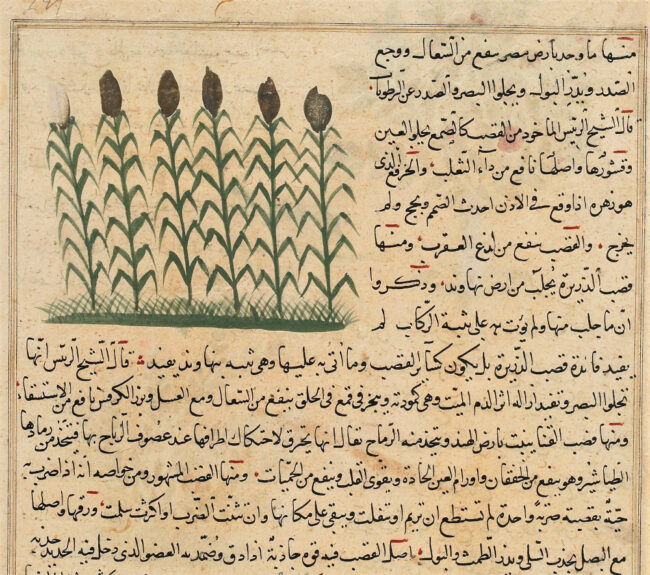
Sugar cane, one of the crops brought to Egypt by the spread of Islam. Muḥammad al-Qazwīnī, ʿAjāʾib al-Makhlūqāt, F1954.78v, detail. Freer Gallery of Art and Arthur M. Sackler Gallery, Smithsonian Institution, Washington, D.C.
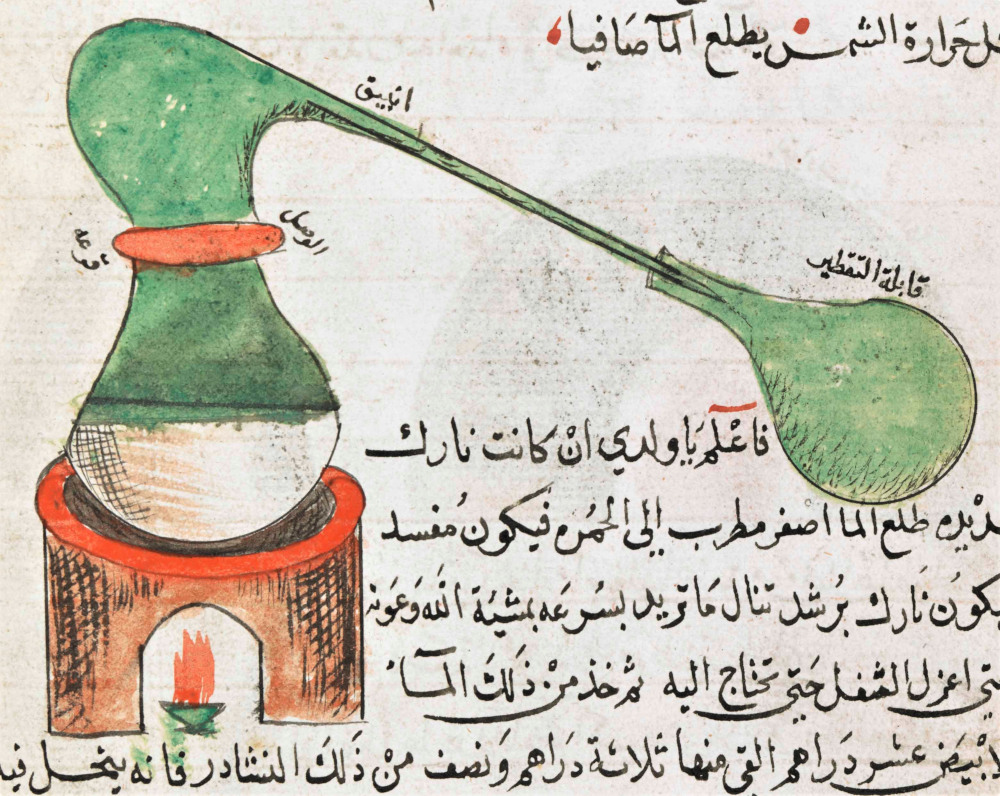
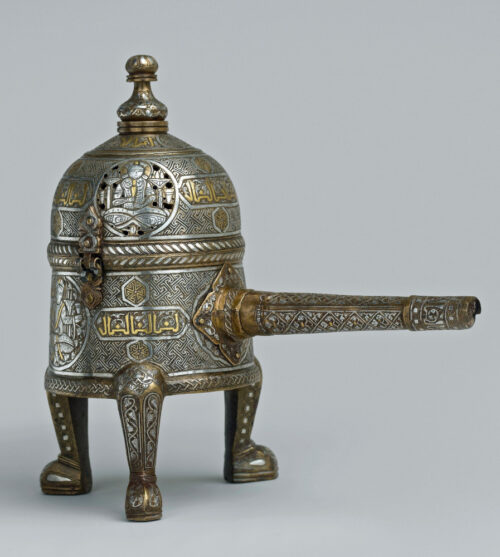
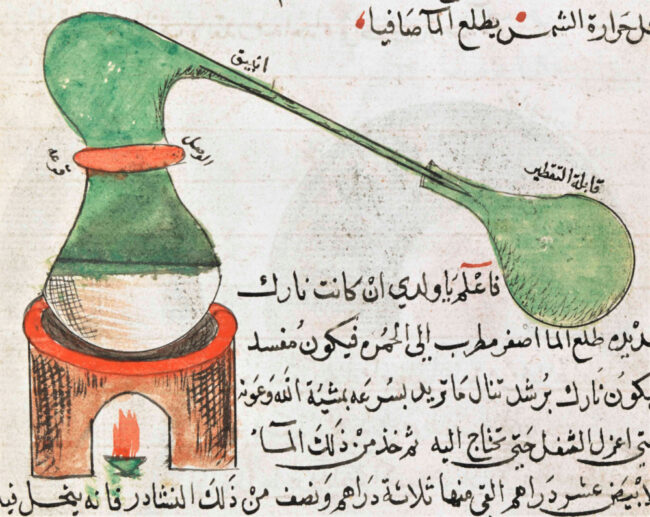
An impressive number of recipes are given for non-edible recipes related to personal hygiene, believed to be essential in maintaining one’s well-being, such as hand-washing preparations, and aromatic oils, incense, and potpourris to rid the dining areas of the lingering food odors. Recipes for deodorants, body powders, breath-fresheners, and formore than 30 recipes for aromatic and therapeutic distilled waters, are also included. Distilling waters appeared to have been prepared in the vicinities of the household kitchens using simple apparatus.
Incense burner, early fourteenth century, 17.190.1716. Metropolitan Museum of Art, Gift of J. Pierpont Morgan, 1917. Public Domain.
Distilling apparatus, Add. 25724, fol.36v. The British Library Board.
And speaking of kitchenware, no other culinary sources mention let alone describe an ingenious pot used for cooking stewed sparrows. It is touted as a highly effective aphrodisiac prepared and consumed by dignitaries during their long winter nights of camaraderie and carousing. The pot required for cooking this dish is described as being made of thin glass with a pontil or stem in the middle. The pot was placed on slow fire with the sparrows cooking with vegetables and chickpeas. In the dining area the simmering sparrows would move up and down in the pot for hours. It was meant to be like a ‘show,’ which the recipe describes as being even more fantastic and delightful than eating the dish itself.
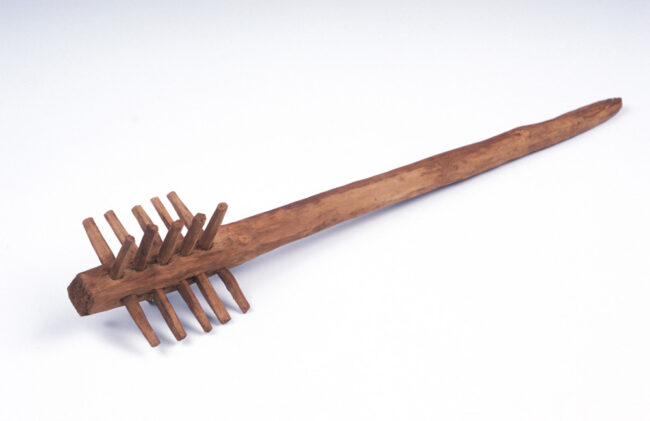
Or take the mifrāk, a tool used in one of the Kanz recipes, our only source; not even the lexicons, past and present mention it. Looking for a clue on the Internet, I was pleasantly surprised to see a similar tool with the same name being used nowadays in southern Egypt and Sudan to blend the okra dish called wīka and whip the traditional stew of mulūkhiyya (Jew’s mallow). What’s even more amazing is that a similar tool was excavated in Egypt, which belongs to the Graeco-Roman Period.
Ancient Egyptian mifrāk (blender), Graeco-Roman Period. Bibliotheca Alexandrina Antiquities Museum, photo by Christoph Gerigk.
Such is the value of cookbooks like Kitāb al-Ṭabīkh and theTreasure Trove; they bridge the ancient past with its gastronomic riches with the present; and enrich our knowledge of material culture during their most prosperous phases. In my capacity as a translator, I did my best to connect text to context by supplementing each text with a comprehensive introduction and an extended glossary and illustrations to initiate the readers into the world of each text.It is to be hoped that building reliably solid knowledge of the Arab cuisine may well lead to better understanding of Arab culture and its complex role in the global issues, past and present.
Here are modernized versions of a couple of recipes I found in the Egyptian book (recipe 613 for the condiment, and 300 for the cookies)
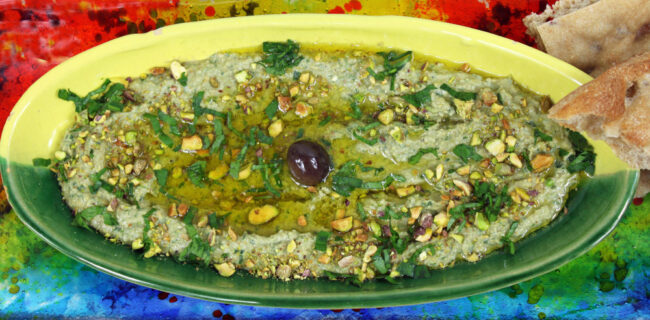
Ḥimmaṣ Kassā
ḥimmaṣ kassā. Photo by Nawal Nasrallah.
Green Dip of Mashed Chickpeas with Tahini
(Makes 4 servings)
This is the precursor of today’s ubiquitous condiment of hummus bi-ṭaḥīna.
1 cup boiled chickpeas
2 tablespoons tahini, stirred with water and wine vinegar, 2 tablespoons of each
¼ cup finely ground walnut, stirred with 2 tablespoons lemon juice, and 1 teaspoon wine vinegar
½ cup chopped parsley
¼ cup chopped mint
3 tablespoons olive oil
¼ teaspoon of each of caraway, coriander, black pepper, ginger, and cinnamon, all ground
½ teaspoon salt
A quarter of a salted lemon (see this recipe), cut into small pieces
For garnish: olive oil, coarsely crushed pistachio, chopped parsley, and cinnamon
Put all the ingredients, except for the salted lemon and the garnishes, in a food processor, and pulse the mix until it looks smooth. It should look green; add more of the herbs if needed. In consistency, it should be thick enough to pick up with a piece of bread. Add a bit more lemon juice if needed. Fold in the chopped salted lemon.
To serve the dish, spread the condiment on a plate and drizzle a generous amount of olive oil all over its face. Garnish it with the chopped parsley and crushed pistachio, and give it a light sprinkle of cinnamon.
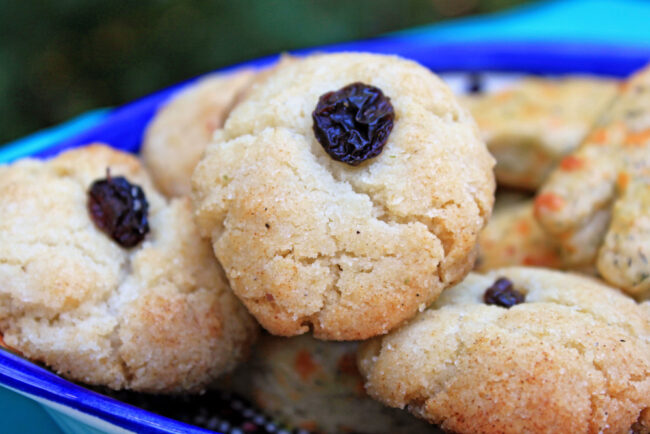
Nuhūd al-ʿAdhārī
Virgins’ breasts. Photo by Nawal Nasrallah.
Virgins’ Breasts
(Makes 20 cookies)
Scrumptious cookies, which seemed to have been popular in medieval times. The recipe does not explain how they are exactly shaped. Studding them with raisins is my improvisation.
1 cup white all-purpose flour
1 cup finely ground almonds (or almond flour)
¾ cup sugar
1 teaspoon baking powder
½ teaspoon ground cardamom
A pinch of salt
½ cup oil (such as canola)
3 tablespoons rosewater
20 raisins
Put the dry ingredients (the first six ones) in a food processor and pulse once or twice to mix them. Add oil slowly through the tube, and pulse a few more times. Add rosewater, and pulse several times until the mix clumps together. Add a bit more if needed.
Take a walnut-size piece, roll it by hand into a ball and place it on a lightly oiled cookie sheet. Slightly moisten your hands with a bit of rosewater while handling the mix. Repeat with the rest of pieces, leaving a space between them. Press a raisin in the middle of each piece, and bake them in the middle shelf of a preheated oven (375 F.) for about 13 minutes (do not let them over bake). Finish the baking in the top shelf of the oven during the last two minutes.
Nasrallah, N. 2019. “Arabic Medieval Cookbooks in English Translation:Treasure Troves for Near Eastern Material Culture“, The Ancient Near East Today 7.5. Accessed at: https://anetoday.org/arabic-medieval-cookbooks/.


Post a comment