The Golden Pome: The Pomegranate from its Deepest Roots to Modern Culture
february 2019 | Vol. 7.2
By Federica Spagnoli
At the end of summer, before the winter cold arrives, pomegranates ripen. The antioxidant, anti-inflammatory, and anti-aging properties contained in its juice and skin make this fruit an important prophylaxis. Pomegranate has always been a symbol of seasons and of health, associated with the divine power to regenerate life, often appearing as attribute of deities such as Ishtar, Astarte, Hera, Demeter, and the Virgin Mary.
The pomegranate is attested in ancient Elam during the 4th millennium BCE, and then spread to the rest of the Near East, with the original shrub (Punica protopunica L.) reaching Mesopotamia, Anatolia, Syria, and Palestine by the end of the 3rd millennium. Sumerians appear to have been involved in domestication of the pomegranate (Punica granatum L.), and the fruit quickly became an important symbol. The brilliant red and yellow of its skin, the blood-red juice and its healthy properties, make the pomegranate create associations with human fertility, and thus life and death. In ancient Mesopotamian art pomegranates are often represented with the deities of fertility, fecundity, and abundance.
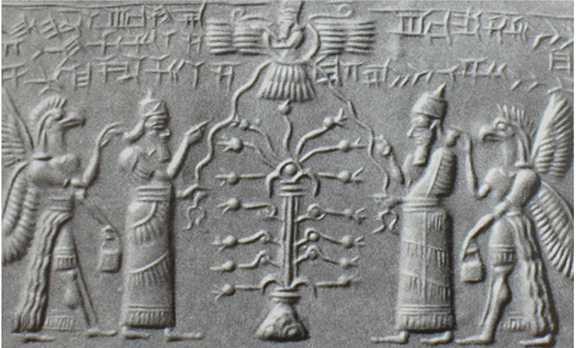
Neo-Assyrian Cylinder seal impression showing a couple of kings and eagle-headed winged genies performing ritual aspersion of a pomegranate bush as Tree of Life. Image courtesy of the Author.
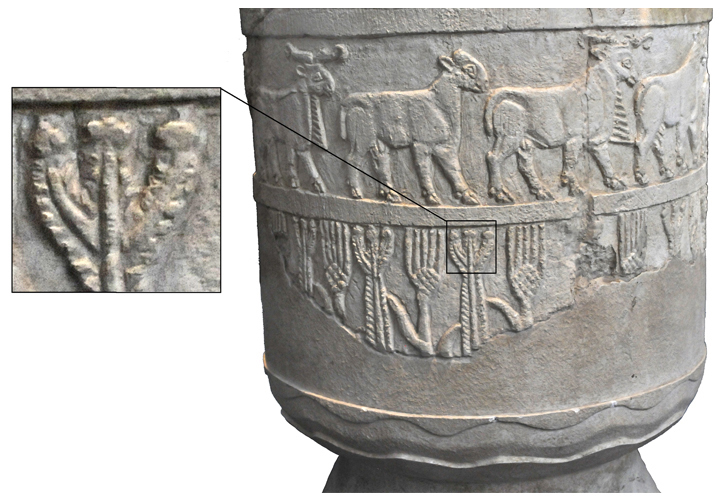
Carved alabaster vase from Uruk-Warka (3500-3300 BCE); in the lower register three branches pomegranate trees. Image courtesy of the Author.
Pomegranate seeds were found in the principal cities of the 3rd millennium BC Syria-Palestine, as Ebla and Jericho, andthe spread of pomegranate in the Levant continuedduring 2nd millennium BCE. The recovery of numerous pomegranate seeds, skin fragments and flower parts from the late 14th century BCEUluburun shipwreck, a Syrian cargo ship sunk near the southern coast of Anatolia, confirms that it was a luxury item destined to the urban élites.The spread of the pomegranate plant and its religious symbolism and use in 14th century BCE Cyprus and Aegean is thus probably due to Canaanite and Syrian trade.
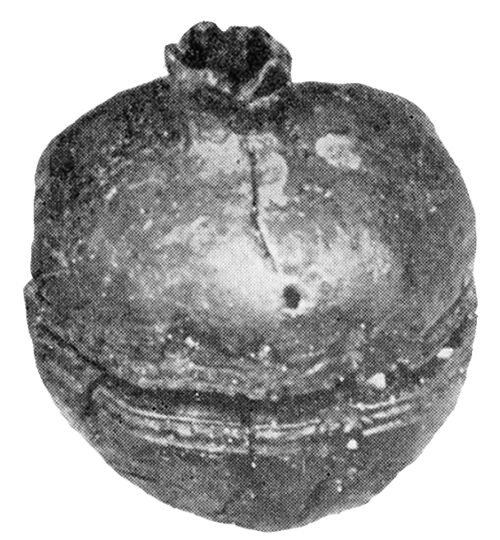
Pomegranate-shaped wooden box from Tomb B35 at Jericho (1700-1650 BCE). Image courtesy of the Author.
By the beginning of the 1st millennium BCE,the pomegranate is found especially in funerary contexts in the Levant, and it also achieves further symbolic value connected to kingship. Its image continues to be reproduced on textiles, wood, ivory, precious metals, as well as in symbolic ornaments.The Bible provides several interesting references to pomegranate (Hebrewrimmon). The earliest is in the Book of Exodus (28:33-34 and 39:24-26) and refers to tying blue, purple and scarlet yarns in the shape of pomegranates to embellish the hem of a priestly robe that alternated with golden bells. Similar decoration characterized Near Eastern élites’ robes since the 2nd millennium BCE, as shown by OldSyrian and OldBabylonian royal statuary. The same kind of decoration might be detected in modern fringes, like those of the kheffiyeh.Pomegranate is listed among the fruitful plants of the Promised Land in the Book of Deuteronomy (8:8-7), and garlands of bronze pomegranates encircled the top of the pillars flanking the entrance of Solomon’s Temple in Jerusalem built by Phoenician architects and artisans (1 King 7:18-20).
Ivory replicas of pomegranate from the Tomb of Tutankhamon. Image courtesy of the Author.
During the 2nd millennium BCE, the pomegranate was an exotic fruit for urban aristocracies of the Near Eastand was exchanged as a luxury item, but it also had strong symbolic value both in the sacred and funeral spheres.The same symbolism is transmitted to the Greek culture at the beginning of the 1st millennium BCE. Even though the pomegranate tree was already cultivated in Greece, in the local literary tradition it continues to be regarded as coming from far off territories and mythical places. For example, the Odesseyrelated that in the luxuriant garden of the palace of Alcinous King of Phaeacians, pomegranate is one of the fruit trees, along with pears, apples, figs and olives, that bears fruits all year round.The pomegranate is also the fruit of the netherworld in the myth of Demeter and Persephone/Kore. In 7th and 6th century BCE the pomegranate appears as a standard element of Greek aristocratic tombs, both as agrave good or depicted on funerary vases.
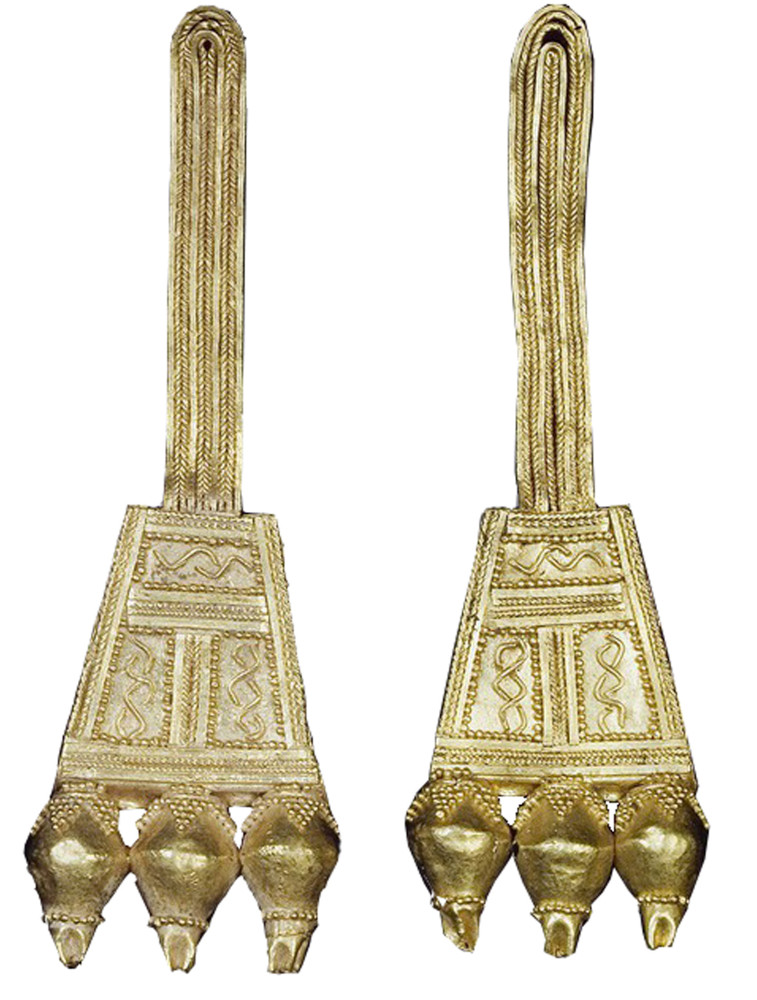
Golden earrings from the tomb of the Rich Lady of Areiopagus, Athens, (mid-8th century BCE). Image courtesy of the Author.
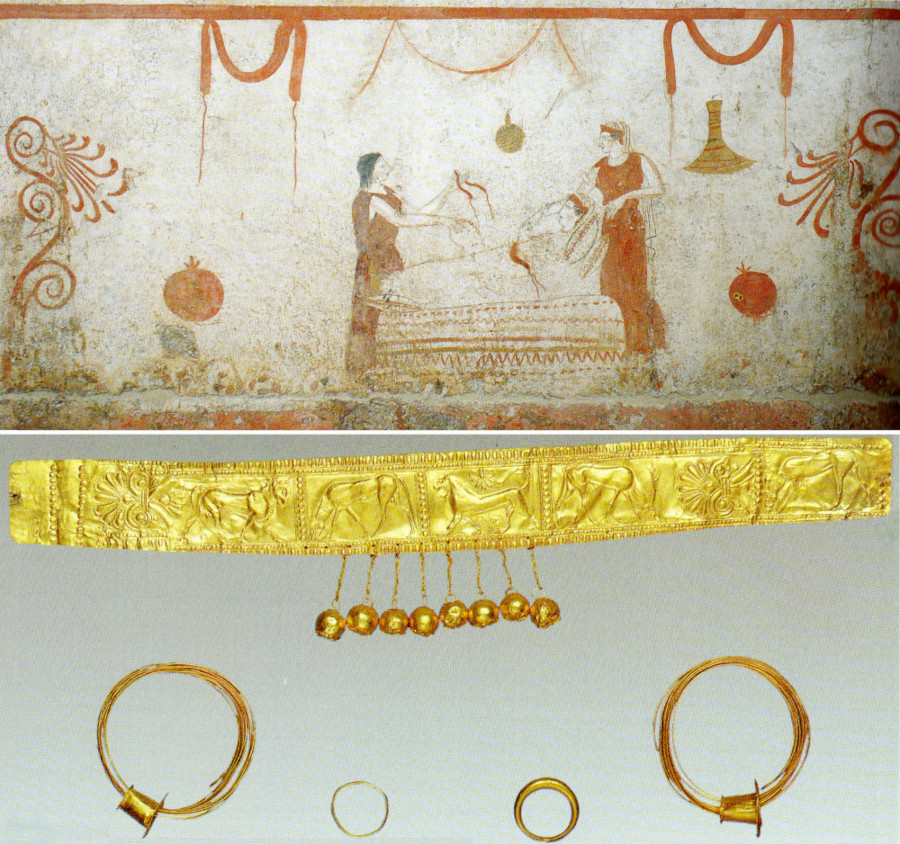
From the top: Paestum (SA), Tomb 87 of Spina Gaudo (4th century BC); Braida del Vaglio (PZ), jewels from Tomb 102 (6th century BCE). Image courtesy of the Author.
The pomegranate is represented as an attribute of the goddesses Hera, Artemis, and even Athena. In Greek culture, the pomegranate was thus the symbol of deities responsible for nature and the reproduction of human, animals, and plants.
In Minoan and Mycenaean traditions the pomegranate is linked to the cult of the Meteres, the ancestral deities of nature and fertility. These concepts are later transmitted in Greek mythology to Demeter, the goddess of nature and the harvest, and to her daughter Persephone. The pomegranate has a central role in the mythologies of these goddesses; it is the element that links with Hades, triggering Persephone’s reappearance on earth, and thus indirectly, the cycle of the seasons. The pomegranate blooms at the beginning of the summer and its fruits ripen by the autumn, matching the return of Persephone to Hades and the lethargy of winter. The pomegranate represents the seasonal passage and the seasons of human life.
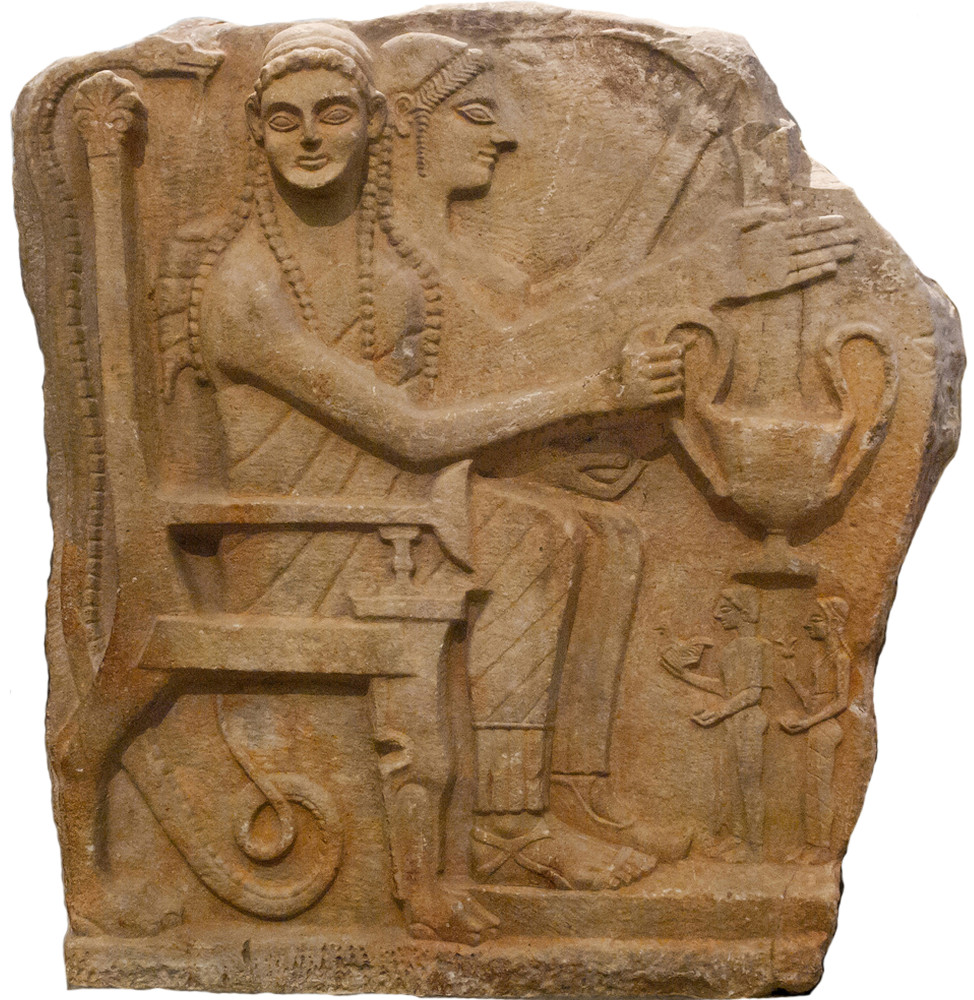
Funerary relief from Chrysapha (Sparta), probably representing enthroned Hades and Persephone/Kore. The goddess holds a pomegranate in her right hand (550-540 BCE). Image courtesy of the Author.
But pomegranates also symbolize renewal and rebirth. In Mycenean and later Greek mythology, Hera, wife of Zeus, receives a tree of golden pomes (μῆλη), probably pomegranates, which gave the gift of immortality, guardedby the nymphsHesperides at the Western border of the world. The pomegranate isone of the most common attributes of Hera in Western Mediterranean, especially in Southern Italy, where the goddess was widely worshipped.
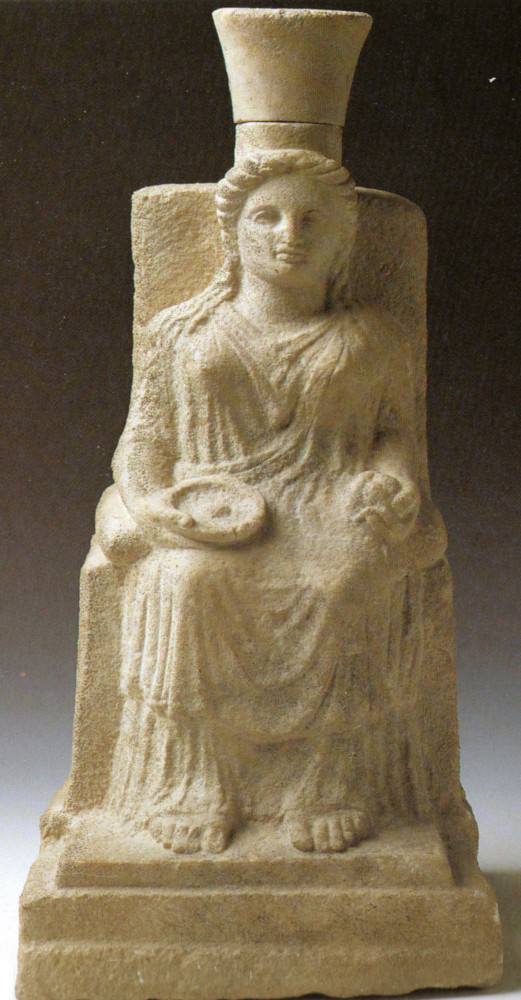
Seated limestone statue of the Goddess Hera holding a patera and a pomegranate from the Hearion by the mouth of river Sele, not far away from Capaccio in the Salerno/Paestum Plain (4th-3rd century BCE). Image courtesy of the Author.
It is probable that the diffusion of pomegranate in western Mediterranean is due to Phoenician expansion around the 10th century BCE, with Phoenician colonists carrying the fruit, and its symbolism. Pomegranates first reached Sicily, the Iberian Peninsula and North Africa, and then the Etruscan and Roman worlds.
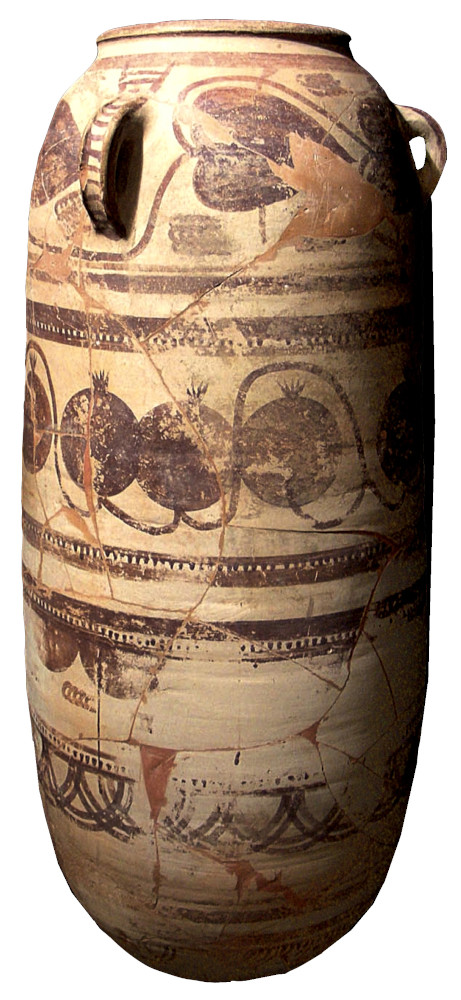
Coimbra de Barranco Ancho (Jumilla), Punic amphora painted in red with a pomegranate garland (5th century BCE). Image courtesy of the Author.
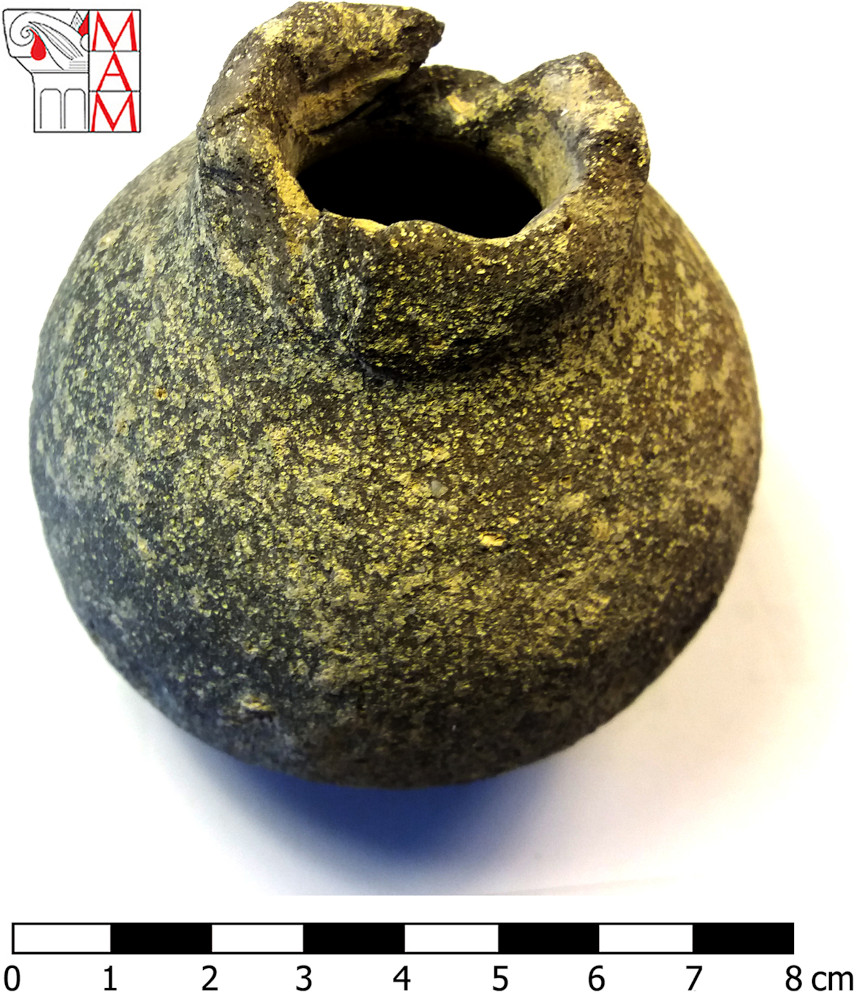
One of the earliest attestation of the pomegranate in Sicily in an 8th century BCE cultic context at Motya. A pomegranate shaped vase was also found inside the Temple of Astarte Aglaia(bright) as a votive offering. Pomegranates are so far absent in 7th and 6th century Phoenician tombs in Sicily but are widespread in the 5th century as both funerary goods and iconography.
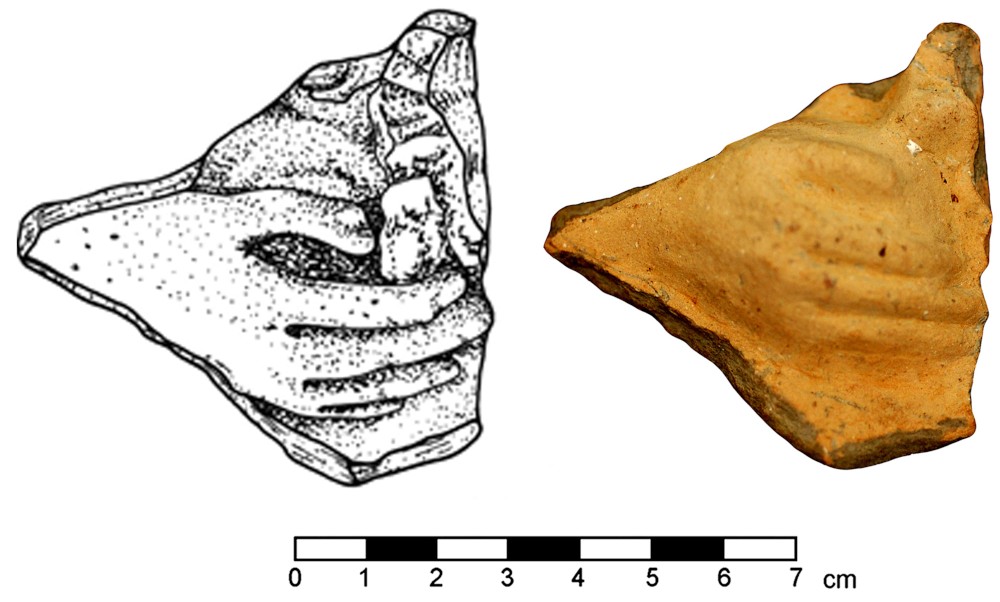
Motya (Sicily), fragment of a terracotta plaquette representing a female hand holding a pomegranate, found in the sacred Area of the Kothon (5th century BCE). Image courtesy of the Author.
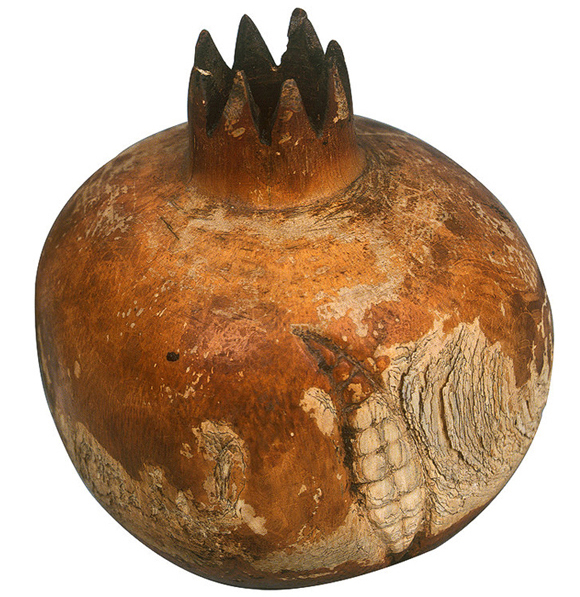
Pomegranate vase found inside the Temple of Astarte Aglaia at Motya (750-675 BCE). Image courtesy of the Author.
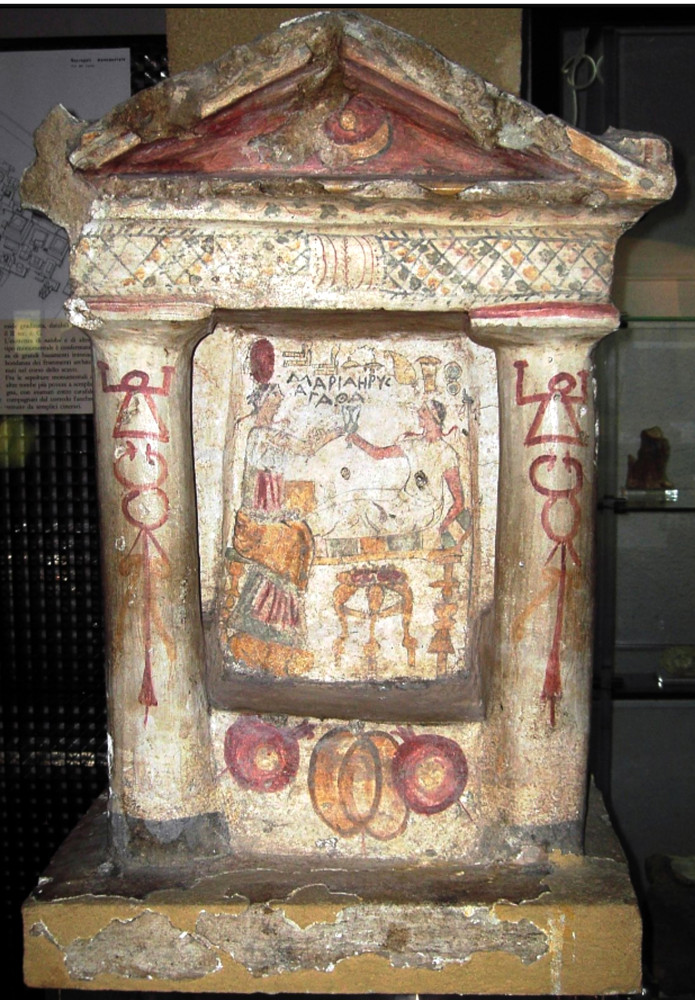
Lilybaeum (Marsala). Punic funerary stelae illustrating a scene of banquet and decorated on the basis with pomegranates and a quince (2nd century BCE). Image courtesy of the Author.
Over millennia, from the Near East to the western Mediterranean, the pomegranate had a major role in the economy and symbolic life of different cultures. Along with grapes and figs, pomegranates became central fruits of Levantine, Aegean, and Mediterranean societies, as well as common symbols of rebirth and fecundity. It was also considered a divine fruit connected with power, passing from the hands of gods to kings.
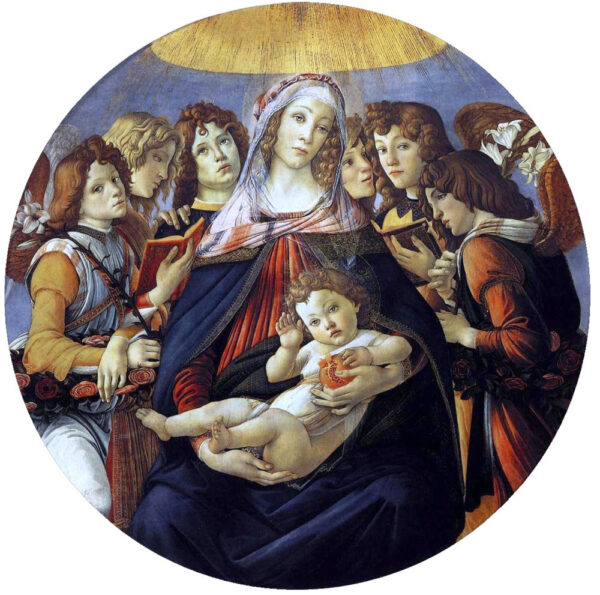
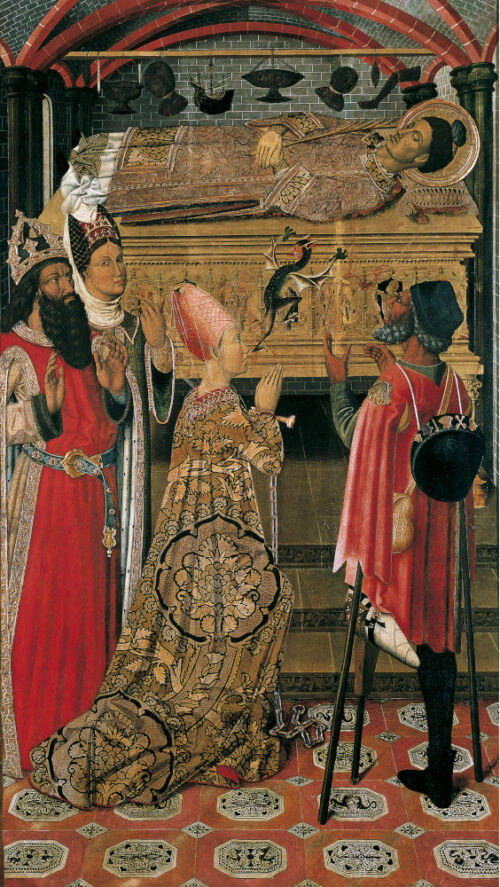
Phoenicians and Carthaginians played a central role transmitting the fruit and its Near Eastern meanings to the West, and at the same time merging them with ideas from the Aegean. The golden pome thus became a symbol of health, prosperity and power that continues until today. The sanctuary of the “Madonna del Granato” at Capaccio near Salerno was erected on a Temple of Hera. There, the Holy Mary is portrayed in a painted statue replicating the sacred gesture of the ancient Greek deity. This association appears throughout Medieval and especially Renaissance art, epitomized by Botticelli’s “Madonna dellamelagrana”, and the sumptuous role of Princess Eudoxia decorated with pomegranate blossoms from the end of the 15th century BCE. Pomegranates continue to appear in contemporary art, such as Salvador Dalí’s 1944 painting “Dream Caused by the Flight of a Bee Around a Pomegranate a Second Before Awakening, where the fruit once again represents the return to life after a peaceful sleep.
Firenze, Galleria degli Uffizi Sandro Botticelli, “La Madonna della melagrana”, 1487, tempera on wood panel.
Barcelona, Museu Nacional d’Art de Catalunya, “Princess Eudoxia before the tomb of Saint Stephen”, 1495-1500, tempera, stucco reliefs and gold leaf on wood panel.
Federica Spagnoliis a facultymember in the Istituto Italiano di Studi Orientali– ISO atSapienza Università di Roma.
How to cite this article:
Spagnoli, F. 2019. “The Golden Pome: The Pomegranate from its Deepest Roots to Modern Culture“, The Ancient Near East Today 7.2. Accessed at: https://anetoday.org/pomegranate-symbolism-ritual/.





Post a comment