Counterfeiting and Fake Dyes in the Clothing Industry from the Roman Period
October 2019 | Vol. 7.10
By Naama Sukenik
Clothing in ancient times wasused formuch more than protection from the elements.The garment was an important means of identification and social communication,and color played a vital role. The significance of color was reinforced during the Roman period when a strict dress code was upheld.But then, as now,a counterfeit industrydeveloped alongside the legitimate industry.
In antiquity, most various plants and animals were the sources of dyestuffs that could yield a wide spectrum of colors. Whilesome were common and relatively inexpensiveingredients, others, especially those from animal sources, were considered more prestigious.The color and dyestuffs indicate technological abilities, patterns of daily life and fashion, trade and politics, as well asindividual economic and social status.
In recent years, advanced analytical tools like high-performance liquid chromatographyhave been used to identify the dyes in archaeological textiles. Thesehave provided new insights about the scope of the phenomenon of counterfeiting dyes in the ancient textile industry.
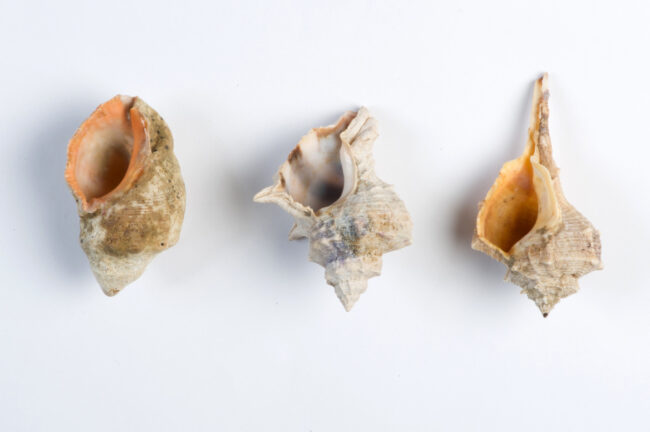
Purple,produced primarily from three species of sea mollusks of the Muricidae family, was considered the most prestigious color in antiquity.
The main species of sea mollusks to produce the ‘true purple’ in the antient time (from the right): Stramonita haemastoma, Hexaplex trunculus and Bolinus brandaris (Photo: Shahar Cohen, courtesy of Prof. Zohar Amar)
The beautiful color produced by this dye, the fact that it does not fade, as well as the complex dyeing process which includes reduction and oxidation processes, made it desirable in the eyes of many and was one of the most important means of identifying high rank in Roman society.
Although the use of murex mollusks for dye began in the Early Bronze Age, it appears that during the Hellenistic and Roman periodsthe popularity of purple dye grew as never before. This tendency became stronger after an edict was issued prohibiting the public from wearing purple, thereby making it exclusive to the Emperor and his family. This prohibition made purple dye even more popular among the public. According to the Edict of Maximum, in 301 CEthe price of purple–dyed textiles could be as high as the price of gold. Frescoes, mosaic floors, and other discoveries from the Roman world also affirm that purple was the most popular color for decorative elements in clothing. The favorite color indecorative textilesfrom the Roman period were shades ranging from intense purple to Bordeaux red,which indicate the popularity of purple hues.
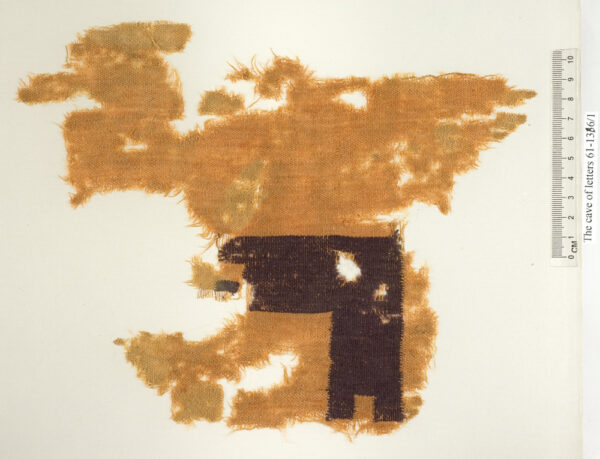
Textile fragment with gamma shape colored in purple hue. Wool, Cave of Letters, Roman period (Photo by Clara Amit, Courtesy of the Israel Antiquities Authority)
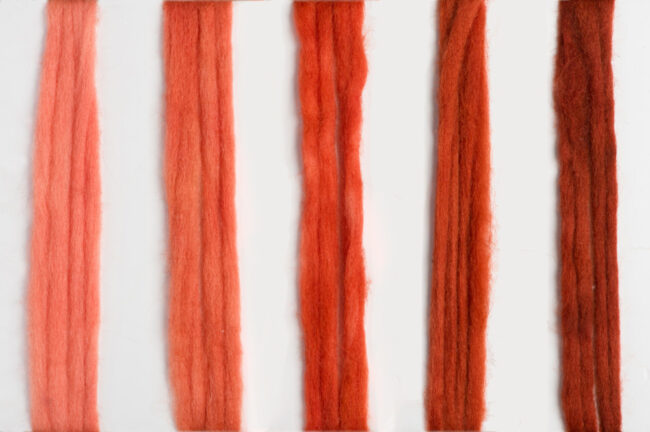
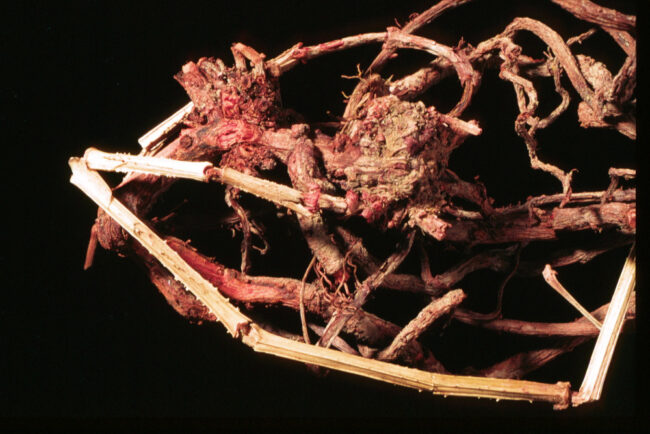
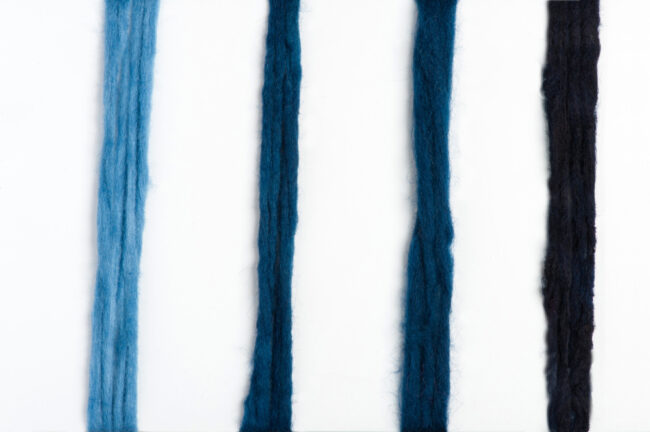
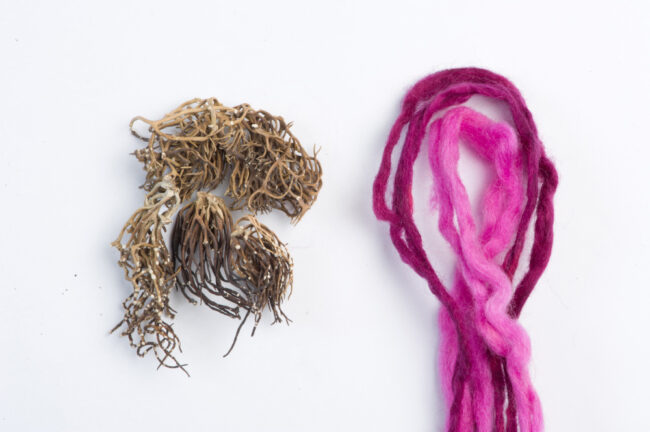
But analyses of textile fragments from various sites in Israel, including the Cave of Letters, Masada and the caves of Murabbaʿat in the Judean desert, as well as Ein Rachel and Moʼa in the Negev, have shown that in most casesthe purple shade was not produced using murex snails. In most of cases, the color was obtained by double dyeing in different dye solutions derived from two plants that were common agricultural crops in the Land of Israel. These are mentioned many times in Jewish sources: madder (Rubia tinctorum L.; see Fig. 3), whose roots are used to produce a red color (see fig 4), and woad (Isatis tinctoria L.), a plant containing indigotin that was used during the Roman period to obtain a blue color (see Fig. 5 ).
Wool fleeces dyed with Madder (R. tinctorum L.) roots, at different times of cooking and soaking (Dyed by Sukenik, Photo: Shahar Cohen, courtesy of Prof. Zohar Amar).
Roots of the dyer’s madder used to produce the red pigment (Photo: Shahar Cohen, courtesy of Prof. Zohar Amar)
Wool fleeces dyed with Isatis, at different times of cooking and soaking (Dyed by Sukenik, Photo: Shahar Cohen, courtesy of Prof. Zohar Amar).
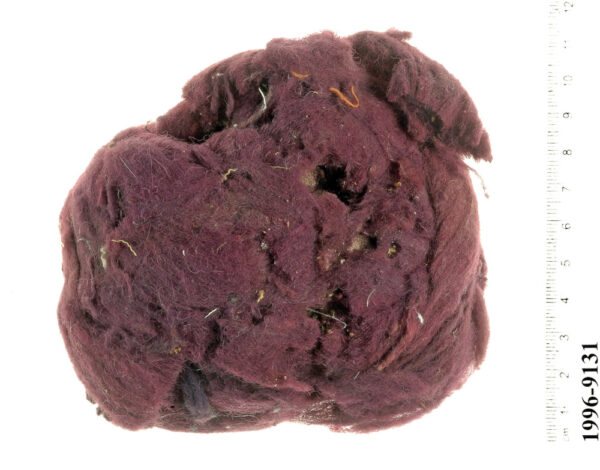
The double–dyeing technique requires great accuracy and prolongs the dyeing process but is still much easier and cheaper than thedyeing withtrue purple. This phenomenon was found in most of the purple textiles include the purple fleece that was found in the Cave of Letters.
The purple fleece made by double dyeing with Madder and Indigotin to imitate the True Purple. The cave of Letters, Israel, Roman period (Photo by Clara Amit, Courtesy of the Israel Antiquities Authority)
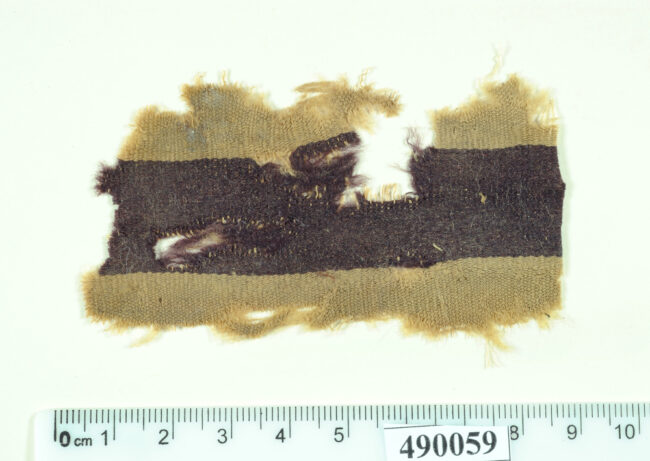
In most cases, the imitation dye was of such high quality that it was difficult to distinguish between textiles dyed in molluscan purple and those dyed with a much cheaper substitute—only advanced analytical methods enable identification.
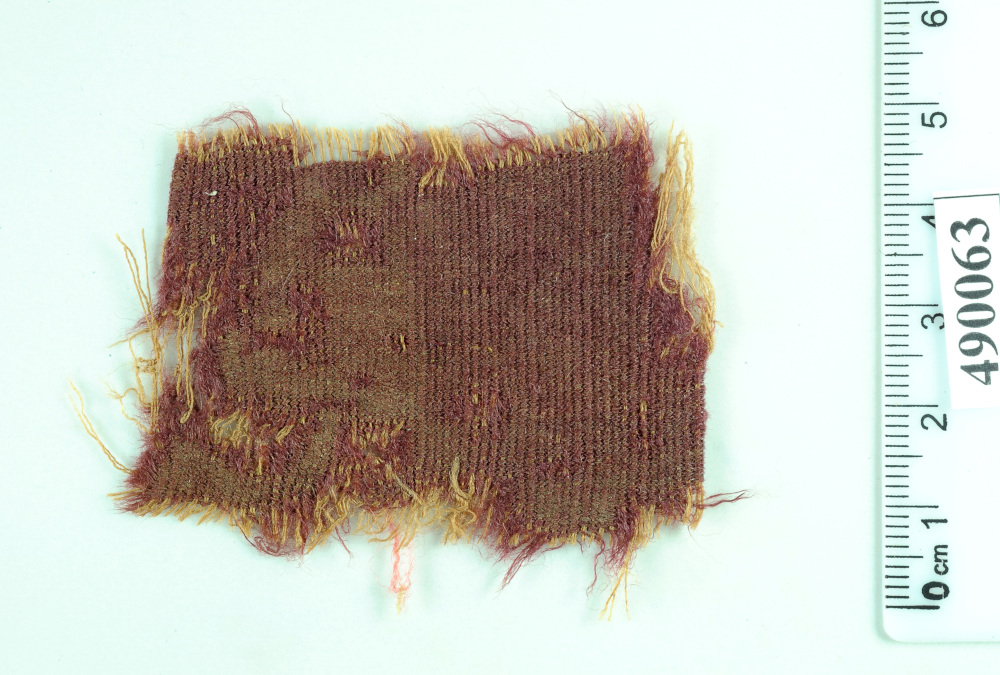
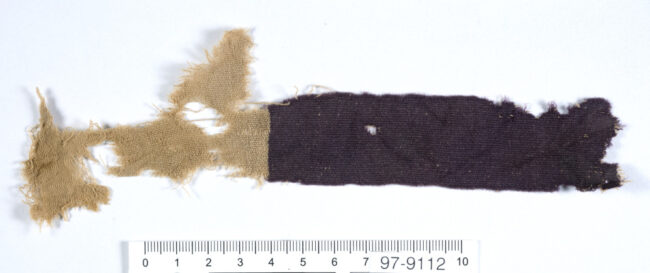
Textile fragment with purple band dyed using vegetal indigotin and madder in a double dyeing method. Murabba’at cave, Roman period (Photo by Clara Amit, Courtesy of the Israel Antiquities Authority)
Only a small number of textiles have been found in Israel that were dyed with true purple. These textiles, discovered at Masada and the Murabbaʿatcave, indicate that the use of the true purple dye was still limited to individuals of high social standing, while the cheaper and more readily available substitutes were common among the general population.
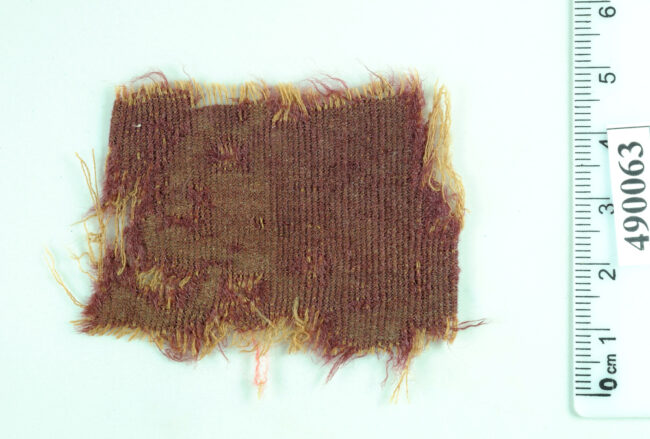
Fragment of purple textile dyed with true purple that produced from murex snail and Cochineal insects. Wool, Murabba’at caves, Roman period (Photo by Clara Amit, Courtesy of the Israel Antiquities Authority)
The phenomenon of purple imitation is not unique only to the Land of Israel but was prevalent throughout the Roman world and was found in places such as Palmyra and Dura Europos in Syria, Berenice in Egypt, and Khirbat Qazone in Jordan.
Thedouble–dyeing technique that has beenfound in archaeological textiles to imitate the purple color wasmentioned in the Stockholm Papyrus, datingfrom the 3rd century CE. ThisEgyptian papyrus contains 154 dye recipes, many of which are concerned with the production of purple dye counterfeits. The papyrus includes othermethods,indicating that even in the purple dye counterfeiting industry, there were degrees of imitation.For example, the fake purple dye manufactured from lichen (Rocellatinctoria L.), which grew on the Canary Islands on cliffs near the sea, gives a beautiful color.
Wool dyed using Roccella tinctoria (Dyed by Sukenik. Photo: Shahar Cohen, courtesy of Prof. Zohar Amar)
Another recipe recorded in the Papyrus Holm includes double dying with the use of woad (Isatis tinctoria L.), which yields a blue color, and the Kermes insect, from whose body a valuable red dye, as were found in Ein Racḥel.
Textile fragment with purple band made by double dyeing with kermes insects and indigo to imitate the ‘true purple’ (Photo by Clara Amit, Courtesy of the Israel Antiquities Authority)
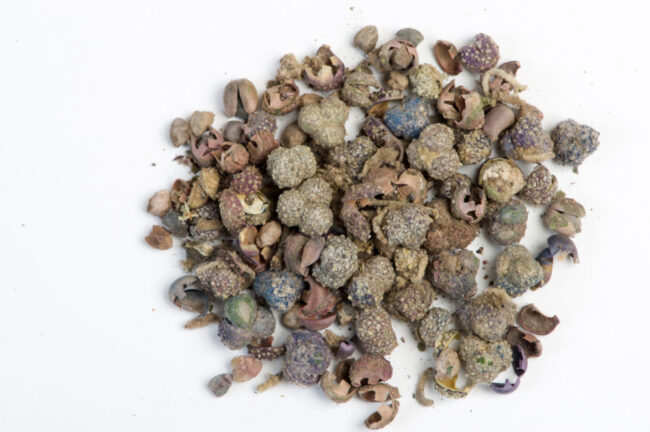
Other materials were derived fromcommonplants such as alkanet (Alkannatinctoria L.)and turnsole (Chrozophoratinctoria L.),which, in reconstructions of the dyeing process, produce a color that is less impressive and less resistant to washing and solar exposure.
Fruits of turnsole plant that used to imitate the purple color (Photo: Shahar Cohen, courtesy of Prof. Zohar Amar)
A similar phenomenon of counterfeiting dyesalso aroseregarding insect dyes, the next most prestigious dye source after true purple. This color, which gives off a red-orange color, is mentioned in the Bible many times along with purple and known in Jewish sources as “tola’atshani”(scarlet dye). This red-orange coloring is produced from the female kermes insect (Kermes vermilio),a scaled insectthat breeds on the branches and leaves of certain oak trees from the coasts of Mediterranean and Europe.
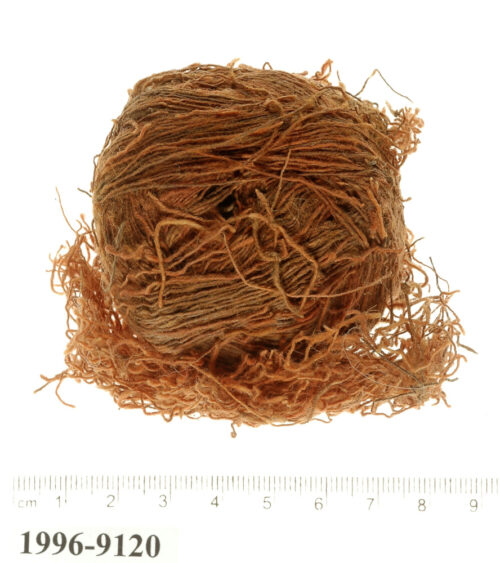
Analysis of orange color textiles includingthe skein wool from the Cave of the Letter,(fig 12) indicates that in most of the cases the orange hue as produced by double dyeing, using madder (Rubia tinctorum L.) and weld (Reseda luteola L.). It is possible that the effort that was made to achieve the orange hue attest to an attempt to imitate the use of the highlyprized Oak kermes, in the same way of the imitation purple.
Skein of wool made by double dyeing with Madder and Weld to imitate the 'tola'at shani’
(Photo by Clara Amit, Courtesy of the Israel Antiquities Authority)
Like today’s fashion industry, where ‘knock offs’ and fakes abound, it seems that during the Roman period the demand for luxury hues was so great that counterfeit dyes were created from vegetable dyes. An industry of imitations purple and scarlet dyesbrought approximations of these prestige colors to the masses at a low cost.
Naama Sukenik is a curator of organic materials in the Israel Antiquities Authority.
For further reading:
Naama Sukenik ‘A 2000 Year-Old Counterfeiting Industry’, In: Oree Meiri, Yehuda Kaplan and Yigal Bloch, Out of the Blue, Bible Land Museum: Jerusalem, Pp. 100-118.
How to cite this article:
Sukenik, N. 2019. “Counterfeiting and Fake Dyes in the Clothing Industry from the Roman Period“, The Ancient Near East Today 7.10. Accessed at: https://anetoday.org/fake-clothing-dyes-roman/.


Post a comment