Peqi‘in Cave—A Unique Chalcolithic Cemetery in the Southern Levant
May 2019 | Vol. 7.5
By Dina Shalem
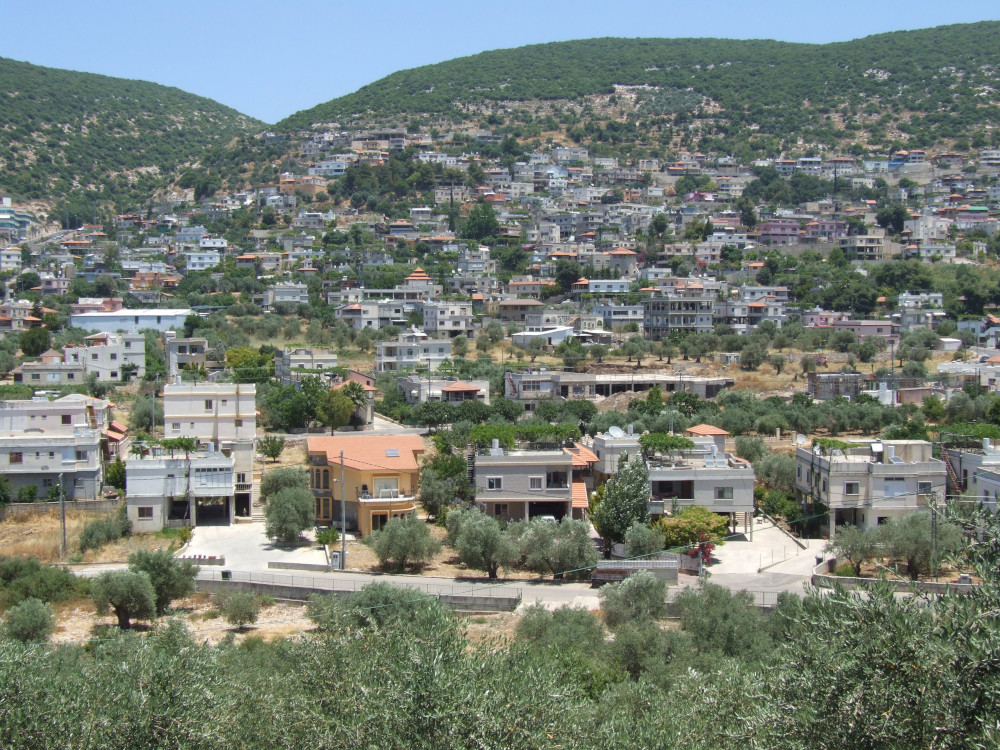
In the middle of the 5th millennium BCE people in the southern Levant began an extraordinary burial tradition—secondary burials in decorated ceramic ossuaries or other vessels, which were placed in cemeteries, usually caves, located outside the settlements. These burial sites were found mainly in the coast of modern Israel, but also in interior part of the country, as far south as the northern Negev. The northernmost burial site—a natural cave with stalagmites and stalactites—is located in Peqi‘in village in a mountainous region of the Upper Galilee and was excavated in 1995 by the Israel Antiquities Authority.
View of the modern village of Peqi‘in. All images courtesy of Dina Shalem.
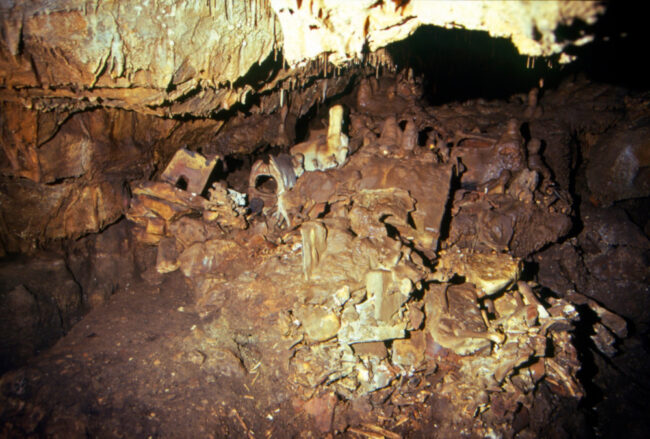
About 6,500 years ago this cave was chosen to become a burial site and was prepared for the placement of the ossuaries by building low walls, shelfs and one large floor built of flat stones. During the following hundreds of years it was used as a public cemetery for secondary burial. Sometime, probably at the end of the period, its original entrance collapsed creating a unique time capsule, which was discovered by accident 6000 years later as the result of road constructions. During the interim the cave had undergone earthquakes and other karstic activities, as well as robbery in the Chalcolithic period. A breathtaking scene was created, of hundreds of broken ossuaries and jars, a large number of skeletons covered by flowstone and stalagmites accumulating atop of the vessels, as well as colorful stalactites on the ceiling.
Interior of the cave showing the remains. Image courtesy of Dina Shalem
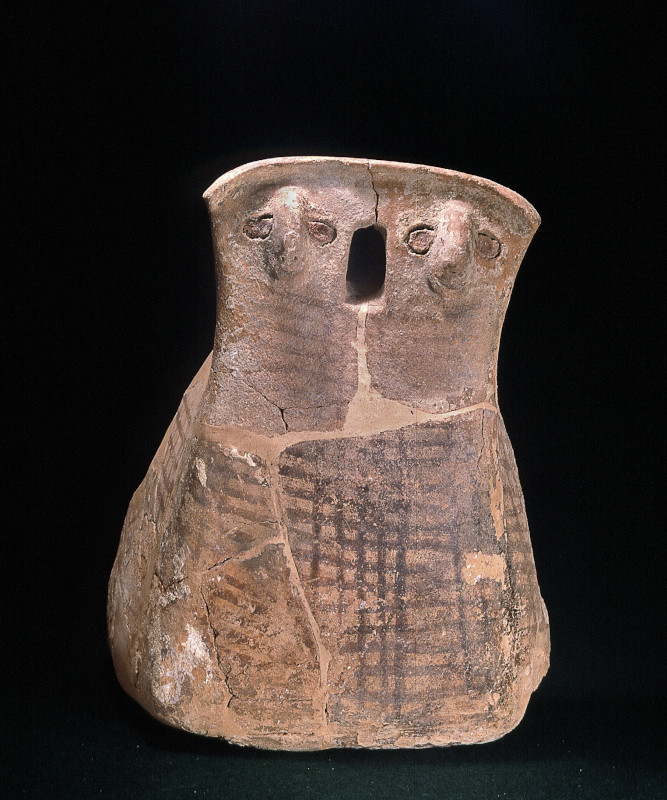
Although the Peqi‘in Cave fits well within the material culture related to the Late Chalcolithic period, its artifacts still astonish us. Most ossuaries from Peqi‘in are sculpted and painted, depicting anthropomorphic features: a large nose, eyes that often are large with eye lashes, female breasts or male beards, small tails as well as arms with hands and fingers.
Detail of ossuaries showing depicted faces and other features. Image courtesy of Dina Shalem
Detail of ossuaries showing depicted faces and other features. Image courtesy of Dina Shalem
Detail of ossuaries showing depicted faces and other features. Image courtesy of Dina Shalem
Detail of ossuaries showing depicted faces and other features. Image courtesy of Dina Shalem
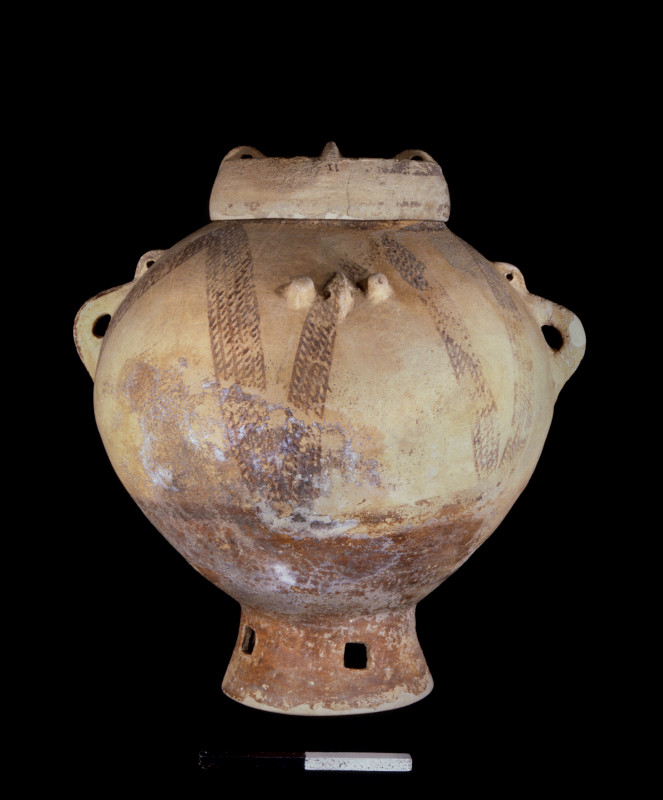
Also geometric designs, such as triangles, various lines and floral designs are painted on the ossuaries. Most of the burial jars were simply domestic pots chosen to become burial receptacles, but some of them were specially made for burial purposes while others were imported from the Golan Heights.
Burial jar. Image courtesy of Dina Shalem
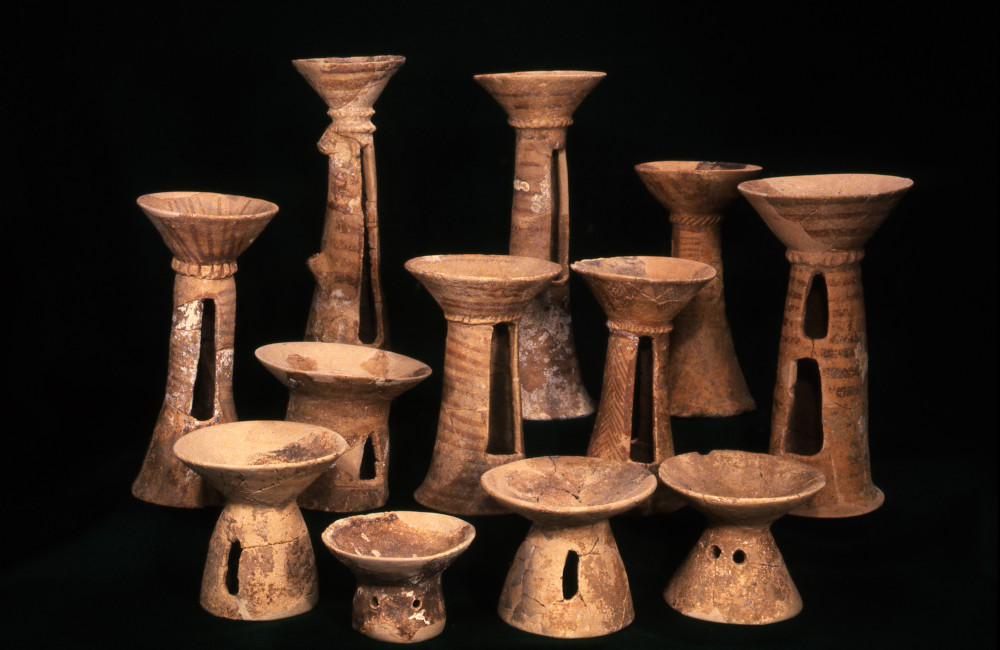
A large number of various fenestrated chalices, some of them high ritual chalices with anthropomorphic features, were found, as well as churns and bowls.
Fenestrated chalice. Image courtesy of Dina Shalem
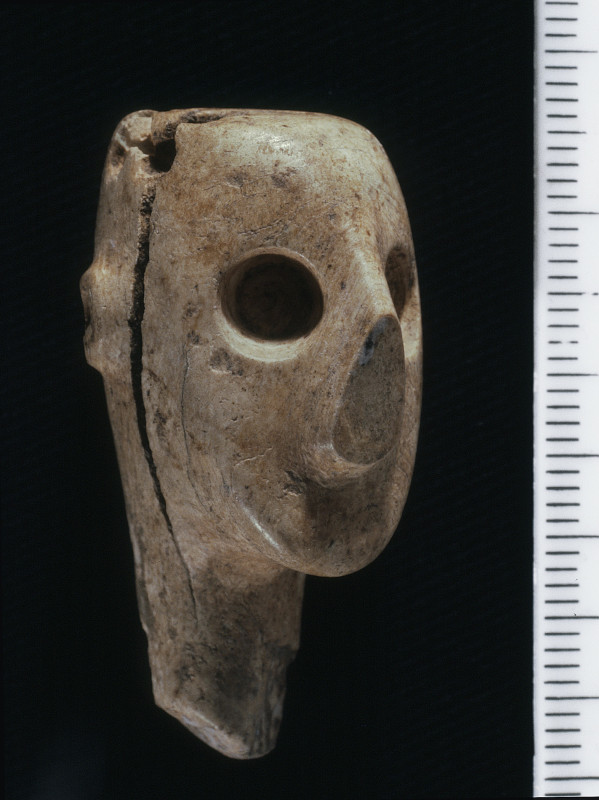
Basalt bowls and chalices, various flint tools such as discs and v-shaped figurines were also found, as well as artifacts indicating contacts with other regions, including copper and hematite objects and a hippopotamus ivory figurine.
Hippopotamus ivory figurine. Image courtesy of Dina Shalem
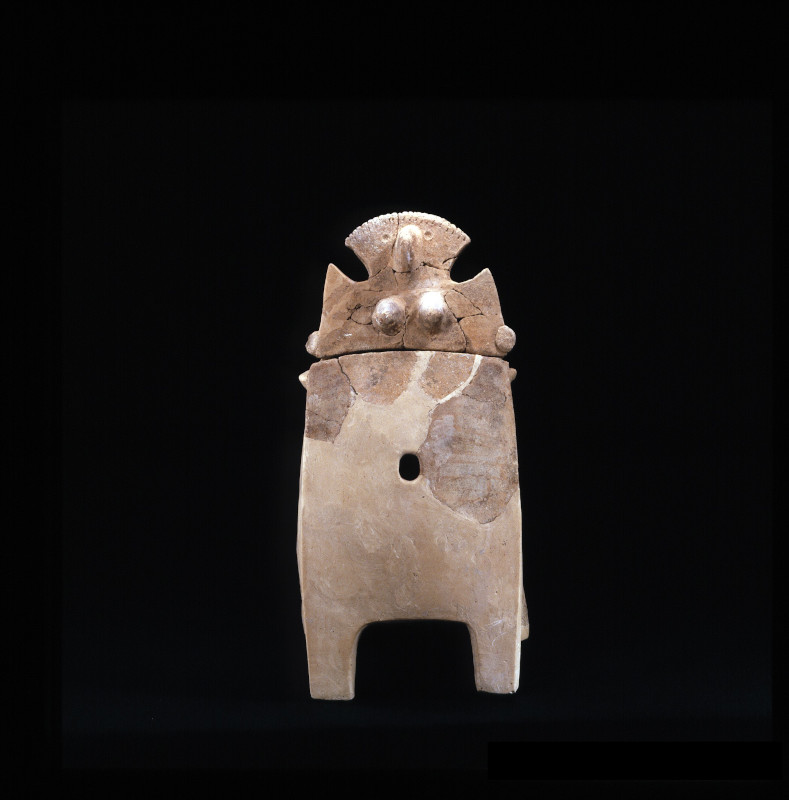
The variety of faces depicted on the ossuaries may be explained as gods, ghosts, or perhaps humans, but the most plausible explanation may beg that they represent divine or mythological images that were known to people in many regions. One type of ossuary strengthens this theory: it has a fan-shaped front on which small eyes and a large sculpted nose are seen sometimes with hair depicted on the upper edge. Below the facial features is a pair of sculpted female breasts.
Ossuary with female features. Image courtesy of Dina Shalem
This specific ossuary type, easily defined by its shape, has been found in various burial caves thus plausibly indicating that it represents a special female image, known to people in many settlements, both in the Galilee and the coastal plain.
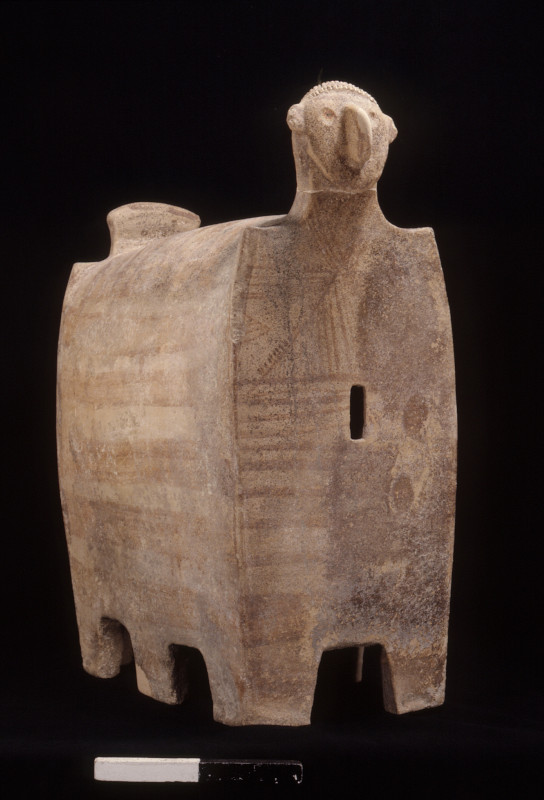
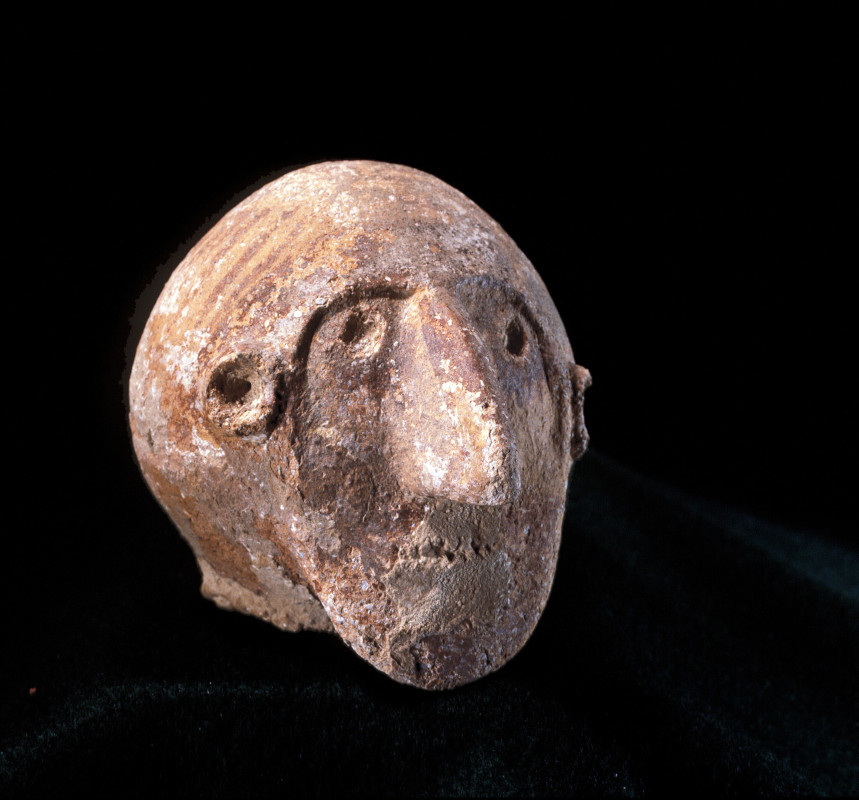
But two unique types of ossuaries, male and zoomorphic, were found only at Peqi‘in. As no genitals were shown on ossuaries the male images were distinguished by their sculpted and painted beards, as was commonly found on figurines.
Figurine head with painted beard. Image courtesy of Dina Shalem
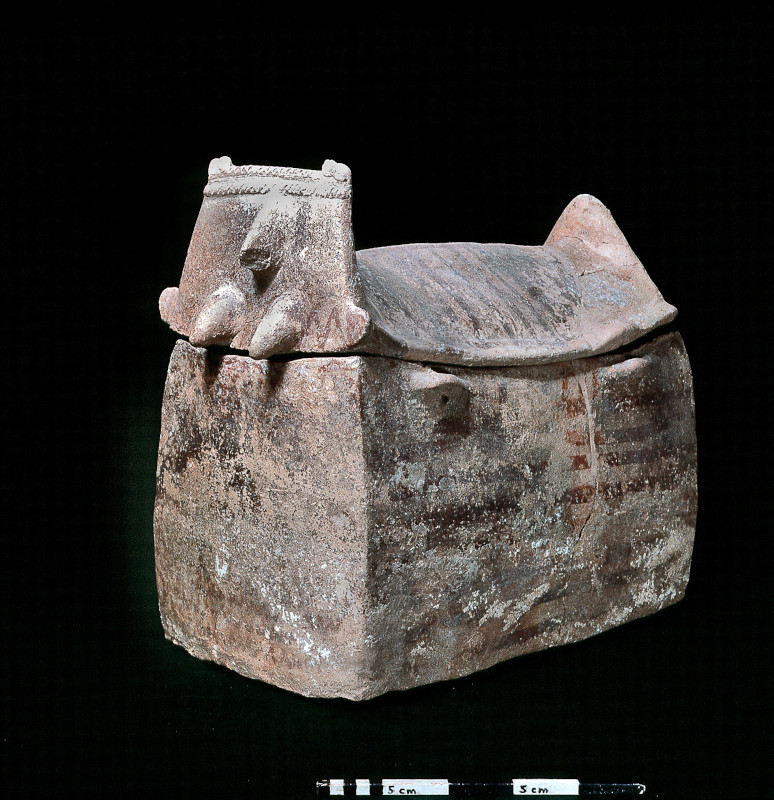
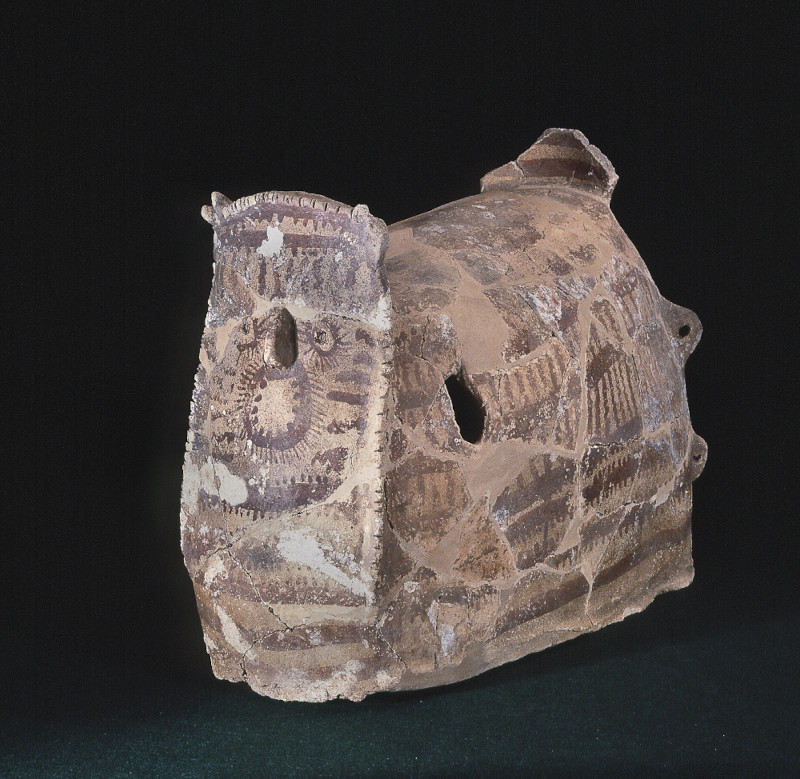
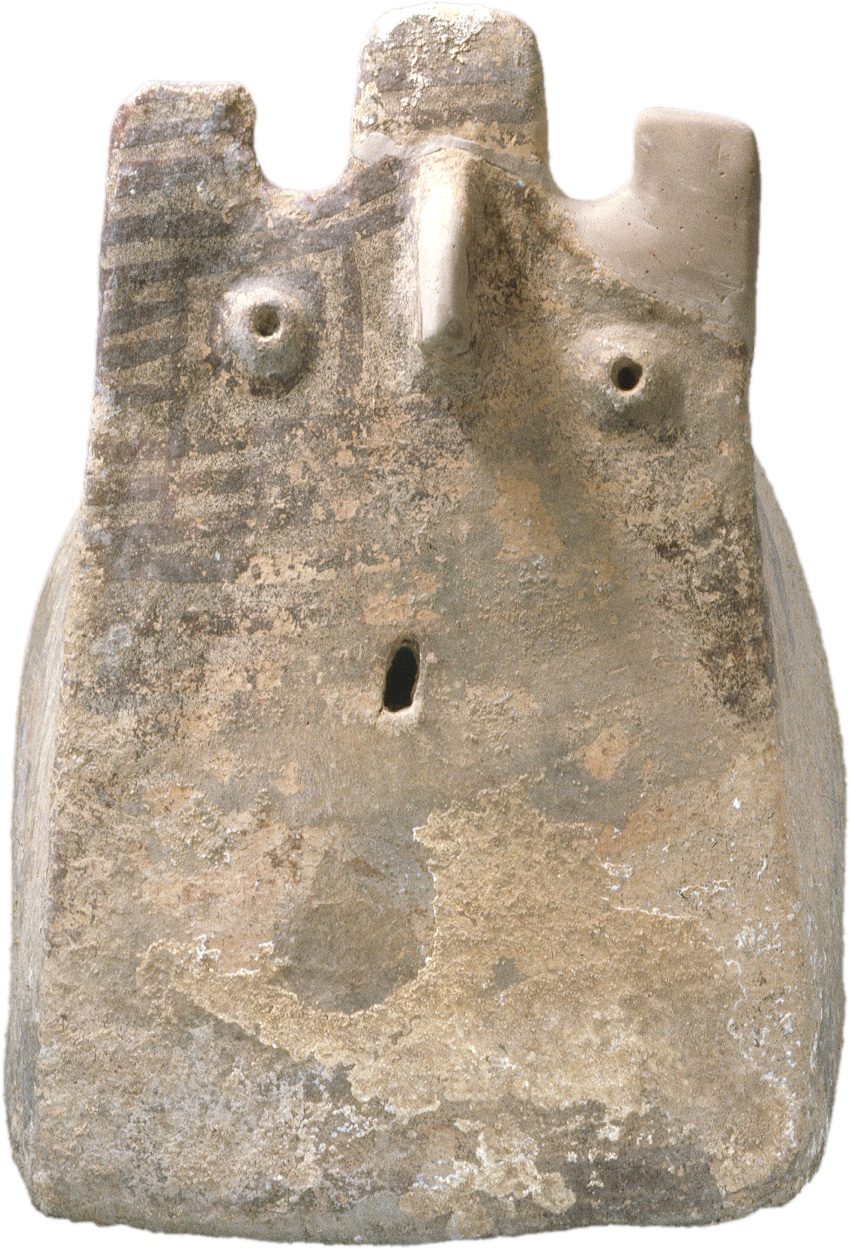
Zoomorphic ossuaries were defined by the small tail and sculpted nose that included nostrils and a small mouth, which differentiated them from the few (male) human mouths depicted below the nose.
Zoomorphic ossuary. Image courtesy of Dina Shalem
These ossuaries are part of the outburst of rich variety of sculpted and painted motifs created on artifacts of various materials, which characterize the culture of the southern Levant in the second half of the 5th millennium BCE. The elaborately designed artifacts bear witness to high technological skills and to people that chose to devote time and effort to create outstanding motifs on domestic as well as ritual objects.
These artifacts and motifs seem to suddenly appear in the middle of the 5th millennium BC together with sanctuaries and the transition to secondary burial. The emergence of these ritual customs may be understood as ameans of social consolidation at a time of demographic changes, reflected in the increase in the number and size of settlements. All these changes including the variety of new customs, artifacts and motifs hint at a more complex society that created new public traditions and motifs in order to keep the population unified.
A recently published paper dealing with the DNA evidence for the origin of the people from Peqi‘in may strengthen the idea that secondary burial and other new customs emerged because of social circumstances. This research, by É. Harney and D. Reich of Harvard University and I. Hershkovitz and H. May of the Dan David Center for Human Evolution and Biohistory Research at TAU’s Sackler Faculty of Medicine, shows that the Peqi‘in people derived 57% of their ancestry from local population, 26% from groups related to Anatolian Neolithic and 17% from groups related to Iran Chalcolithic. Moreover, this new information may partially strengthen the suggestion that some of the motifs on the ossuaries origin in earlier and northern traditions.
Dina Shalem was a researcher for the Israel Antiquities Authority and is an Adjunct Researcher at the Institute for Galilean Archaeology, Kinneret College on the Sea of Galilee
How to cite this article:
Shalem, D. 2019. “Peqi‘in Cave—A Unique Chalcolithic Cemetery in the Southern Levant”, The Ancient Near East Today 7.5. Accessed at: https://anetoday.org/levant-cemetery-chalcolithic/.

Post a comment