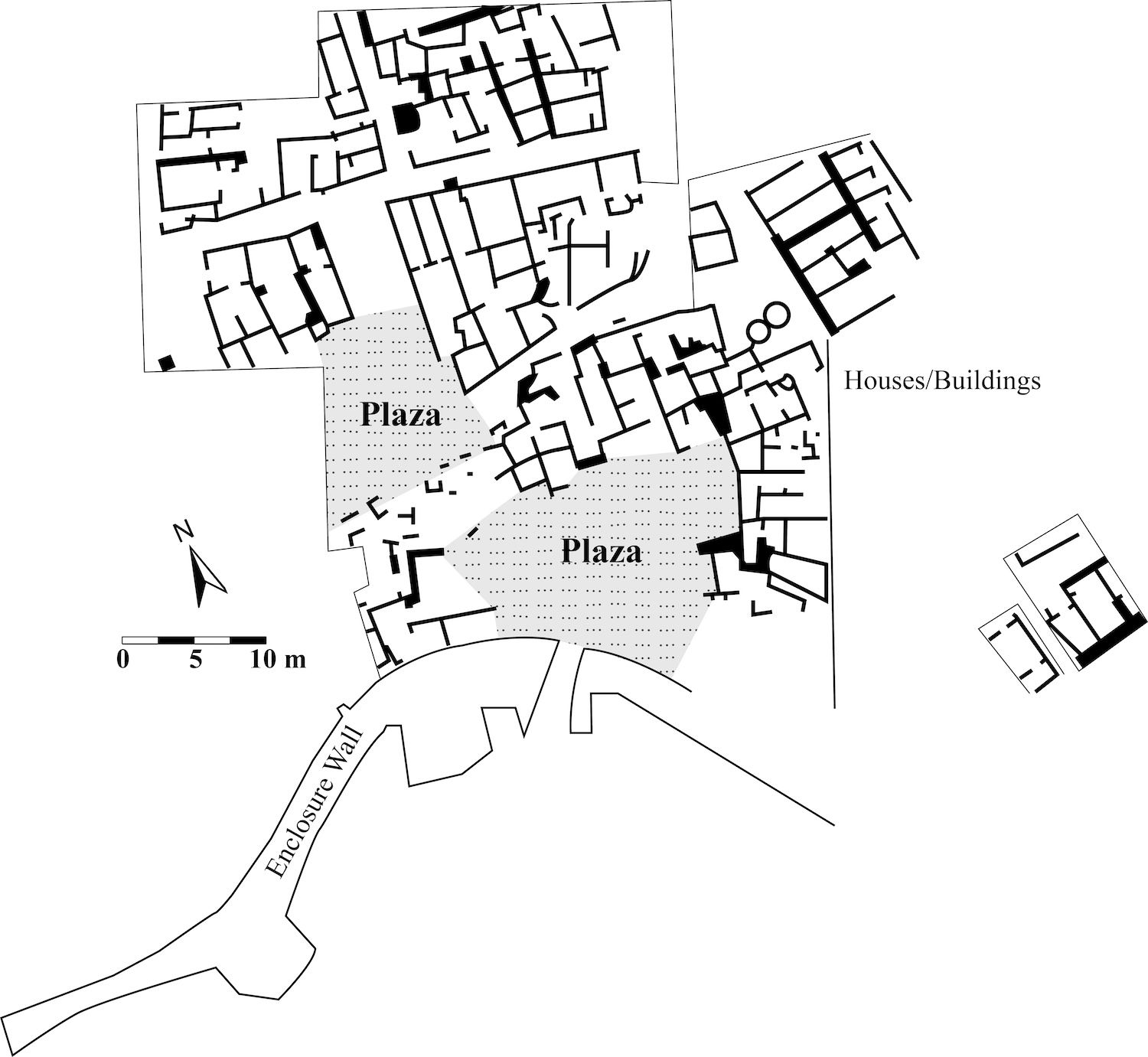
Phoenician Tejada de la Vieja (Iberian Peninsula), 8th century BC and later. Plan by Karoll Cartography. © Brett Kaufman.

Did the Phoenicians Bring Democracy to Greece?
May 2026 | Vol. 14.5

By Brett Kaufman

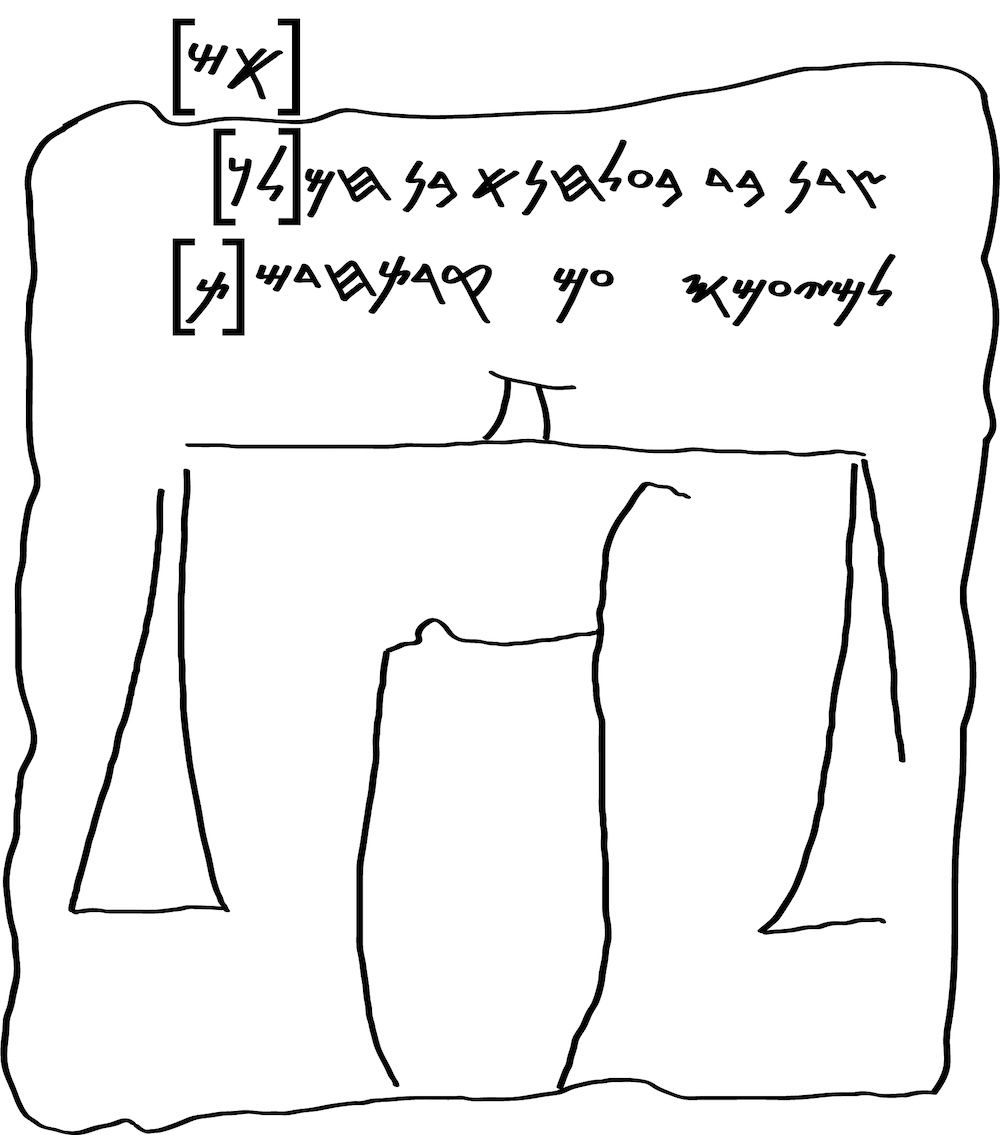
From Aristotle to John Adams, great minds of government have revered Carthaginian democracy as the purest expression of a people’s will. The People’s Assembly of Carthage revamped older Babylonian democratic institutions to let everyone in their society be heard. Through Graeco-Roman histories and Punic inscriptions we learn that the Carthaginian Assembly was comprised of men, women, slaves, and probably foreigners and even children, where the poorest citizen was allowed to propose policy or debate directly with the head of state.

Throughout the 19th century, however, popular attitudes toward Northwest Semitic contributions to Western civilization shifted dramatically with the rise of antisemitism. In direct contradiction to the testimony of ancient Greek writers themselves, Phoenician inputs to Classical Greece were rejected.

Punic inscription mentioning a common citizen of the People’s Assembly of Carthage, circa 4th-2nd centuries BC. Recreated by the author from Corpus Inscriptionum Semiticarum I 270. © Brett Kaufman

While Phoenician influence on the Graeco-Roman worlds has more recently been revisited and corrected from the perspectives of art, architecture, industry, crafts, and writing systems, the spheres of government in general and constitutional democracy in particular are still mostly considered to be solely within the preserve of ancient Greece or Athens. But after dozens of excavations of Phoenician sites across the Mediterranean in the past few decades combined with Punic epigraphy and classical histories about Carthage, we are now in the privileged position to reexamine their political contributions to the ancient Mediterranean. Specifically, the extraordinary proliferation of plazas or town squares at Phoenician sites — built centuries before Greeks carved out their first agora — provides a sound archaeological proxy for the spread of the historical assembly from the Phoenician plaza to the Greek agora to the Roman forum. 

In my book, Phoenicia, Carthage, and Popular Government in the Pre-Classical Mediterranean: The Other Democracy (Oxford University Press 2025), I attempt the first comprehensive reconstruction of Phoenician government from archaeological, epigraphic, and historical sources. While it is by now well documented that the assembly in the town square started in Mesopotamia, the question still remains, how did it get to the Aegean?

While I argue that the Phoenicians did play a major role in the spread of democracy and what would become the remarkable institutions of Greek popular government, which in particular would go on to inspire the liberties so fundamental to the development of Western civilization, I do not find the contest over “who came first” to be intellectually compelling. Still, an accurate chronological sequence is essential if we hope to understand how, why, where, and when the democratic assembly in the town square spread from Mesopotamia to the Levant to Europe.

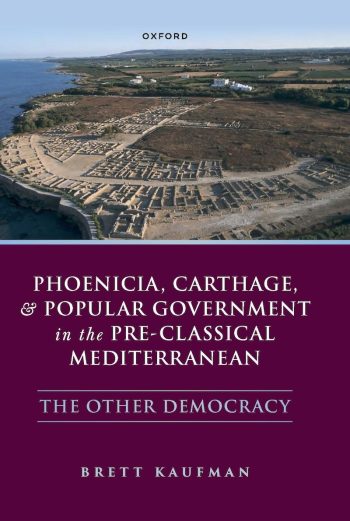
Book cover showing Carthaginian Kerkouane (North Africa) with its three town squares. Kerkouane photo © Alain Denize/Getty Images.

The Agora Arrives to the Bronze Age Aegean

As the Amorite and Canaanite ancestors of the Phoenicians adopted Mesopotamian-style assemblies, and they designed their cities with open spaces like town squares to accommodate civic crowds, these Northwest Semitic-speaking groups also opened up new trade missions westward across the Mediterranean. The early exchange of people and things became widespread between populations of the Levant, Egypt, and Crete. Architectural traditions and urban layout are some of the most intriguing of these physical expressions, as the Minoans put their own spin on Near Eastern and Egyptian techniques and designs.

One of the most substantial and enduring legacies of this exchange was the town square — large public gathering spaces, typically called “western courts” due to their being positioned to the west of the Cretan palaces. These plazas were often triangular and included causeways that would host processions and other ceremonies, and were likely sites for the exercise of decentralized political power by community members, power that would not solely be held by the palace elites.

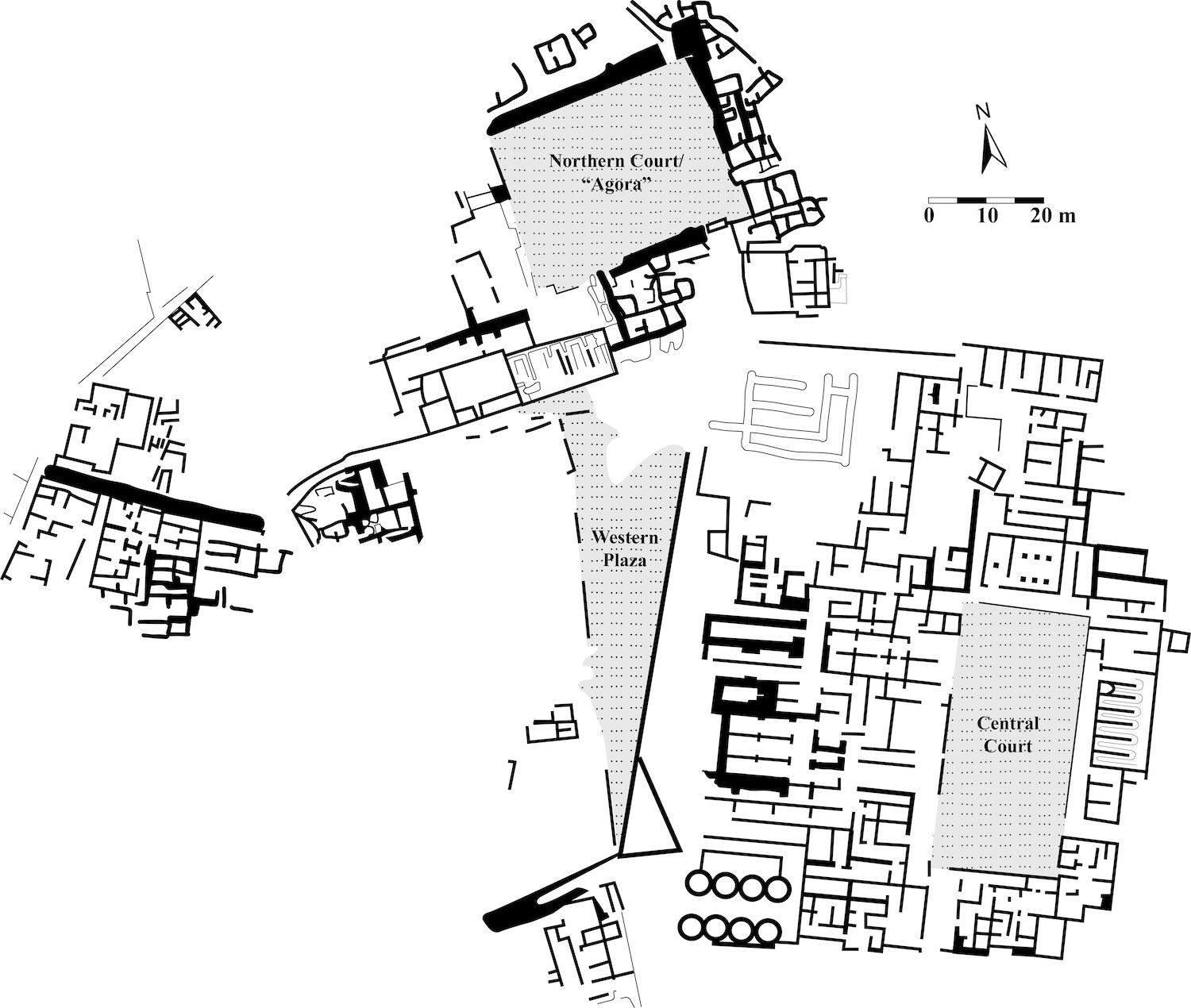
By the Middle Minoan I period (ca. 2000 BC), also known as the “Old Palace” or “First Palace” period, palatial compounds with western plazas emerge at the well-known sites of Knossos, Phaistos, and Malia, while by the Second Palace period public plazas developed south of the palace at Gournia as well. At Malia, the citizenry had at least three plazas with potential for assembly.

Minoan Malia (Crete), showing palace compound and western plaza. Plan by Karoll Cartography. © Brett Kaufman.

At Knossos, town residents walked along a marked causeway and steps to an eastern platform for town representatives to enter the assembly area. The palatial retinue had their own southern platform, and there was yet another stand to the west for other palace officials to gather above the crowd, which could have numbered in the thousands given the surface area. The open air western plazas of the Minoan palaces were unrestricted, allowing interaction between the palace and the people.

This kind of architectural space that encouraged crowds and assemblies was as pervasive in Minoan society on Crete as it was absent in Mycenaean cities on the Greek mainland. There were indeed a variety of interior courts in Mycenaean palaces such as at Pylos and Mycenae as well as at Tyrins with a sizeable forecourt. However, the crucial difference between Minoan and Mycenaean courts are that the Minoan examples, as we have seen above, were often outdoors with unrestricted access, and the Mycenaean examples were tucked deep inside the palatial compounds.

This tells us much about the ideology of elite control in Mycenaean societies, namely that these spaces were not public. State business was handled before a carefully selected audience, not a rowdy populace seeking to express itself. Despite numerous excavations, so far there is no evidence of open-access public plazas at Mycenae or elsewhere on the Helladic mainland. This situation is quite different than that of the Minoan elite, who went to relatively great lengths to integrate their citizenry into public space and likely public decision-making.

Such an archaeological reality indicates that the direct predecessor of the Homeric agora, as well as the agorae of the Iron Age and Classical Greeks, is not to be found in the Mycenaean Late Bronze Age. Rather, we see it first in the Aegean among the Minoans, who would have adapted their triangular plazas from interactions with Canaanites who brought over the concepts of urbanism, open plazas for assembly, and the assemblies that we hear about frequently in cuneiform sources. Although some terminology persisted from the Mycenaean kingdoms to the classical city-states, such as deme and polis, the Helladic Bronze Age governmental system itself had little if anything to do with the emergence of the Archaic agora or Athenian democracy.


Where did the Archaic and Classical Greeks get the idea of the agora and assembly?

The Archaic and Classical agora was unlikely inspired by earlier Minoan models because of the temporal and material culture gap from the 15th to 8th centuries BC. However, is it not curious that some of the earliest attested Greek law codes and agorae in the 8th century BC are on the island of Crete, for example at Dreros, and at Lato where an early agora is developed on the model of Minoan palaces? The curiosity may be satisfied by the fact that Crete was one of the earliest places the Iron Age Phoenicians visited in their westward expansion. On Sicily, 8th century BC Greek colonists of Megara Hyblaia also founded an agora, contemporary with Phoenician settlement on the island.

Even the Greek word agora may find its etymology in the Semitic languages. The form appears in the Mycenaean as a-ko-ra, albeit here more likely as “collection” (including “flock”). The standard Greek etymological dictionaries derive the noun from the verb agora, “to gather,” with a possible Indo-European source, although they all agree that no cognates are to be found in any of the other Indo-European languages.

This gives us space to turn to Semitic for a potential source of this quintessential Greek word. One possible derivation of agora is found in the Akkadian ekurru, “temple, chapel”, which is ultimately traced back to the Sumerian E.KUR, distinctly places where the public would gather on special occasions. This proposal is faithful to the sacred aspect of the agora, so central to the Greek polis.

Following this origin, the Sumero-Akkadian plaza traveled to Levantine societies, taking the form of the Semitic root ’gr, “to gather,” as in the harvest. The Iron Age Israelites too were constantly congregating in assembly, like the qhl or mwʽd, and until Saul and David had a strong cultural taboo against monarchy. In the Hebrew Bible, the verb ’gr is used three times to mean “gather,” all in an agricultural context, hence “harvest” (Deuteronomy 28:39; Proverbs 6:8, 10:5). Furthermore, the noun ’gwrh (pronounced agora) is used for a specific weight or measurement of silver in 1 Samuel 2:36. As such, it would be a small leap for agrarian societies to add the meaning of “to gather together” as a community.


Democracy as political competition for followers

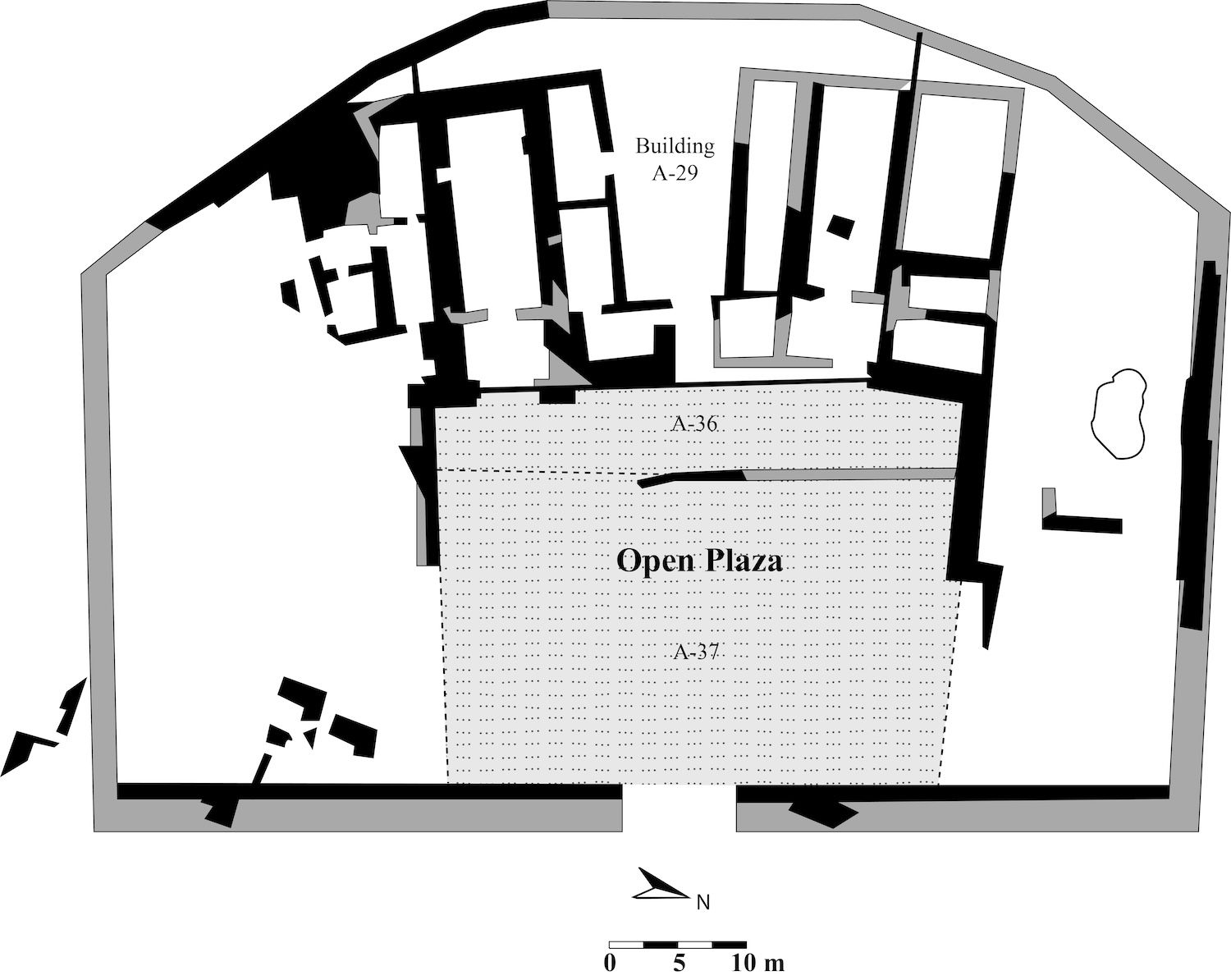
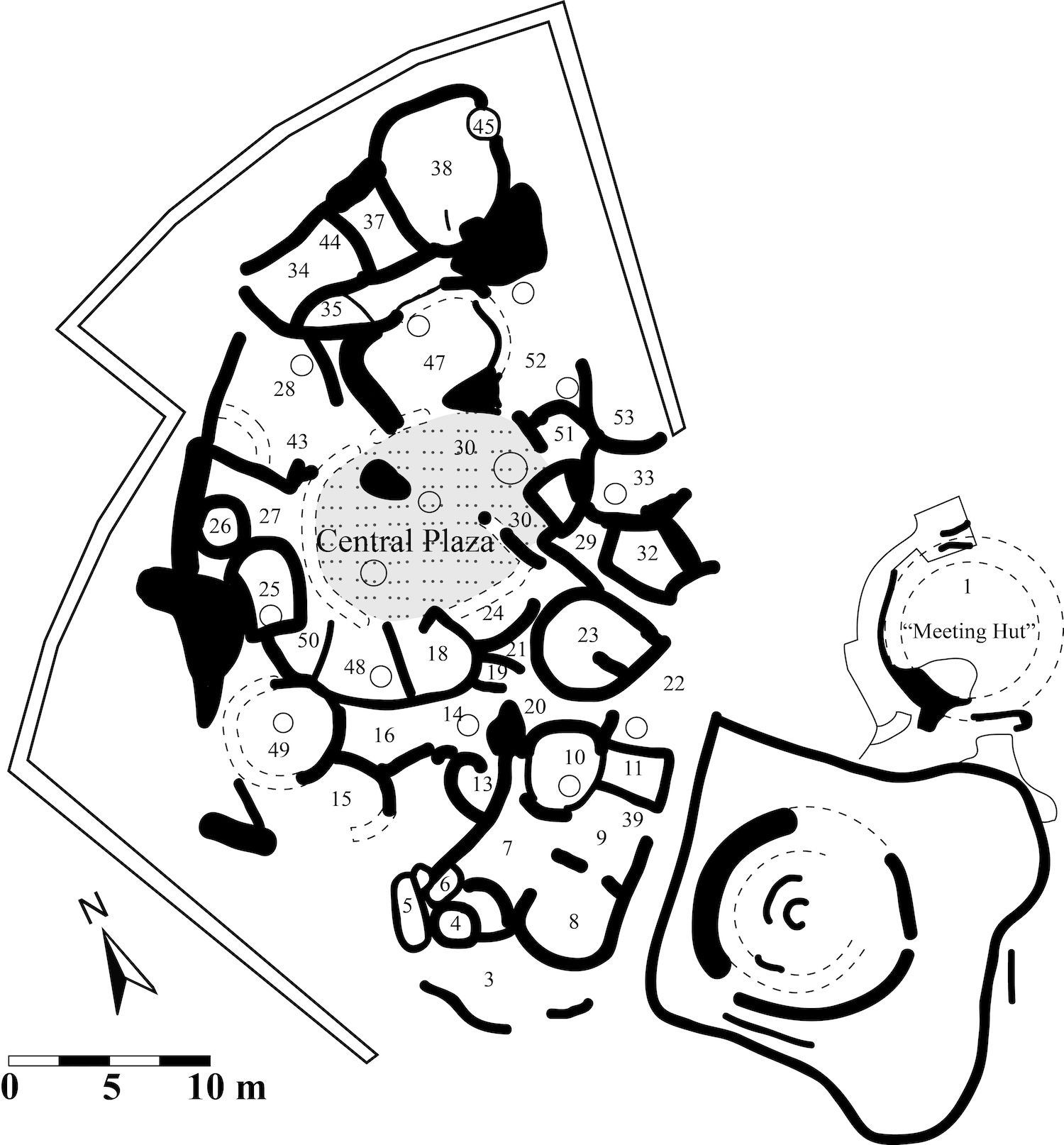
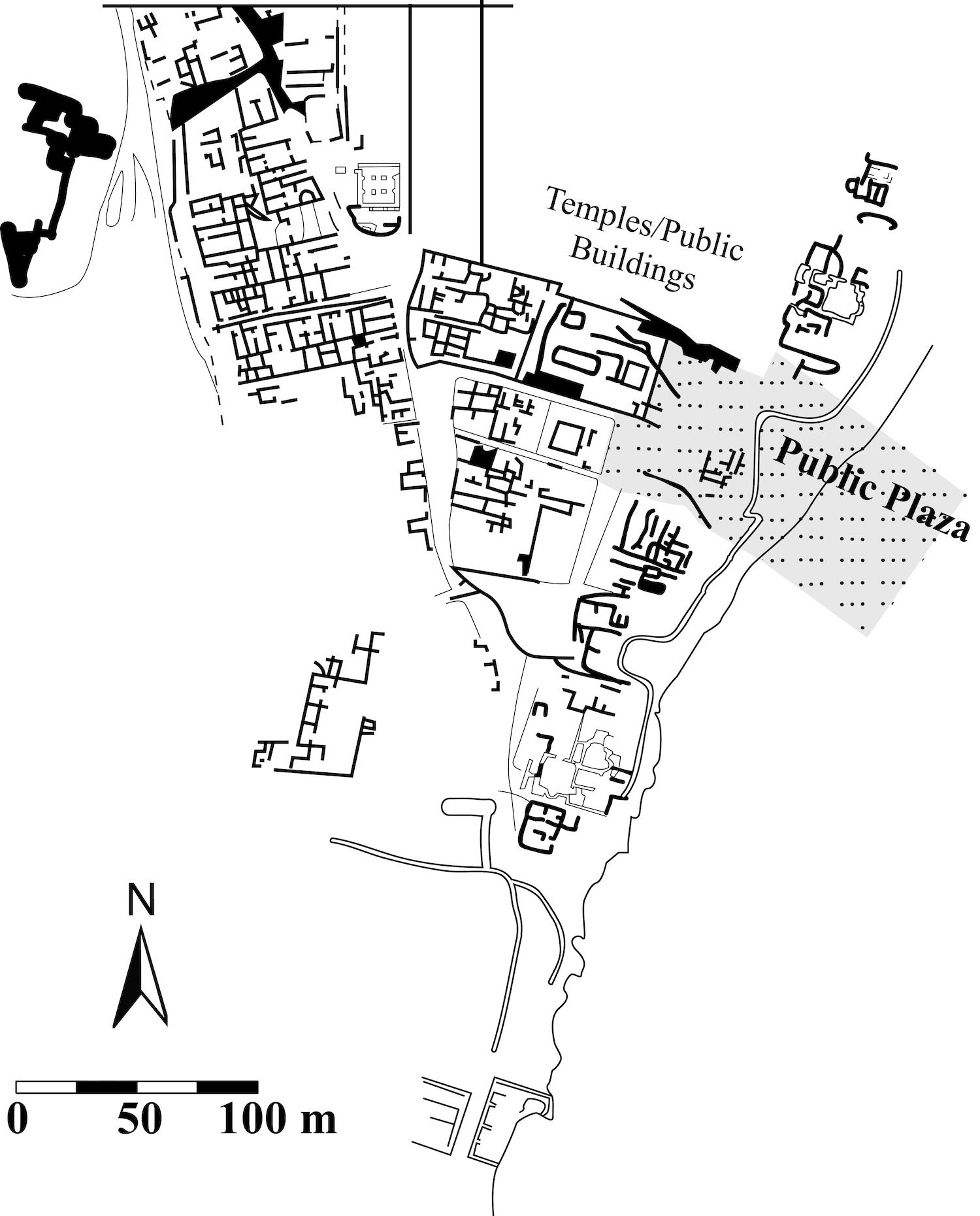
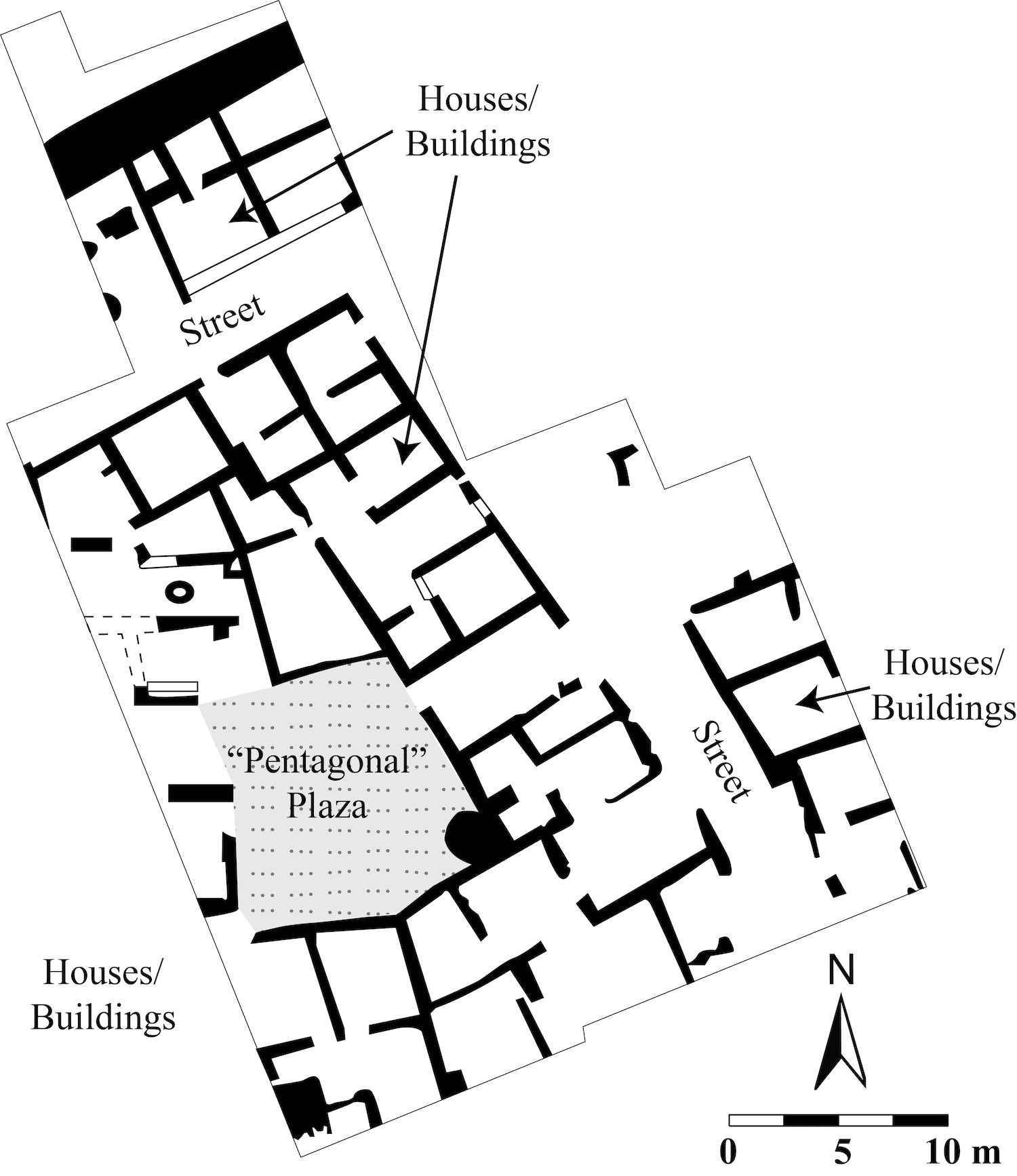
The handful of earliest Iron Age Greek plazas that are seen as the immediate precursors to the Classical agorae were not established before the 8th century BC. By that time, Phoenicians from Tyre already had established multiple town squares across the Mediterranean such as at El Carambolo and Tejada de la Vieja in the Iberian Peninsula, or had inspired other indigenous peoples to do so like the Sardinian nuraghic people of Sant’Imbenia.

Phoenician El Carambolo (Iberian Peninsula), 9th century BC. Plan by Karoll Cartography. © Brett Kaufman.
Phoenician Tejada de la Vieja (Iberian Peninsula), 8th century BC and later. Plan by Karoll Cartography. © Brett Kaufman.

Through their interactions with Phoenicians, indigenous communities like these and the Greeks would come to adopt this open urban space as a center of both commerce and assembly. Among other cutting-edge technologies, the Tyrians taught some of these peoples how to construct monumental architecture, as well as how to design a city based on principles of Near Eastern urbanism.

Nuraghic Sant’Imbenia (Sardinia), circa 800 BC. Plan by Karoll Cartography. © Brett Kaufman.

For the Greek colonists, the idea of a people’s assembly would have been highly appealing, as most colonists were not at the top of the elite hierarchy in their metropolis, but rather were starting from scratch and looking to build a new society. It is not that Tartessians or Sardinians or Archaic Greeks had never conceived of communal gathering and debate, but rather that the urban expression of the town square that hosted the historical institution of the assembly that the Phoenicians introduced fit very well with their latent tendencies toward self-rule. This was a clever Phoenician strategy to endear these peoples to Tyrian commerce.

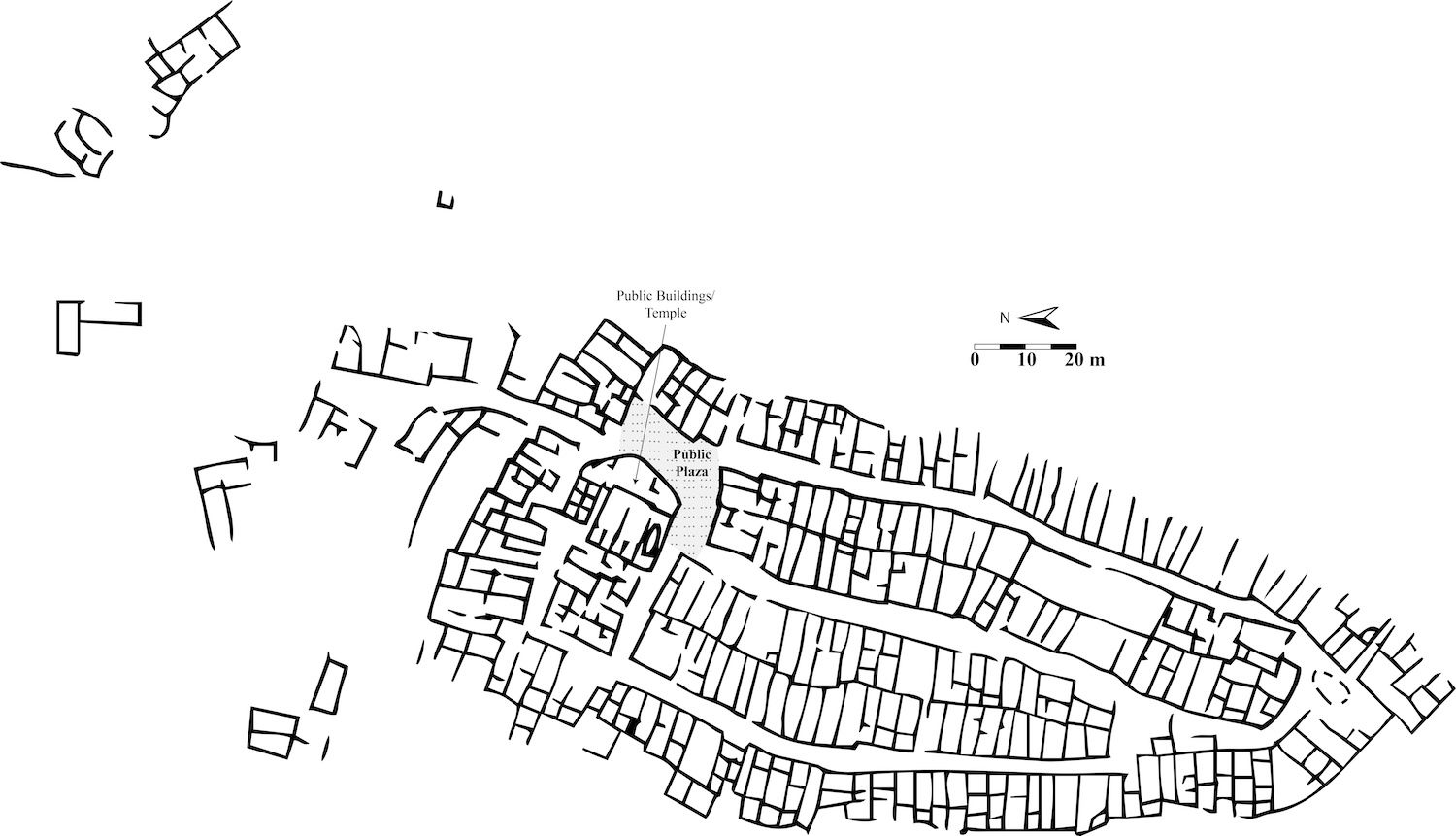
The later, widespread foundations of agorae at Greek mainland sites (including Athens) and their colonies in the 6th century BC corresponded closely with plaza construction at Phoenician and Carthaginian sites at the same time (such as Monte Sirai, Tharros, and El Oral). This indicates that political competition for unaligned followers between Mediterranean leaders of all stripes was intensifying. It is also during this century that military conflict between Phoenician and Greek polities — democracies and tyrannies alike — was added to the competition.

Phoenician Monte Sirai (Sardinia), circa 600 BC. Plan by Karoll Cartography. © Brett Kaufman.

The picture that emerges is one of Phoenician citizen groups exercising their right to assembly and voting based on millennia-old traditions derived directly from Sumer to Old Babylon to Ugarit and Byblos to Tyre to Carthage. The Phoenicians operated in a competitive vacuum in the central and western Mediterranean before the 6th century BC, and chose to spread their big tent style of Near Eastern political economy without the coercion that was characteristic back home in the Fertile Crescent.

Phoenician Tharros (Sardinia), 6th-5th centuries BC. Plan by Karoll Cartography. © Brett Kaufman.

Democracy therefore evolved as a form of political competition. The idea of a government designed for the people and not just for the elite was not something that the Greeks gave to the Phoenicians. Instead, it was already being mandated at least politically if not legally by Phoenician kings and settlers before the Phoenicians ever taught the Greeks how to write; or in any case, right around that time. Leaders must compete with each other for followers, and the same held true in the free market of governmental forms, as we see between various city-states in the 1st millennium BC, both within and without Greece.

Phoenician-Iberian El Oral (Iberian Peninsula), 6th century BC. Plan by Karoll Cartography. © Brett Kaufman.

Once the Phoenicians butted up against the later Greek state-level societies that were coming into their own, competition and ultimately conflict over resources and followers was inevitable. From the Greek perspective, the data indicate that there were three main vectors for the spread of the public plaza or agora: Bronze Age Canaanites to the Minoan Aegean, Iron Age Tyrians to the Archaic Greeks, and finally a competitive back and forth between Carthage and Classical Greek city-states, and eventually Carthage and Republican Rome, as these states vied for followers and allies. Who could best honor the people’s will?

Brett Kaufman is the Helen Corley Petit Associate Professor of the Classics at University of Illinois Urbana-Champaign.

This article contains modified excerpts and summaries from parts of his book, Phoenicia, Carthage, and Popular Government in the Pre-Classical Mediterranean: The Other Democracy that was recently published by Oxford University Press; for complete discussions of these topics, and for the specific evidence and references for both the written and pictorial data presented above, the reader is directed to the material contained in the book.

How to cite this article:

Kaufman, B. 2026. “Did the Phoenicians Bring Democracy to Greece?”, The Ancient Near East Today 14.5. Accessed at: https://anetoday.org/phoenicians-democracy-greece/.

Want to learn more?

4 Comments

  • Steve Serlin

    It never ends; as we search the old we find so much new. This is a wonderful article to lead interested individuals to new conceptions of the evolution of democracy, the role of Phoenicians, of Carthage, and the assimilation of cultural practices. Thank you

  • Paul Teitelbaum

    I feel this article is very light on evidence to associate plazas with democracy. Public assemblies can exist for many other reasons. Perhaps the book is more specific about “Graeco-Roman histories and Punic inscriptions [from which] we learn that the Carthaginian Assembly was comprised of men, women, slaves, and probably foreigners and even children, where the poorest citizen was allowed to propose policy or debate directly with the head of state.” It would have been useful if the author provided some specifics for such a radical claim.

  • Sammy HOURANI

    I always suspected that was the case; The Phoenicians and the Mesopotamian civilizations were the main source of all materials needed to build the Hellenistic and the Graeco-Roman Golden Era.

  • Stephen Stockwell

    Brett Kaufman’s new book is a very useful contribution to the history of democracy and Phoenician studies. His application of the scientific method to epigraphic details and the development of the plaza is valuable in tracking the spread of democracy from Mesopotamia via Phoenicia to the west, a movement that Ben Isakhan and I argued for in our 2011 book, The Secret History of Democracy. But is Kaufman’s case compelling? By listening to Phoenician and Punic voices he establishes the democratic significance of the people’s assembly in Carthage but we already knew that from Aristotle. Evidence for other possible assemblies do not appear in his translations or where they do (eg Lapethos KAI 43), they are accompanied by question marks at crucial moments. And while the spread of the plaza does match the spread of Phoenician and Punic trade, can we read the plaza as a proxy for democracy? I have stood in some of these plazas and wondered at their purpose. They seem more likely to be marketplaces or for the worship of the king or like the school assembly where the headmaster lays down the law. So while Kaufman’s scientific approach deserves much praise, there is still more work to be done to give a definitive answer to the question: did the Phoenicians bring democracy to Greece? While I have taken some tentative steps to answer that question in the research essay in my 2023 Phoenician Sonnets, Kaufman encourages us to return to the coalface in a search for the truth about this key moment in the history of democracy.

Post a comment

Your email address will not be published. Required fields are marked *