The Care of the Elderly in Susa: A Study in the Akkadian Documents from the Sukkalmah Period
october 2019 | Vol. 7.10
By Hossein Badamchi
Everyone grows old and requires care. How was this addressed in the ancient Near East? The sources, mostly private testaments and adoption documents in cuneiform, demonstrate among other things that inheritance was used as incentive and sanction against neglectful children in order to secure care for the elderly.
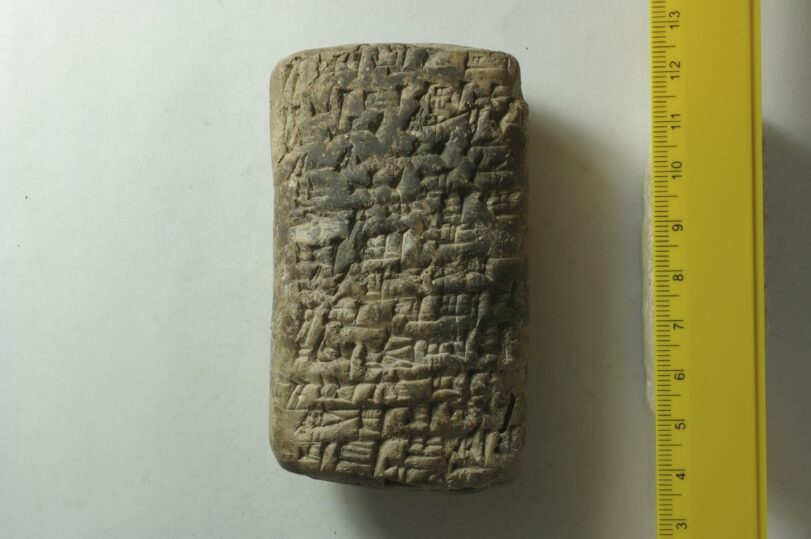
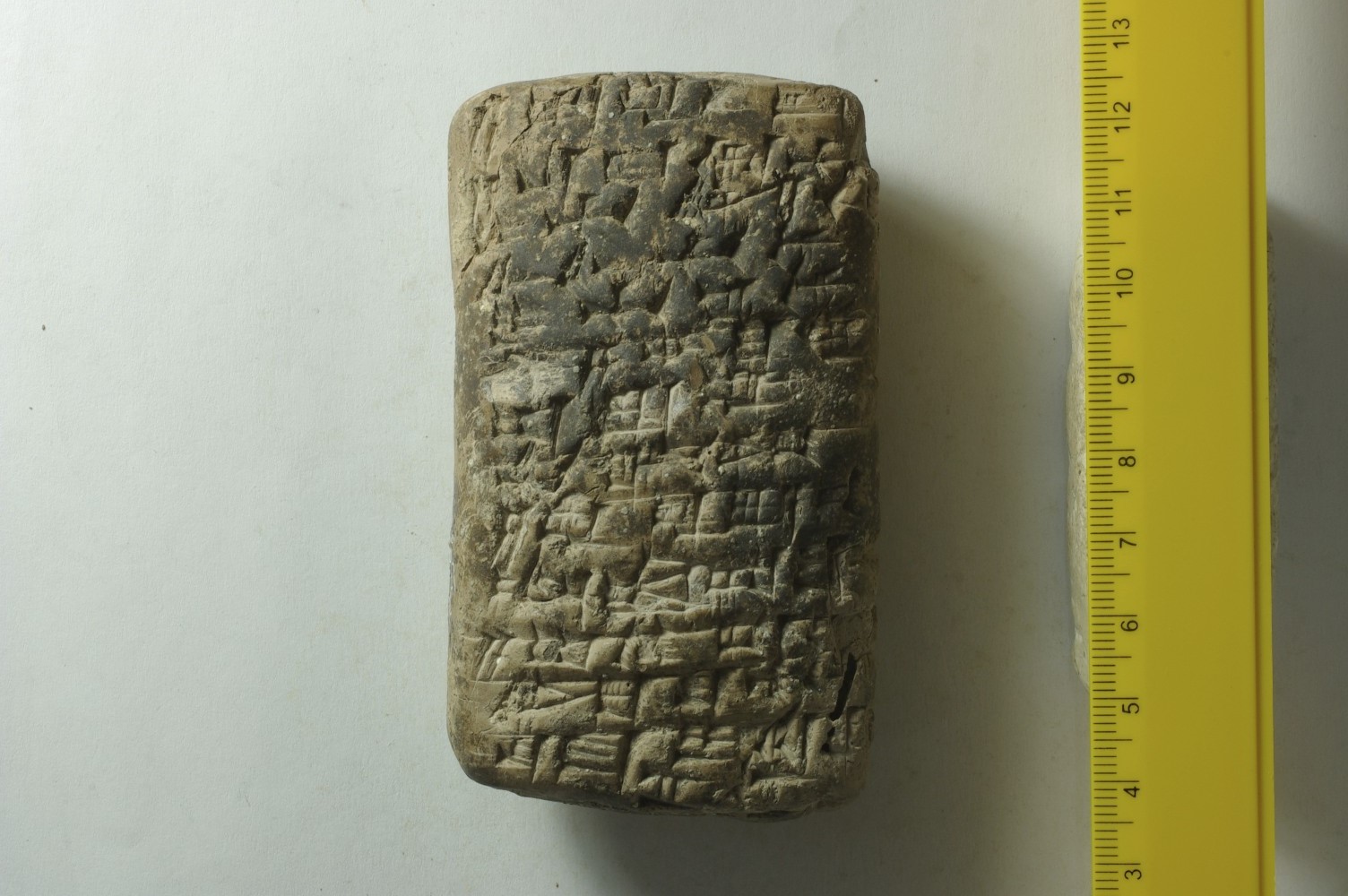
Nearly 600 legal texts in the Semitic Akkadian dialect from the Iranian site of Susa dating to the first half of the second millennium BCE constitute a unique source for study of Elamite law and society.
There are no legal texts in the local Elamite language from this period, nor any Akkadian legal texts found at other Elamite sites from this period. This collection of legal texts is also important for studying the development of law in the Old Babylonian Period, for example, legal institutions like the so-called esip-tabal contracts (literally, gather and take away), already mentioned in the Laws of Hammurabi (§§ 49-52) whose only attestations in legal practice come from Susa.
However, among other legal topics like sale and lease, the texts are especially important for their unique light on the relationship between children and elderly parents. What was the nature of this obligation? Children who inherit from their parents had the responsibly to provide care. This care is not only emotional support but could be translated in terms of rations to be given. For example, in an Old Babylonian letter (AbB 11, 139) a man who had neglected his mother is ordered to send her 300 liters of barley.
One of the most interesting texts from the Susa archive is a testament in which a father gives all his property (things, movable and immovable) to his daughter (MDP 23, 285). The document emphasizes that the act of transfer, which will be enforced when the father is dead, was made while the father was alive and in full possession of all his faculties. In lines 5-9 the details of the property in question are described and in lines 10-14, it is stated that during his life time “he broke the clod of (his) current and future (children) and gave his estate to his daughter Narubti.” To break the clod of children is a symbolic act denoting disinheritance. The daughter thus becomes the sole heir and receives the whole estate of her father, to the detriment of other sons/heirs who are not named but categorically deprived. In return, she must perform two important duties: to take care of the father and feed him while he is alive and to present kispum (funerary ritual) for his spirit when he is dead.
In another case (MDP 28, 405), a mother gives a house to her daughter in perpetuity as a reward for her daughter’s previous service. Our analysis of the text concludes that the mother had given the house to her daughter in perpetuity because the daughter had taken care of her mother at the time of famine. The mother had two sons as well as this daughter, and the sons both took an oath to honor this transaction.
In another unique testament (MDP 24, 379), a man named Gimil-Adad gives all his property, currently owned and whatever he may acquire in the future before he dies, to his wife and the mother of his children, Beltani. The main concern here is the wife’s well-being after her husband passes away. Codex Hammurabi §172 brought up one aspect of the problem: that when the father dies, the children may try to force the mother to move out of the paternal house in order to divide and take possession of their inheritance shares. The other aspect is the daily food and proper care that the children must provide for the ageing mother.
In MDP 24, 379, lines 10-22, there are two sets of stipulations regarding her sons (one threatening and another gratifying): if they complain after the father has died, and object to the donation; they will be disinherited and literally “chased away” from what is now “her house.” The ungrateful son will not be allowed to enter her house, and will get no food provision from the mother (lines 10-18). However, the son who shows respect and takes care of his mother will be able to stay in her house and will inherit whatever she has at the end (lines 19-22). Here by the testator’s act, instead of the usufruct (life-long time right to use) described in Codex Hammurabi §172, full legal ownership is given to the wife. The father is also concerned about his young daughter, as in lines 23-25 he stipulates that his sons “will jointly give whatever silver (is required for dowry?) to their sister Ilša-hegal.” This probably refers to providing a dowry for a younger sister who has not married yet.
In order to understand the proper context and terminology in the Susa documents, comparative study with Mesopotamia is necessary, but the benefits of such comparative method go both ways. Similar legal institutions stipulated that elder care was a familial duty to be provided by the sons. Inheritance was used to secure the care when parents faced ungrateful sons; in other words, if a son fails to do his duty towards his parents, inheritance can be used as an incentive and a threat. Daughters would sometimes be contracted to perform the service in return for getting the entire inheritance.
If a couple did not have children, they could adopt a child and thus form a family together, an arrangement to make sure that the surviving spouse does not face destitution in the old age. We have also seen husbands making arrangements to secure elder care for their wives, either by creating life-time usufructs in which children can only inherit after the mother is gone, or by donating the entire property to the wife, as in the case of Gimil-Adad. And for the first time in the cuneiform record, there is a case (MDP 28 399) where the wife makes her husband her sole heir and stipulates that the child will only inherit if she properly takes care of the father as well as the mother.
This is not a new legal institution but only a new aspect of the same rule, described above: that due to the insufficient inheritance laws, the couple had to make their own testamentary arrangements to make sure that the surviving spouse receives proper care in the old age. These types of arrangements remain familiar to us today.
Hossein Badamchi is Assistant Professor in the Faculty of Literature and Humanities at the University of Tehran. For access to the tablets in the National Museum of Iran in Tehran, I thank S. Piran, curator and current head of the Inscriptions Department, and M. Ghelichkhani, head of the Photography Section A full analysis of the texts discussed here is presented in Akkadica 139 (2018).
How to cite this article:
Badamchi, H. 2019. “The Care of the Elderly in Susa: A Study in the Akkadian Documents from the Sukkalmah Period“, The Ancient Near East Today 7.10. Accessed at: https://anetoday.org/elderly-care-sukkalmah-period/.
Want to learn more?

From Trash to Treasure: Nahal Omer and the Virtual Silk Road


Post a comment