
Mudbrick Architecture: Social Meaning and Functionality
Since the Neolithic period, earthen construction has been one of the most widespread building traditions across the ancient world. Communities shaped soil, water, and organic temper into bricks, plasters, and floors, creating architecture that was at once durable and adaptable.
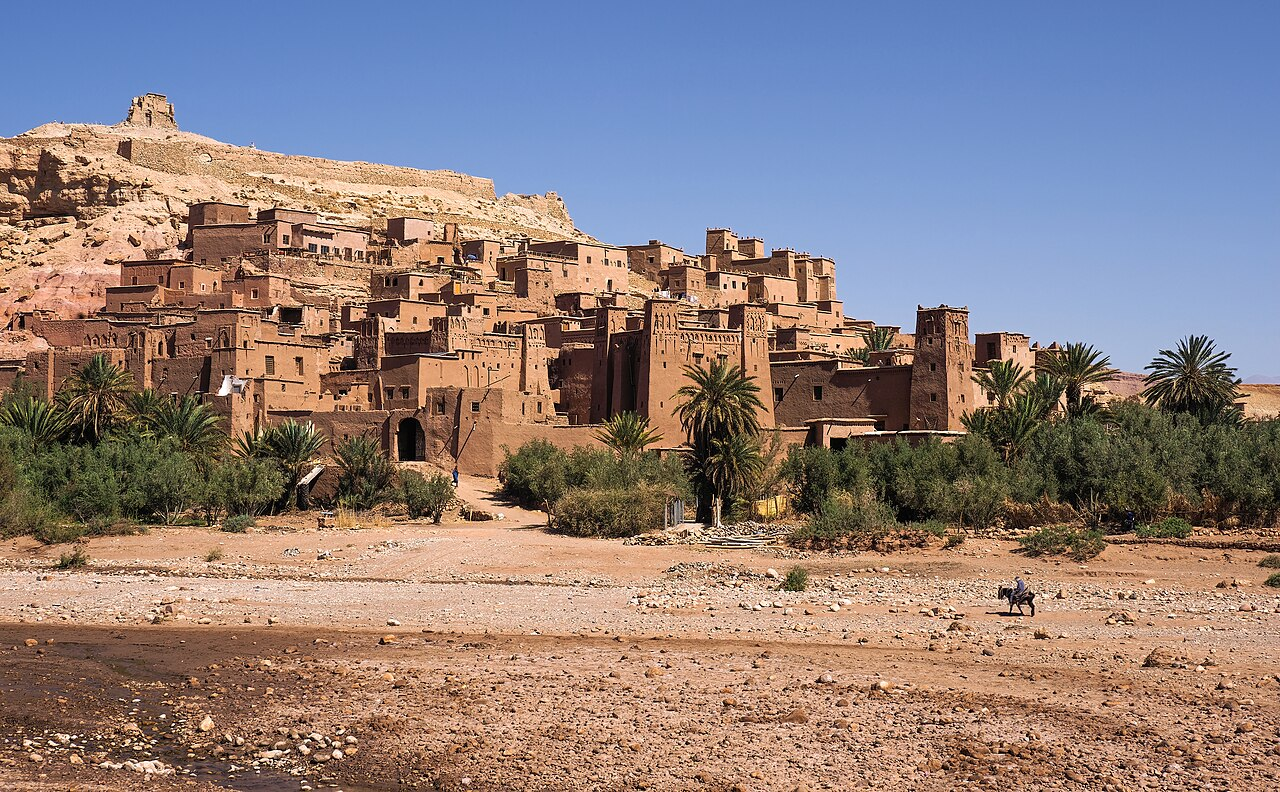
Mudbrick structures at Ksar Aït Behaddou, Morocco. Photo by Petar Milošević, CC By-SA 4.0
What sets mudbrick apart as an archaeological material is its double identity. Each mudbrick is both an artifact, intentionally crafted by human hands, and an ecofact, preserving traces of the natural environment from which it was made. Because of this dual character, a mudbrick is more than a structural unit: it is also a repository of information. Its composition and manufacture can reveal technological choices, resource management, and patterns of labor organization, while at the same time offering insights into climate and landscape in the past.
Although mudbrick is one of the most widespread building materials of the ancient world, it has often been studied from specific perspectives rather than as a whole social process. Important work has examined construction techniques and technology, while other studies have focused on architectural form and function. More recently, scholars have also begun to explore mudbrick as material culture, connected to social life, labor organization, and cultural identity. Bringing these different approaches into dialogue offers the possibility of a more holistic understanding — one that considers not only why certain recipes and resources were selected, but also how knowledge was transmitted and how social or symbolic values were embedded in architectural practice.
Current research aims to bridge this gap by analyzing mudbrick production and use across a broad geographical and chronological scope — from the Levant to the Caucasus and Greece, from the Late Bronze Age to the Classical period. By tracing the full chaîne opératoire — from soil selection to mixing, molding, drying, and construction — we can approach mudbrick not only as a building technology but also as a reflection of cultural practice, community identity, and human engagement with the environment.
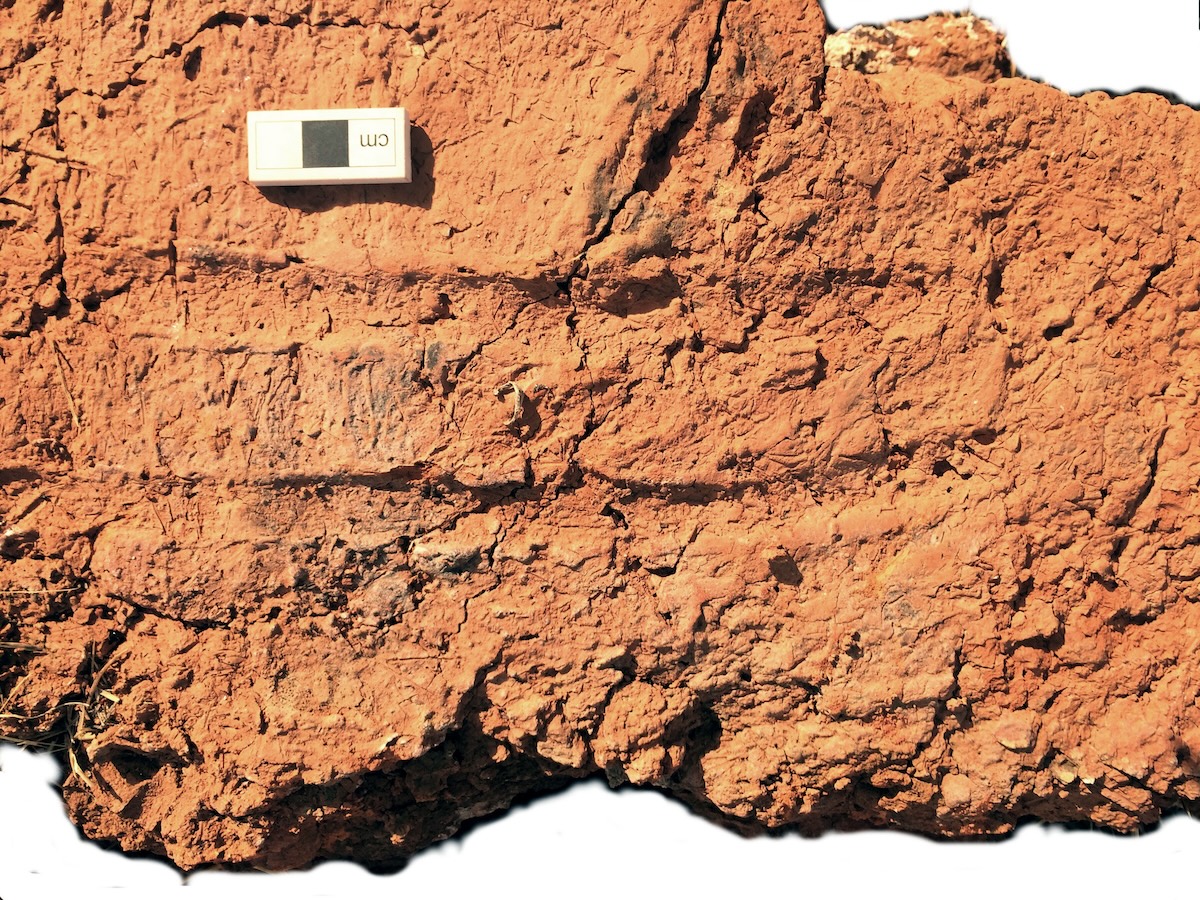
Burned mudbrick from Monastiraki, Crete, with fingerprint impressions. Photo by M. Lorenzon.
Iconography and Practice
One of the additional advantages of studying mudbrick is that it is unusually well represented in ancient art. Egyptian tomb paintings, Mesopotamian reliefs, and funerary models depict the act of making bricks, offering us glimpses of gestures, tools, and labor. These images complement archaeological data by showing how communities chose to visualize construction, often emphasizing its social or ideological meaning. The famous wall paintings in the tomb of Rekhmire (TT100) in Egypt, for example, illustrate groups of workers engaged in preparing, shaping, and transporting bricks. The scenes convey not only the technical steps of production but also an image of communal coordination and controlled labor. Similarly, Middle Kingdom models from Beni Hasan reproduce miniature brick-making workshops, suggesting that construction was seen as a meaningful activity worthy of representation in the funerary sphere.
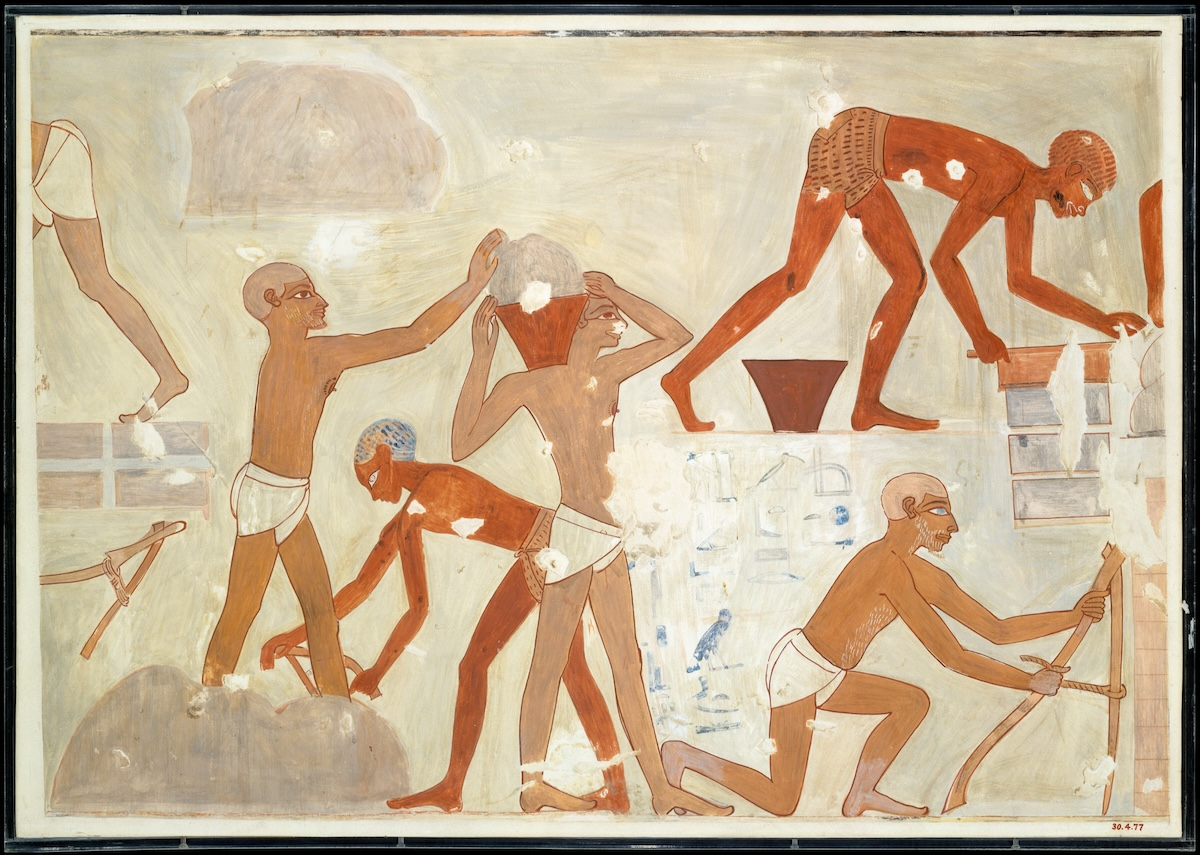
Facsimile of a wall-painting from the Tomb of Rekhmire (ca. 1479-1425 BCE). Painted at Qurna by Nina de Garis Davies for the Egyptian Expedition of the Metropolitan Museum of Art, probably 1928. MMA 30.4.77.
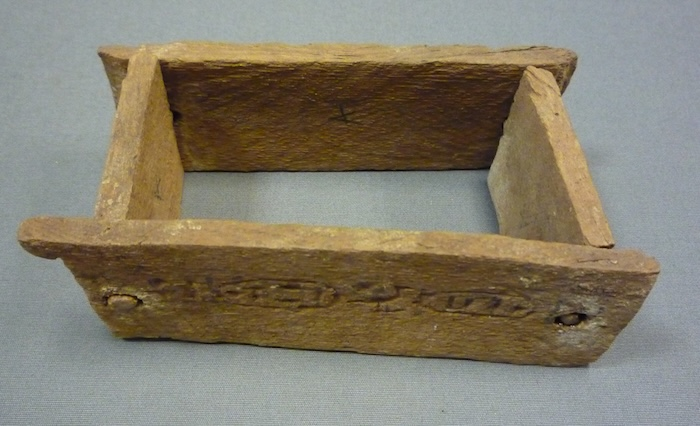
Model of a wooden mold for making mudbricks (length 10 cm/3.75 inches), recovered from the foundation deposit in front of the tomb of Hatshepsut (KV 20) in the Valley of the Kings, Egypt (ca. 1479-1458 BCE). Metropolitan Museum of Art 20.8.7. Public Domain.
In Mesopotamia, the Ur-Nammu stela depicts the king as a builder, carrying tools used in mudbrick construction. Here, the image does not document the process itself so much as it emphasizes the ideological link between rulers and the foundational act of building in earth. Of course, such representations are not neutral. Scholars have debated to what extent they reflect everyday reality or instead offer idealized visions of social order and productivity. The value of comparing imagery with geoarchaeological evidence lies precisely in testing these boundaries: while the paintings and reliefs present a streamlined version of brick-making, microscopic analyses reveal significant variability in recipes, techniques, and scales of production. Together, these sources show that mudbrick was not only a technical matter but also a subject through which ancient societies communicated ideas about labor, practices, and identity.
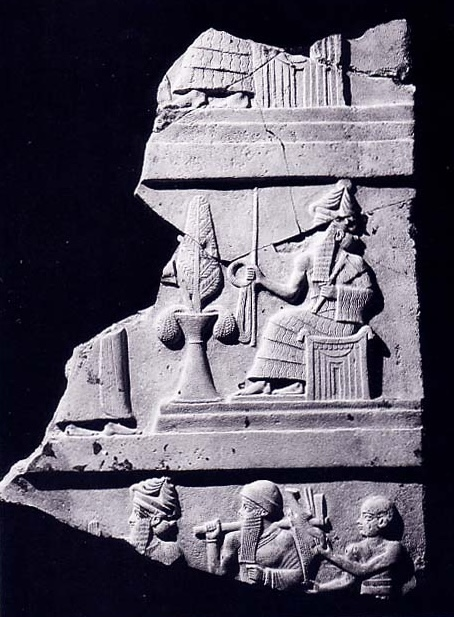
Ur-Nammu stela, showing the king in the lower (broken) register carrying tools used in mudbrick construction. Object B16676.14. Courtesy of the Penn Museum.
Mudbrick as Social Practice
Mudbricks are more than simple blocks of earth. The decisions involved in their manufacture — choices of soil, the type of vegetal temper, mixing techniques, drying strategies — were shaped not just by functional needs but also by cultural preferences and social structures. Ethnographic and archaeological research has demonstrated that such decisions often carried symbolic associations. For example, recent studies in Bronze Age Crete have shown that Minoan builders deliberately used marine vegetation as temper in mudbricks, not only for its functional properties but also to express cultural identity. Similarly, in the Levant, variations in mudbrick recipes point to different organizational models of production: household-based manufacture in some cases, centrally managed or specialized workshops in others. By treating mudbrick as material culture, we can therefore recover patterns of social organization, skill transmission, and cultural identity embedded within architecture itself.
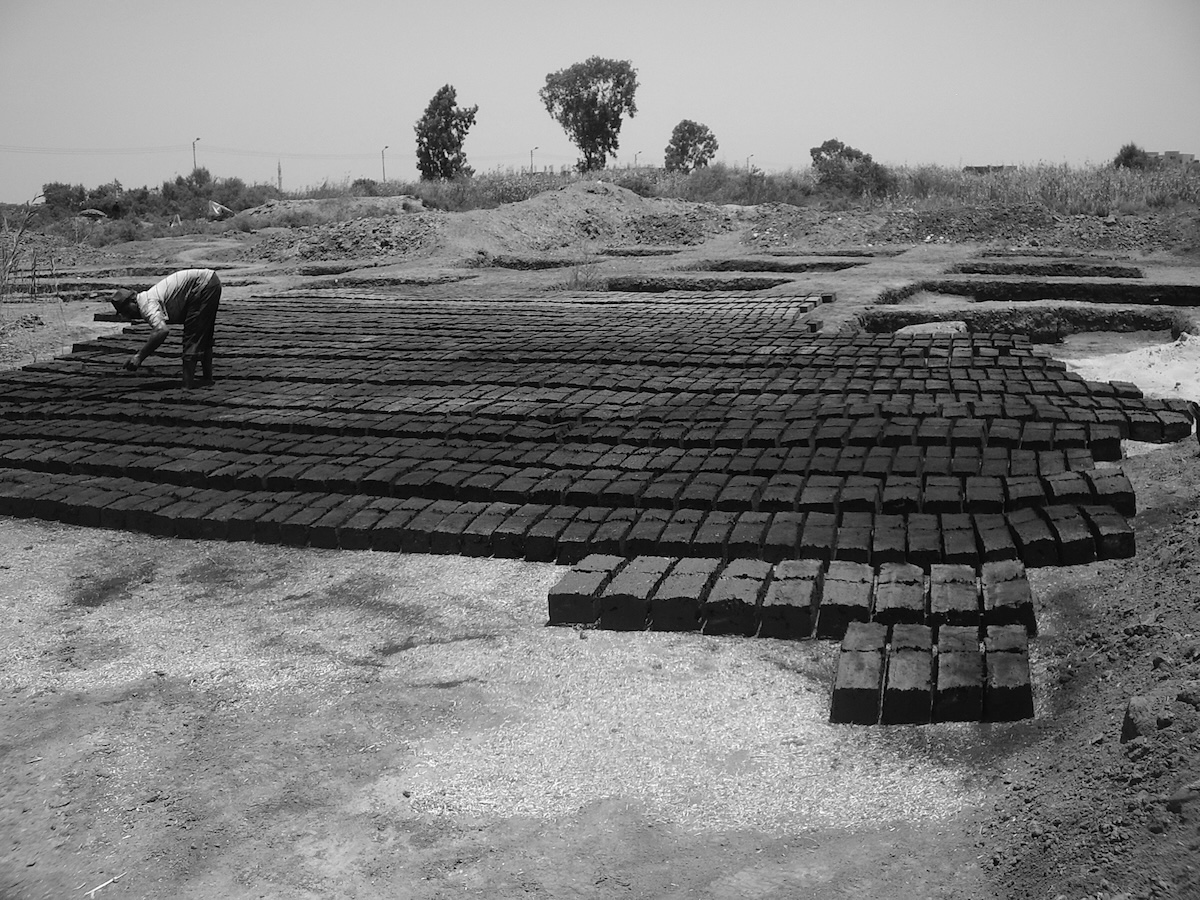
Mudbrick manufacturing in Tell Timai, Egypt. Photo by M. Lorenzon.
In the southern Caucasus, the capital city of Artashat/Artaxata offers a long history of earthen construction, from Chalcolithic settlements to Urartian and Hellenistic phases. Geoarchaeological and archaeobotanical analyses of the site show extensive re-use and recycling of mudbricks, demonstrating both the resilience and adaptability of earthen traditions. Communities across centuries drew on similar resources and techniques, suggesting a continuity of knowledge transmission and shared building practices despite political and cultural changes.
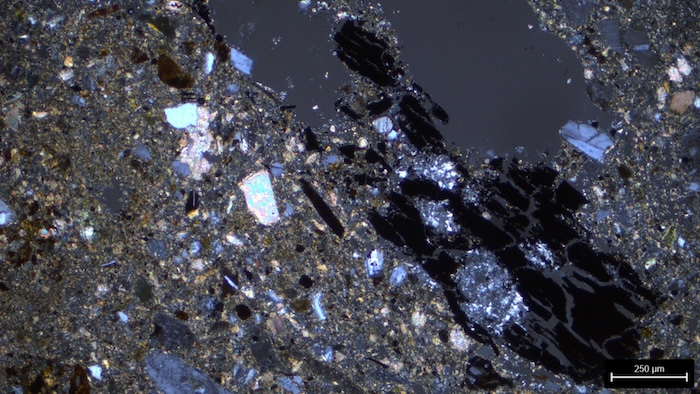
Microphotographs of charcoals in the mudbricks examined from Artashat, Armenia. Photo by M. Lorenzon.
At Assur, mudbrick and fired brick were the primary building materials for both monumental and domestic architecture. Geochemical analysis of the bricks shows considerable variation in composition over time, reflecting different strategies of raw material procurement. In some contexts, builders relied on opportunistic use of locally available soils, while in monumental construction there is clear evidence for greater standardization and control. This contrast points to a dual system in which everyday building practices were flexible and locally managed, whereas state-sponsored projects adhere to different requirements. Together, these patterns illuminate not only the technical aspects of construction but also the socio-political dynamics of labor organization and resource management in the Assyrian empire.
Towards a Holistic Understanding
Mudbrick architecture is more than a backdrop to ancient life: it is a record of how communities engaged with their environment, organized labor, and expressed cultural meaning. Yet, earthen remains are fragile.
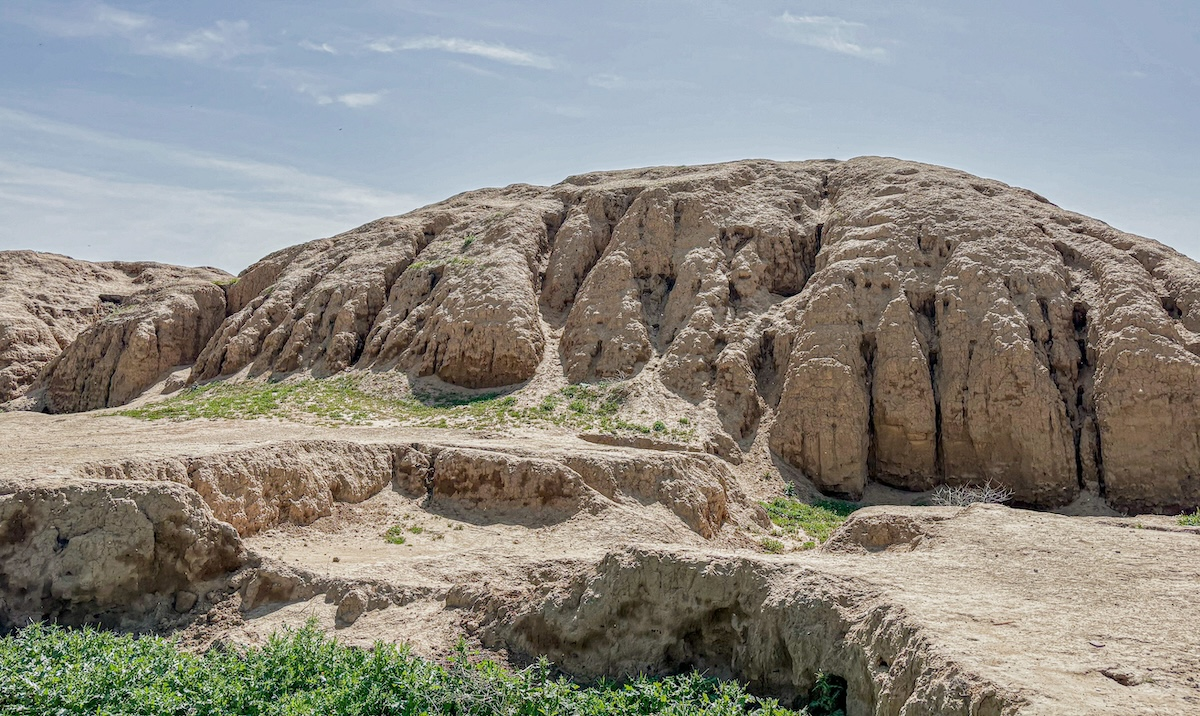
Ziggurat with decayed mudbricks at Kar Tikulti-Ninurta, Iraq. Photo by M. Lorenzon.
Once excavated, they deteriorate rapidly, and in many parts of Western Asia, archaeological sites are threatened by agricultural expansion, looting, and climate change. Unless studied systematically, this evidence risks disappearing forever. Projects such as EARTH and Building in New Lands seek to overcome the fragmentation of previous studies by combining geoarchaeology, archaeobotany, material analysis, and iconographic study. By reconstructing the full cycle of mudbrick production and use, we can reveal not only how walls were built, but also how communities created, maintained, and transmitted knowledge. Mudbricks thus embody a social biography: they tell us about the organization of labor, the negotiation between tradition and innovation, and the cultural values encoded in everyday materials. Studying them holistically allows us to recognize earthen architecture not as marginal or ephemeral, but as central to understanding the societies of the Bronze and Iron Ages and beyond.
Post a comment