

Top Archaeological Discoveries of 2025
1. Neolithic “Amphitheater” and Sculptural Finds at Karahantepe
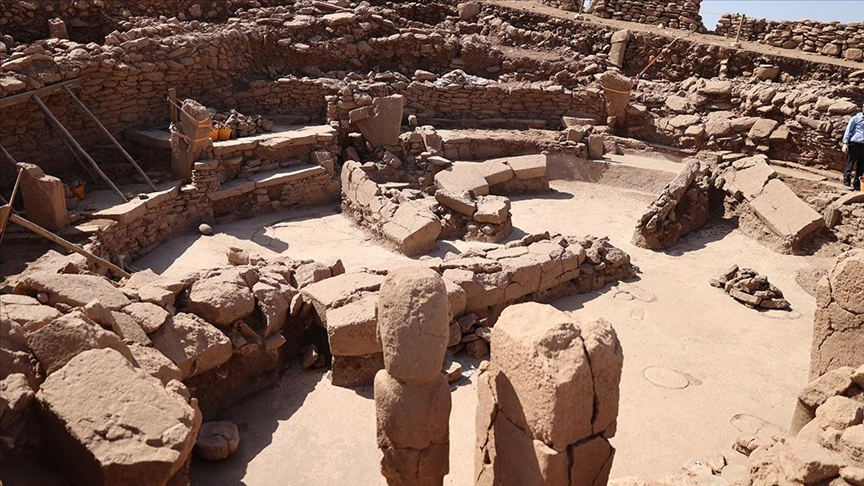
Karahantepe’s amphitheatre-like Neolithic structure. Photo Credit: http://anatolianarchaeology.net
Excavations led by Istanbul University have revealed a large structure resembling an amphitheatre at Karahantepe, a Neolithic site located near Şanlıurfa in southeastern Türkiye that was inhabited from ca. 9400 to 8000 BCE. The circular structure measures almost 17 meters in diameter and features tiers of stone benches, human and animal sculptures, and carved heads embedded in the walls. Thousands of years older than its classical counterparts, the form of the circular structure points to organized group gatherings. The sculpted human faces in the “amphitheatre” join the T-shaped pillars with carved faces announced earlier this year to form one of the largest concentrations of human face depictions in the Neolithic era. That’s not all: elsewhere at the site excavators found an assemblage containing a set of stone figurines representing a wild boar, a vulture, and a fox — animals that play a leading role in stories of Neolithic people — which were deliberately arranged, suggesting intentional storytelling. Taken together, the Karahantepe material further challenges longstanding narratives about the shift from nomadic hunter-gatherer life to early settlements, showing that complex social organization and communal monumental architecture predate the establishment of agricultural communities.
Read more about the “amphitheater” at Arkeonews
Read more about the T-shaped pillars with carved faces at Smithsonian magazine
2. A Newly-Discovered Royal Tomb from Egypt’s Mysterious “Abydos Dynasty”
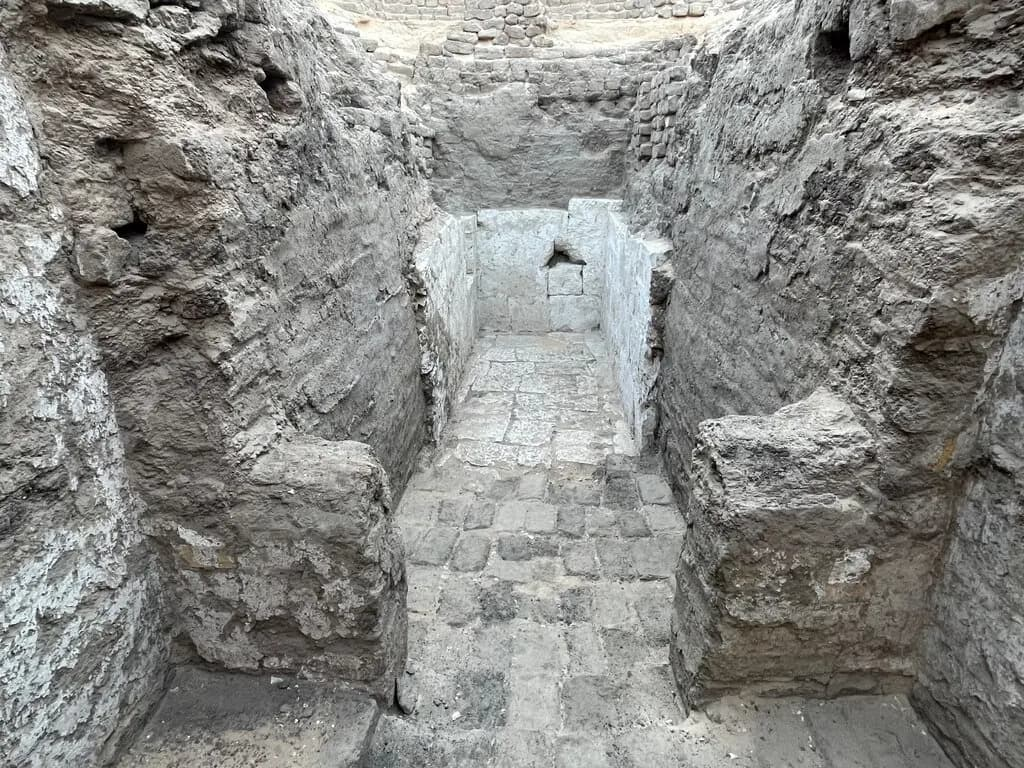
View of the burial chamber of the newly discovered royal tomb at Abydos. Photo courtesy of Dr. Josef Wegner for the Penn Museum.
An Egyptian-American team unearthed a large royal tomb for an unknown king belonging to the mysterious Abydos Dynasty, a short-lived local Egyptian dynasty that governed parts of Upper Egypt around 1650–1600 BCE, ruling concurrently with the Hyksos in the north and the Theban dynasty in the south during the fragmented Second Intermediate period. The tomb was found 7 meters (23 feet) underground near “Anubis Mountain” to the south of Abydos. The structure consists of a limestone burial chamber with a decorated entryway, several rooms, and mudbrick vaults originally reaching a height of ca. 5 meters (16 feet). Fragmentary inscriptions and images stylistically resemble those from the tomb of King Senebkay — another member of the Abydos Dynasty — which was announced in 2014. The new tomb, however, is much bigger; unfortunately, the occupant’s name has not survived. The tomb was extensively robbed in antiquity, leaving no trace of the king’s sarcophagus. Nonetheless, the newly discovered tomb provides testimony to a poorly documented era of Egypt’s ancient history.
3. Evidence of the Egyptian Army at Megiddo in the Time of King Josiah
Area X at Megiddo, at the end of the 2022 excavation season, view to the southeast. Credit: The Megiddo Expedition.
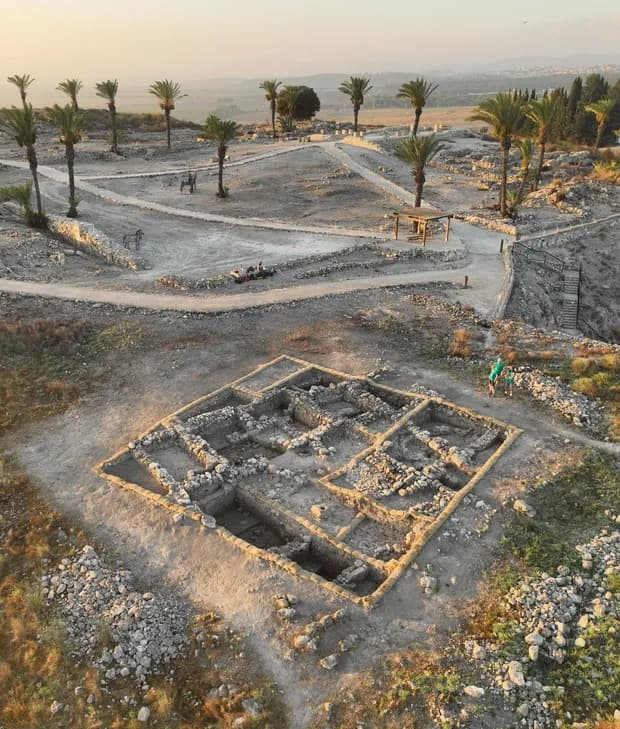
Recently published pottery may provide hard evidence of the military encounter at Megiddo in 609 BCE between King Josiah of Judah and King Necho II of Egypt. The battle and Josiah’s resulting death is famously recorded in Hebrew scripture and is considered a consequential turning point in the history of ancient Judah. Archaeologists unearthed a layer in Area X at Megiddo dated to the late 7th cent. BCE which revealed an unusual mix of pottery: an exceptional number of sherds of Egyptian-made vessels of various types, along with a significant number of sherds of East Greek origin. As the Egyptian pottery is rather crudely made, the researchers argue that it is likely to belong to soldiers rather than imported. The archaeologists concluded that the material represents a garbage dump left by the Egyptian army, and the presence of East Greek pottery is interpreted as belonging to Greek mercenaries, who are known from other sources to have served in the Egyptian army of Necho. Although the newly unearthed material can’t shed light on the death of biblical Josiah, it does provide evidence of the Egyptian military presence in Megiddo around the same time.
5. Mysterious pre-Islamic Script from Oman Finally Deciphered
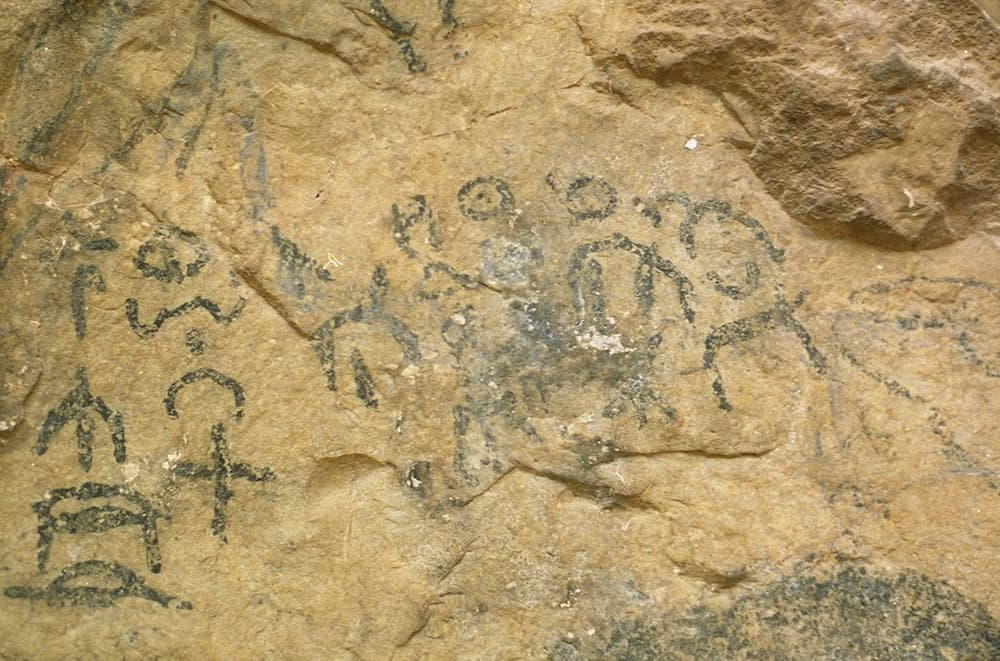
Inscription from a cave near Tawi Atair in Oman (KMG 120-126). Photo by Geraldine King, © Michael C.A. Macdonald.
After more than a century of failed attempts, linguist Ahmad Al-Jallad successfully deciphered the Dhofari script, a nearly 2,400 year-old writing system found on rock faces in caves and on dried riverbeds across southern Oman and Yemen. The breakthrough came when Al-Jallad identified three inscriptions as abecedaries — alphabetic listings rather than sentences. By comparing these letter sequences to similar ancient scripts from Yemen and North Arabia that followed the halḥam alphabetical order, he was able to assign sounds to the glyphs. The decipherment revealed that the language was not Arabic, but an ancient relative of Oman’s pre-Islamic indigenous languages that are still spoken today. The newly translated inscriptions have already provided insights into the region’s ancient religious practices, including that the ancient port city of Sumhuram was named after a previously unknown deity called Sumhu.
6. Earliest Bronze-Age Farming Settlement in Mediterranean Africa Outside Egypt
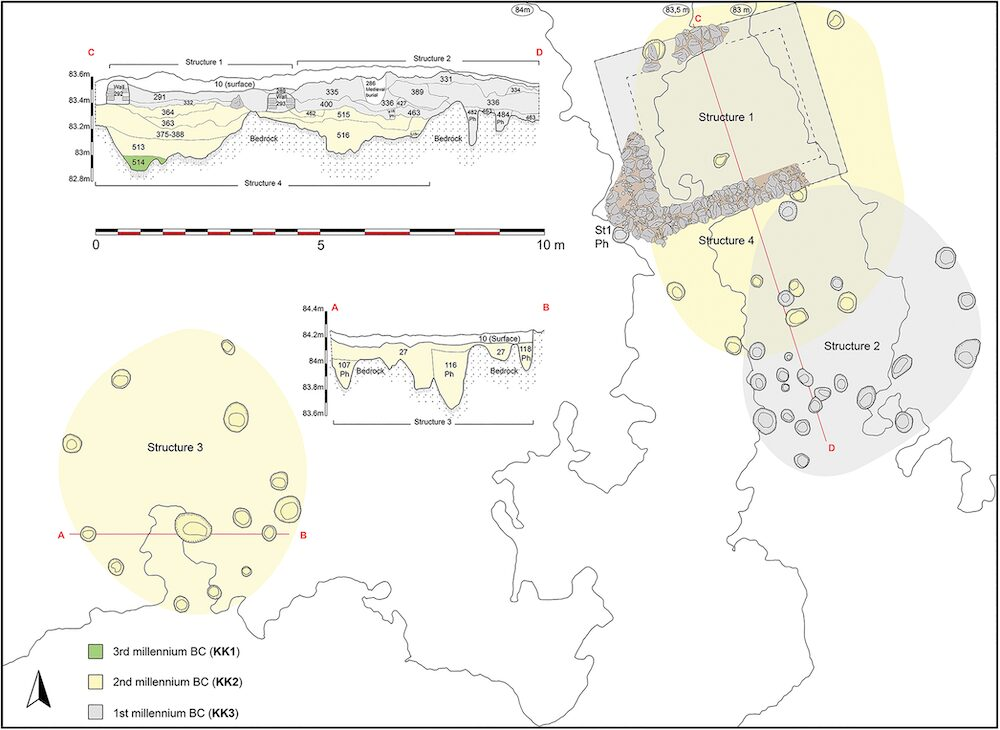
Plan and sections of structures at Kach Kouch, Morocco. Source: https://doi.org/10.15184/aqy.2025.10
Archaeologists from the University of Barcelona have published the first study of a Bronze Age agricultural settlement in the ancient Maghreb: Kach Kouch in northwest Morocco, just east of the Strait of Gibraltar. The earliest phase, dated to 2200–2000 BCE, is poorly represented, but the second phase, dated to 1300–900 BCE, revealed a stable, sedentary agricultural community centuries before the arrival of the Phoenicians. The work is important for correcting the long-held narrative of northwest Africa as a terra nullius (empty land) before Phoenician settlement and sets the stage for further study of ancient indigenous complex social and political organization in North Africa outside of Egypt.
Read the press release at ASOR news.
Read the original research article in Antiquity (open access)
7. Pathogen that Caused the Justinian’s Plague —and the First Pandemic — Identified
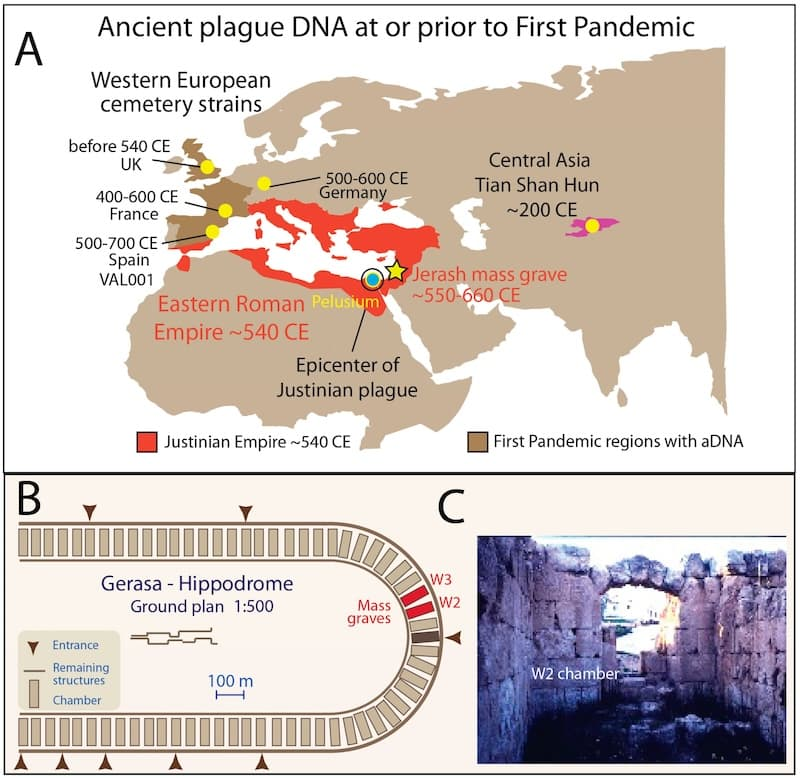
Map of ancient plague DNA and plan/photograph of Credit: Genes (2025). https://doi.org/10.3390/genes16080926
A global research team led by researchers from the University of South Florida and Florida Atlantic University identified Yersinia pestis, the microbe that causes plague, in teeth from a mass grave at Jerash, Jordan, providing the first definitive biological evidence of the devastating pandemic written about in accounts of the time. Researchers found nearly identical strains of Y. pestis from multiple individuals buried in a grave excavated in 1993 and dated to the mid 6th to mid 7th centuries CE, corresponding to the early period of the plague. The Plague of Justinian first appeared in records from Pelusium in Egypt in 541 CE (during the reign of Justinian), before spreading throughout the Byzantine Empire and recurred in waves until ca. 750 CE, when it faded out. The first recorded pandemic affecting Eurasia/Africa, it is estimated to have killed anywhere from 15 to 100 million people across Europe, Asia, and North Africa.
Read the original research article in the journal Genes (open access)
8. First Iron Age Shipwrecks from the Southern Levant Excavated

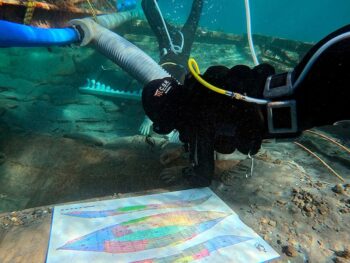
A three-camera photogrammetry rig was used by the excavation team to document the assemblages. Photo by Amir Yurman, University of Haifa
A joint team from UC San Diego and University of Haifa published the results of their underwater excavation of three cargoes from Iron Age shipwrecks in the harbor of Tel Dor, Israel — the first excavation of Iron Age cargo along the southern Levant coast. Radiocarbon dating and pottery typology tie the cargoes to distinct sub-periods: early Iron I (11th cent. BCE), Iron IIB (late 9th–8th cent. BCE), and Iron IIC (7th–6th cent. BCE). The assemblages are rich, featuring a Cypro-Minoan–inscribed anchor, Phoenician amphorae, Cypriot basket-handle amphorae, and iron blooms (impure iron destined to be forged into wrought iron). Together they point to Dor as a thriving Iron Age port town, while the differing contents of each assemblage illustrate how maritime trade networks shifted with changing political conditions. As there are only 11 other known boats and cargoes from this period across the entire Mediterranean, the Dor discoveries provide an exceptionally important new dataset.
Read the full press release from UC San Diego
Read the research article in the journal Antiquity (open access).
9. Researchers Sequence the Entire Genome of an Ancient Egyptian for the First Time
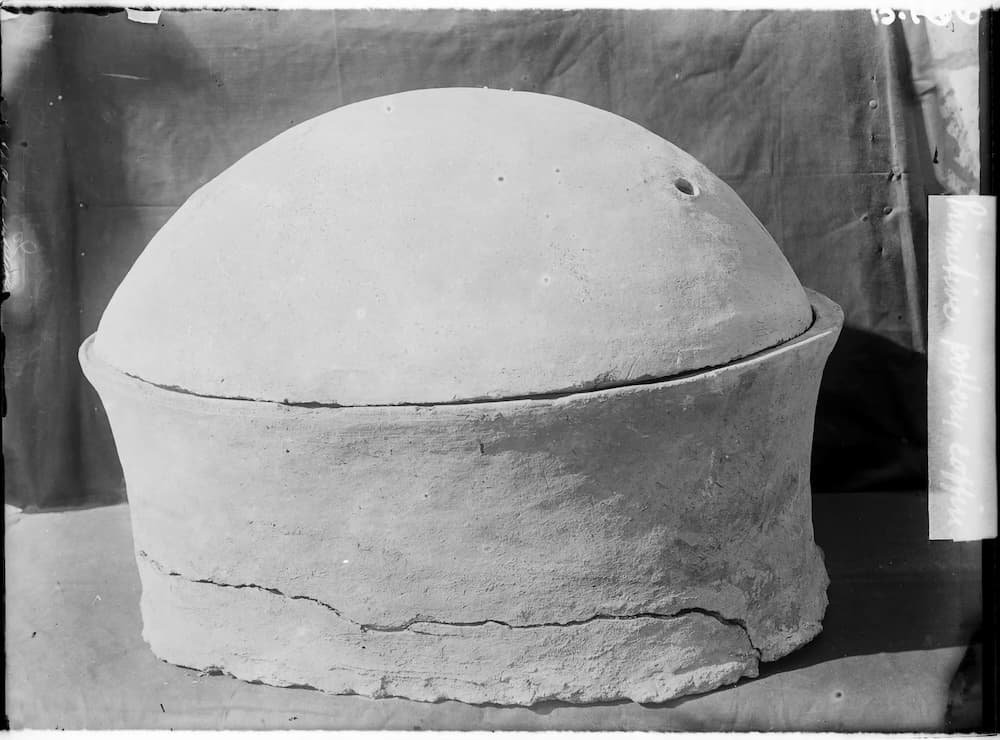
Pottery vessel in which the Nuwayrat individual was discovered. Photo: Garstang Museum of Archaeology, University of Liverpool
Scientists from the University of Liverpool achieved a major milestone in archaeogenetics by sequencing the first complete genome of an ancient Egyptian. The researchers studied the well-preserved remains of a man who was buried in a pottery vessel in a rock-cut tomb, which was excavated in 1902 by John Garstang at the site of Nuwayrat (near Beni Hasan), 265km south of Cairo. Radiocarbon analysis dates the burial to 2855–2570 BCE (the late Early Dynastic or early Old Kingdom). Osteological examination puts his age at 44–64, and isotopic analysis of the teeth suggests that he grew up in the Nile Valley. The researchers extracted DNA from the man’s tooth and compared his genome with genomes from 3000 modern people and 805 ancient individuals. They found that while 80% of the genetic material shows North African Neolithic ancestry, 20% of his genetic ancestry can be traced to genomes in Western Asia, especially Anatolia and the Levant in the Neolithic and Bronze Age. This reinforces archaeological evidence of the movement of people and goods between the Nile Valley and Western Asia during Egypt’s early history.
Read the full research article in Nature (open access)
2 Comments
-
-
ANE Today Editor
Thank you, I’m glad you enjoyed the article!
-

Gopal Chippalkatti
Wonderful assemblage of this year’s archaeology finds.